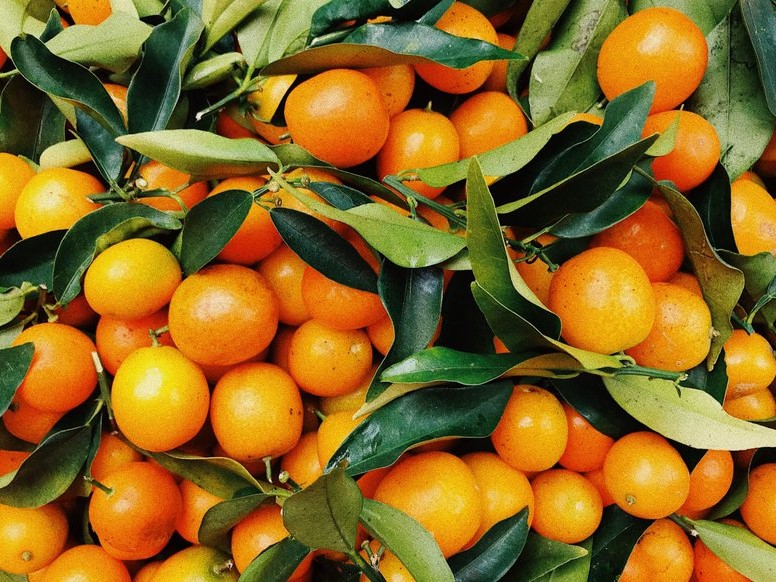
South Africa’s citrus industry on Wednesday said it was voluntarily closing the export of Valencia oranges to the European Union (EU) to mitigate Citrus Black Spot (CBS) risk.
The decision to close comes with a month left of the current export season.
The Citrus Growers’ Association of South Africa (CGA) and the Fresh Produce Exporters’ Forum Boards said they have taken the decision to voluntarily close the export of Valencia oranges from CBS affected areas in South Africa to the EU starting from 16 September 2022.
“This decision was taken in response to the 10 CBS notifications of non-compliance (NONCs) on SA citrus detected so far this season and the traditional heightened risk that Valencia oranges pose for CBS non-compliance at the tail end of the EU export season,” said Justin Chadwick, CEO of CGA in a lenghty statement.
The market closure will be rolled out in a staggered approach, with the last day of inspections on Valencias in Northern regions being on the 16th of September while the Gamtoos Valley [Patensie], East Cape Midlands and Sundays River Valley will close inspections on the 23 September 2022.
Mandarins, grapefruit, lemons and navels from CBS-free areas will not be affected.
“While this closure will serve as another blow to growers who have faced one of the most challenging seasons to date, continued access to the EU market over the longer-term must be prioritised,” said Chadwick.
“This decision also shows South Africa’s phytosanitary CBS Risk Mitigation System being implemented effectively.”
He said to date, 138 million (15kg) cartons of fruit have been packed for export to key markets across the world.
The latest prediction is that 167.2 million cartons of citrus will be shipped by the end of the 2022 season, which is 3.3 million cartons less than what was predicted at the start of the season.
“While these figures still show steady volume growth when compared to previous years, a number of serious operational and commercial challenges means that the majority of local growers are faced with the very real prospect of significant earnings losses this year,” said Chadwick.
Experienced industry commentators are of the view that less than 20% of citrus growers are likely to achieve above break-even returns at the end of the 2022 season.
This poses a major threat to the sustainability and profitability of the sector and the 130 000 jobs it sustains as well as the R30 billion in export revenue it generates annually.
Chadwick said the most serious challenge facing growers, which is having the biggest impact on their bottom line is price hikes across a number of inputs as a result of the Covid-19 pandemic and the Russian invasion of Ukraine.
“For example, fertilizer prices increased just over 56% between 2020 and 2021 and fuel prices are up by 53%,” Chadwick said.
“Of even greater concern is record high freight rates, with shipping lines hiking their prices by 128% between 2020 Q1 and 2022 Q1.
“This means growers are having to pay virtually twice as much to ship their fruit, than what it costs to produce it over the course of an entire year.”
Chadwick said in order to guard against further price hikes and ensure price stability in the future, the CGA has been engaging with other fruit sectors on potentially taking control of their shipping, with a feasibility study expected to be completed by the end of September.
“At the same time, there has been a decline in real export prices across all varietals which is expected to continue for the next few years,” explained Chadwick.
“This challenge has been further compounded by the recent unjustified and discriminatory False Coddling Moth (FCM) regulations passed by the EU, which will require exporting African countries to implement a drastic mandatory cold treatment for oranges headed to the region.
“These new regulations recently saw up to 1350 containers of citrus detained at EU ports for a number of weeks, which resulted in local growers incurring over R200 million in losses.”
The long-term enforcement of the new FCM regulations is a serious threat to the industry, which is why the WTO consultation process recently launched by the Department of Trade, Industry and Competition (DTIC) will be critically important.
“The CGA’s position remains that the cold treatment prescribed within the new regulations is contrary to scientific evidence, making it an arbitrary and unnecessarily trade restrictive measure and accordingly contravenes international requirements for such phytosanitary trade regulations,” said Chadwick.
“The CGA will make all resources available as required by the DTIC and DALRRD during the upcoming WTO consultation process.
“All of these factors along with the current economic constraints in South Africa including ongoing fiscal pressure, persistent load shedding, high unemployment rates and low levels of consumer and business confidence means that growers are under severe pressure.”
There have been instances where growers have had no choice but to dump cattle-grade fruit that was not fit for human consumption.
This was the case for one farmer in the Eastern Cape recently.
“Where possible, growers continue to donate fruit that is fit for human consumption to communities in need, specifically when such fruit will not generate a viable return when sold fresh or processed into juice,” said Chadwick.
“In this regard, the CGA has also offered assistance to facilitate donations to communities through its Orange Heart Fruit Drive initiative.”