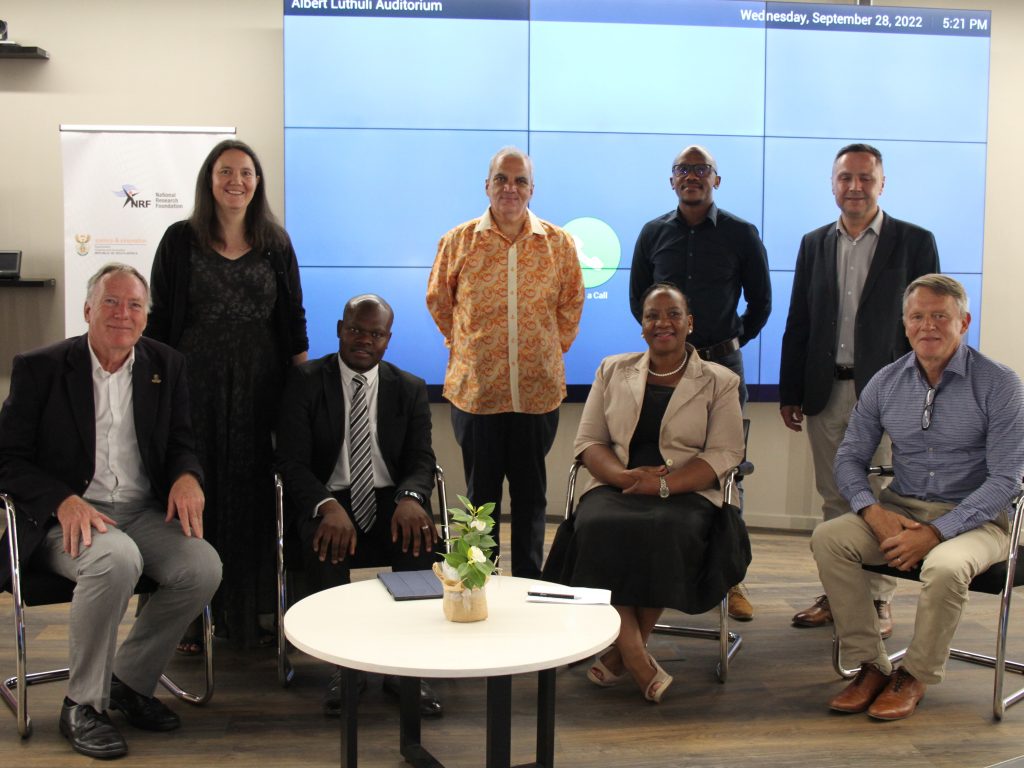
Pretoria – The National Research Foundation (NRF) and the Council on Higher Education (CHE) co-hosted the launch of the Doctoral Degrees National Report.
The report highlights several areas for commendation and also makes a series of important recommendations to improve the quality of doctoral provisioning in South Africa.
High quality doctoral graduates are needed to grow and transform the countrys research enterprise, and to feed into South Africas economic development.
The launch on Wednesday (28 September 2022) initiated an important and inclusive discussion around the quality of doctoral provision in South Africa, and the need for further investigations into other postgraduate qualifications.
The proposal for a review of South African doctoral provisioning arose from a discussion between the NRF and CHE, where the NRF raised the importance of quality, given its investment in human capacity development.
The CHE has been engaged with the review since 2017, with the objective of promoting and enhancing the quality of doctoral studies across South African higher education institutions both public and private.
The review commenced with the development of a Qualification Standard for Doctoral Degrees framework, completed by the Standard Development Reference Group of independent academic peers in 2018.
The national review commenced fully in 2019 following the approval of the Qualification Standard.
The review included 28 institutional self-evaluation reports, followed by institutional review panel reports of these institutions.
The National Review Report provides a comprehensive composite of these reports, put together by a small team led by Professor Andrew Leitch and released in June 2022.
At the launch, the CHEs CEO, Dr. Whitfield Green, provided the first response, highlighting the important role that institutions in the higher education, science and innovation sector need to play in order to bring about the necessary changes in the system.
Dr. Green called for dialogues to inform a jointly crafted national strategy.
The NRFs CEO, Dr Fulufhelo Nelwamondo, discussed the important role that the NRF plays in providing funding, supervisory capacity, and research infrastructure to support doctoral candidates.
Given this investment, quality is key, and the NRF will work together with institutions as they implement their improvement plans.
Three respondents provided their inputs from an institutional perspective.
- Professor Gerald Ouma, Senior Director of Institutional Planning, Monitoring and Evaluation at the University of Pretoria;
- Professor José Frantz, the DVC responsible for Research and Innovation at the University of the Western Cape; and
- Professor Benjamin Anderson, Executive Chairperson of the Da Vinci Institute.
They emphasised the important role that the report plays in providing clarity on the interventions needed, and on the need for internal efficiencies balanced with a focus on societal impact and transformation.
During the discussion facilitated by Dr. Aldo Stroebel, Acting Group Executive: Strategy, Planning and Partnerships at the NRF, important questions were raised around the time it takes for doctoral students to complete their studies; the fact that all institutions have room for improvement; and the need for more efficiency between support programmes offered by different players in the sector.
The report can be downloaded from: https://www.che.ac.za/sites/default/files/inline-files/CHE%20Doctoral%20Degrees%20National%20Reporte.pdf.