Accra, Ghana – There is nothing quite like that first cup of coffee in the morning.
For me, its a moment to gather my thoughts before the day really begins.
However, this daily ritual isnt something we can take for granted.
Climatologists have warned that without action, coffee farmers in Africa will lose their livelihoods.
So, if we want to keep enjoying that precious cup, we need to ensure our coffee is sustainably sourced.
Coffee farming in Africa
The continent produces 12% of the worlds coffee, with over ten million farmers across 30 countries.
Whilst demand for coffee is forecast to grow significantly, crops have been declining in Côte dIvoire, the largest coffee producer in West Africa.
Nestlé has been manufacturing coffee in Côte dIvoire for over 60 years, and we have seen first-hand the challenges farmers are facing.
Climate change creates rising temperatures, drought, and flooding which makes coffee more difficult to grow. Under this pressure, farmers have turned to environmentally harmful practices such as deforestation and are substituting old coffee trees for crops that are easier to grow.
The case for sustainable coffee farming and transition to regenerative agriculture
Its not too late to reverse this decline. On a recent farm visit to the village of Yobouekro, I saw for myself the impact climate change is having.
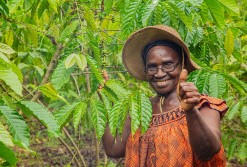
I met with Amani Ahou, a female coffee farmer who, until recently, planned to abandon her plantation as the crop from her aged trees had fallen to depressingly low levels.
Over the last few years, Amani has received training from Nescafé agronomists.
Ahou has learned pruning techniques, composting, and the importance of planting shade trees.
She is now more upbeat about the prospect of reviving her coffee farm.
“My plantation has rejuvenated, my old trees are starting to flower again, and are producing good coffee,” Ahou said.
It was great to see for myself how improving technical knowledge and building stronger partnerships between farmers and industry can have a real and lasting impact on farmers like Amani.
Regenerative agricultural techniques like these play a critical role in the future of coffee farming.
They will improve soil health, restore water cycles, increase biodiversity, and reduce greenhouse gas emissions.
By planting more coffee trees and encouraging greater biodiversity, farmers can create an environment for bees, insects, and birds to thrive on their farms.
This will have a positive impact on the ecosystem and reduce the effects of climate change.
The responsibility and cost for transitioning to regenerative agriculture cannot lie solely with the farmers.
Its been 10 years since we launched the Nescafé plan, during this time we have worked closely with farmers to improve agricultural practices, sharing our knowledge and expertise from across the planet.
The plan builds farming skills to help farmers produce higher quality beans and achieve higher premiums, so they can support their families and contribute meaningfully to their local communities.
However, we know there is much more to be done, which is why we are going further and last week announced the Nescafé Plan 2030 (https://bit.ly/3Vk8yCL) to accelerate regenerative agriculture, reduce greenhouse gas emissions, and improve coffee farmers livelihoods.
Nescafé has committed to investing over 1 billion Swiss francs globally. The aims of the plan are:
- 100% of our coffee to be sourced responsibly by 2025
- 20% of coffee sourced from regenerative agricultural methods by 2025 and 50% by 2030.
In Côte d’Ivoire, we are committed to supporting farmers that take on the risk and costs associated with transitioning to regenerative agriculture.
We will be piloting a financial scheme that includes conditional cash incentives for adopting regenerative agriculture practices.
We have a long way to go, but if the whole coffee industry in Africa supports this transition to regenerative agriculture.
We will ensure no farmer is left behind, so we can continue to uplift lives and livelihoods with every cup we drink.
*Scott Coles is the Coffee Business Executive Officer for Nestlé (www.Nestle.com) Central and West Africa