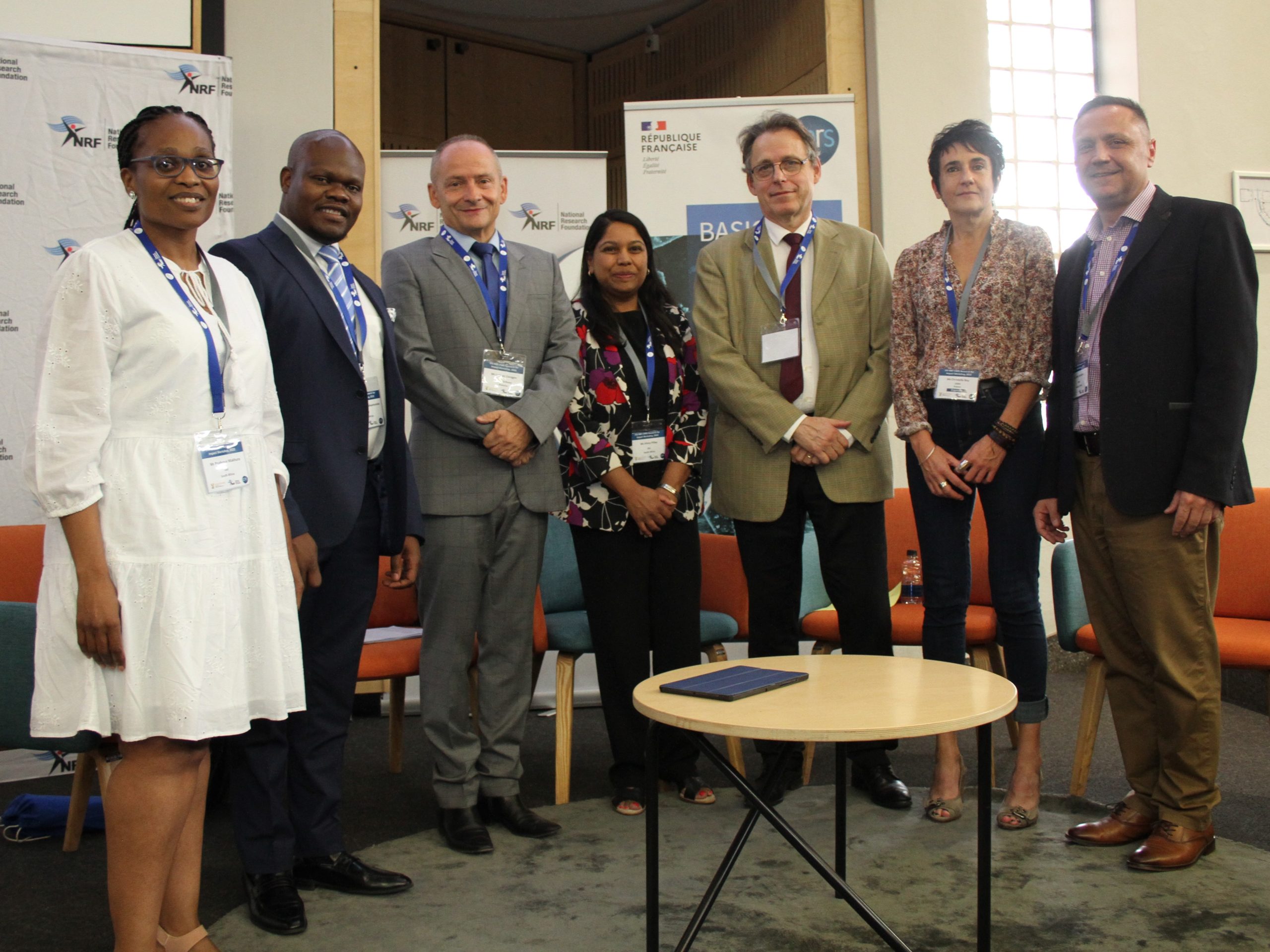
Pretoria – More than 60 esteemed researchers from African and European countries have concluded a workshop in which they discussed ways to strengthen international collaboration.
Themed Strengthening scientific collaboration between Europe and Africa, the workshop was held at the Future Africa Campus of the University of Pretoria, from 17 to 20 October 2022.
The workshop was hosted by the National Research Foundation (NRF) and the French National Centre for Scientific Research (CNRS), in collaboration with the Department of Science and Innovation (DSI) of South Africa.
As the theme said, the workshop aimed to strengthen dialogue and collaboration between European and African scientists to better respond to socio-economic challenges at local and global levels.
In his opening address, NRF CEO Dr. Fulufhelo Nelwamondo said the workshop was a continuation of high-level engagements that began in October 2021.
I’m very excited to see the rapid progress in the implementation of the partnership programmes between France and South Africa, but most importantly between France and a number of African countries,” Dr. Nelwamondo said.
“This is a very clear indication of the urgency and seriousness that all parties and stakeholders have placed on the collective approaches in education and research activities within the two continents.
Dr. Nelwamondo added: We are aware of the increasing demand of science to re-demonstrate relevance, and we can do this by showing the relevant outcomes and impact.
“This basically means that the better translation of research into outcomes that transform society is a key function of a research system across the globe, but perhaps not effective yet in developing countries.
“Part of the conversation that we need to have is around how we ensure that we can translate the fundamental science into something that makes an impact on society.
Ludovic Cocogne, Counsellor for Cooperation at the French Embassy, pointed out that the workshop flows from the scientific cooperation agreement that exists between France and South Africa.
First signed in 1995, it was renewed in May 2021 during France President Emmanuel Macrons State visit to South Africa.
The scientific cooperation between South Africa and France is multipurpose and very active.
CNRS, Frances research organisation, which ranks among the world’s leading research institutions, is leading the countrys drive to improve international scientific collaboration.
Professor Alain Schuhl, CNRS Deputy CEO for Science, told the researchers his organisation launched its strategy for developing scientific collaboration with Africa a year ago, after two years of planning and preparation.
Prof Schuhl said: We are engaged in a long-term strategy. We want to support and encourage equitable and sustainable cooperation.
He also insisted on the importance of flexible cooperation such as the ones pushed by the CNRS and the NRF.
Such cooperation is not only institutional but also gives a large place to new developments in science, networking, and the facilitation of joint applications for competitive research grants.
The Covid-19 pandemic demonstrated that the importance of cross-border scientific collaboration cannot be understated, said Vinny Pillay, Chief Director at the DSI.
Scientific collaboration is more necessary now because the world faces various emerging problems.
Said Pillay: Weve seen during the Covid pandemic that no country alone has been able to have the resources, intellectual capital, vaccinations, technologies, and innovations to address the problem.
“Weve seen the role that science and technology and innovation have played. But of course, as we move forward, we have seen this multitude of challenges that we are facing. I
“I dont think more than any time in our lives than right now have we faced such pressing challenges, whether it is around energy, climate change, or health.
The plenary sessions were dedicated to presenting and discussing recent development and trends in research in Africa, potential funding opportunities for collaborative research between Africa and Europe, and regional advances in Open Science.
Attendees were divided into five two-day thematic sessions, where they discussed topics such as Energies of the Future, Marine Sciences, Sustainable Engineering for Bio-based Products, Sustainability of Socio-Ecosystems, and Mathematics of Planet Earth.
In addition to the definition of joint scientific priorities, their discussions focused in particular on various constraints to be overcome in order to develop effective international collaborations, provide them with a favourable environment and finance them.
During the closing session, the five groups came up with ideas to improve collaboration in their scientific domains.
A specific session was also devoted to early career scientists whose expectations towards international scientific cooperation were also presented during workshop closure day.
Closing the workshop, Prof Alain Schuhl expressed his interest in taking the work carried out during the two-day parallel sessions to the next level.
He underlined the importance for the scientists present to communicate their needs and make concrete suggestions on how to enhance their new collaborations.
NRFs Acting Group Executive, Dr. Aldo Stroebel, urged the scientists to take advantage of funding and research collaboration opportunities that exist.
He said: While it is not always smooth sailing for African researchers, there are many positive developments. Initiatives such as the workshop, funding growth in Africa, and stronger research institutions are among these positives.
Added Stroebel: “There are many opportunities currently and we are aware of them – programmes that are running, that are co-funded between the partners (participating) here and many others on the continent. Please be aware of the opportunities. Do not hesitate to collaborate.”
About the NRF:
The National Research Foundation (NRF) is an independent statutory body established in accordance with the National Research Foundation Act.
Its mandate is to support and promote research through funding, human resource development, and the provision of the necessary research facilities in order to facilitate the creation of knowledge, innovation, and development in all ?elds of science and technology, including indigenous knowledge.
NRF also supports and promotes public awareness of, and engagement with, science; and promotes the development and maintenance of the national science system and support of Government priorities, thereby contributing to the improvement of the quality of life of all South Africans.
Website: www.nrf.ac.za | Twitter: @NRF_News | Facebook: @NRFSouthAfrica
About the CNRS
The French National Centre for Scientific Research (CNRS) is among the world’s leading research institutions. Its scientists explore the living world, matter, the Universe, and the functioning of human societies in order to meet the major challenges of today and tomorrow. Internationally recognised for the excellence of its scientific research, the CNRS is a reference in the world of research and development, as well as for the general public.
Website: http://www.cnrs.fr/en | Twitter: @CNRS @CNRSinSthAfrica | Facebook: @CNRS @CNRSNews