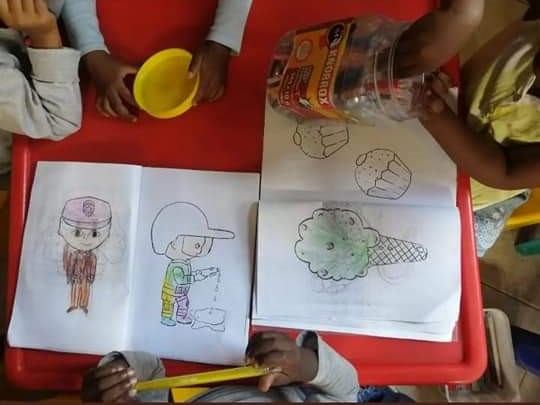
Johannesburg – Early Childhood Development (ECD) providers no longer have to be registered as non-profit organisations (NPOs) to qualify for a subsidy from the Department of Basic Education (DBE).
The DBE on Thursday announced that it will not require ECD programmes to be registered as NPOs “as a requirement for eligibility to receive the ECD subsidy”.
The DBE said it recognises that a wide range of ECD providers was needed to ensure more children have access to quality services.
Before the DBE announcement, one of the eligibility criteria for ECD programmes to receive the “ECD subsidy” was to have a not-for-profit registration.
“However, NPO registration does not add additional assurances regarding the use of the subsidy, and it is obstructive to the goal of expanding towards universal access to ECD, especially for the poorest children,” the DBE said.
“The DBE is of the view that the NPO registration imposes an additional administrative burden on ECD programmes, and may be inappropriate for the structure of many organisations operating in the sector.”
ECD programmes deliver a public good and should be eligible to receive state subsidies if they are registered or conditionally registered in terms of the Children’s Act and are serving eligible children.
NPO registration does not add additional assurances regarding the use of the subsidy.
“The controls introduced by the service level agreements that are signed by all subsidised ECD programmes are stricter than those required by NPO registration,” said the DBE.
“Thus NPO registration is redundant as a requirement to receive the ECD subsidy.
“The DBE has therefore decided to drop the eligibility criterion that ECD programmes need to also be registered as an NPO.”
The DBE said the removal of the NPO registration requirement will bring “immediate relief” to providers who go through “the overly burdensome bureaucratic processes” and “will allow for an increase in access to the ECD subsidy by vulnerable children”.
Provinces are responsible for the registration of ECD programmes, as well as the payment of the ECD subsidy.
“The Minister of Basic Education has therefore written to the members of the executive council responsible for Education in the provinces to inform them about this decision and to request their support in the implementation of the decision within their departments,” the DBE said.
Which ECD programmes are eligible to receive the ECD subsidy?
Subsidies can be paid to any type of ECD centre and non-centre based ECD programme as long as it is registered or conditionally registered in terms of the Children’s Act.
Which children are eligible to receive the ECD subsidy?
Children attending the ECD programme are eligible for the subsidy if they receive a Child Support Grant (CSG), or are eligible for the CSG based on the “means test” gazetted in a particular year.
Applying for an ECD subsidy
ECD programmes that are registered or conditionally registered in terms of the Children’s Act and serving eligible children should contact their Provincial Department of Education to find out how and when to apply for the ECD subsidy.
However, the DBE said subsidies are awarded to eligible programmes in line with available funds.
“Eligibility to receive the subsidy, therefore, does not guarantee that the programme will be awarded a subsidy,” said the DBE.
What to do if the programme is already registered as an NPO?
ECD programmes that are already NPOs or that wish to become NPOs may still do so.
Being an NPO means that it’s easier to get funding from companies and individuals.
However, it is no longer required before you can receive the ECD subsidy.