Johannesburg – Technology and science can solve challenges quicker and more efficiently as demonstrated this week at the University of Johannesburg, where a 3D Construction Printing for Sustainable Human Settlements Project was launched.
For many people in South Africa, the acquisition of a house – through purchase or construction – is the most significant expense.
Using innovative building products such as 3D Construction Printing, South Africa can eradicate its massive housing backlog.
Last year in August, the Department of Human Settlements and Urban Development (DHSUD) disclosed that there was a backlog of more than 6.5 million housing units that it needed to address.
One of the solutions to tackling the backlog is 3D Construction Printing.
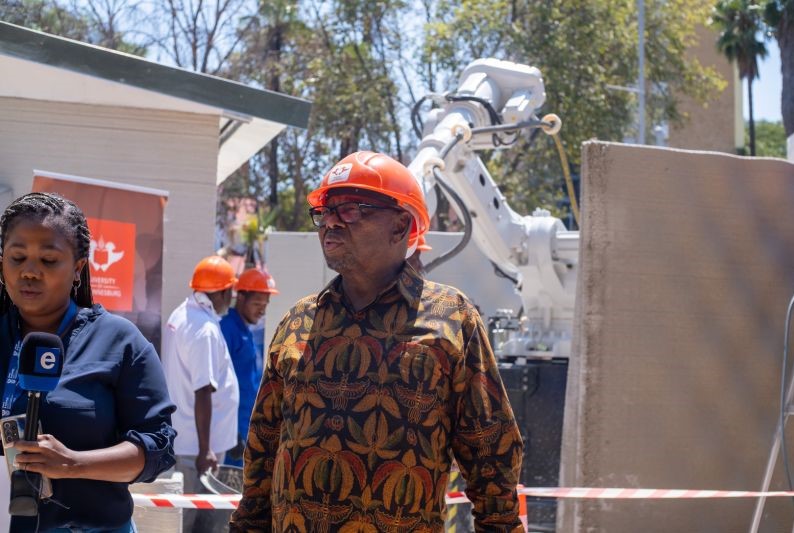

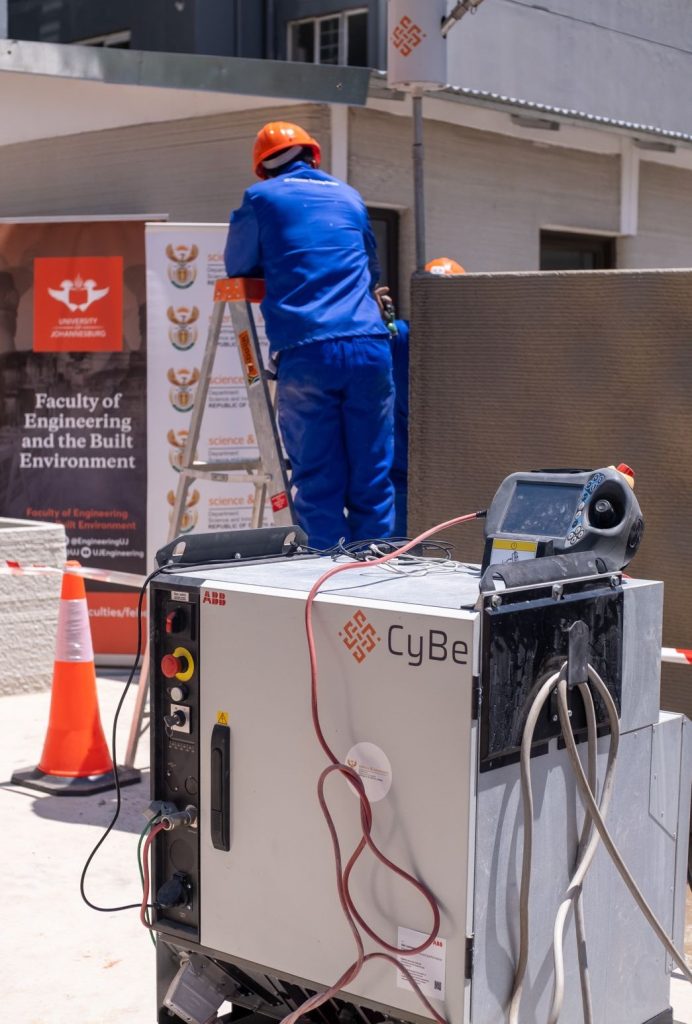
Higher Education and Training, Science and Innovation Minister Dr. Blade Nzimande on Friday, (27 January 2023), said: “It was a great honour and privilege for me to be a part of the launch of the 3D Construction Printing for Sustainable Human Settlements Project held at the University of Johannesburg“.
The construction 3D printing pilot project was first implemented on 1 April 2022 and is expected to conclude on 31 March 2024.
3D Construction Printing provides better-quality housing and construction products and possibly reduces the life cycle cost of the houses.
“The Construction 3D printing technology is one of the latest demonstrations of our commitment as the Department of Science and Innovation to increasingly employ science, technology and innovation in addressing the day-to-day challenges of our people, including in the provision of quality housing, education, water supply and infrastructure,’ said Dr. Nzimande.
“Using innovative building products in South Africa has significant potential economic ramifications, including eradicating the housing backlog, providing better-quality housing and construction products, and possibly reducing the life cycle cost of the houses.”‘
This technology is expected to contribute to programmes of the Department of Human Settlements, in the implementation of the Comprehensive Housing Plan, which aims at eradicating informal settlements in South Africa in the shortest possible time.
“My gratitude goes to the University of Johannesburg, Mampeule Foundation, AfriSam, and the KZN Department of Human Settlements for collaborating with my Dept of Science and Innovation in this initiative,” said the minister.
“I also thank Minister Kubayi-Ngubane, MEC for Human Settlements in Gauteng, Mr. Lebogang Maile, and MEC for Human Settlements in KZN, Dr. Ntuthuko Mahlaba.”