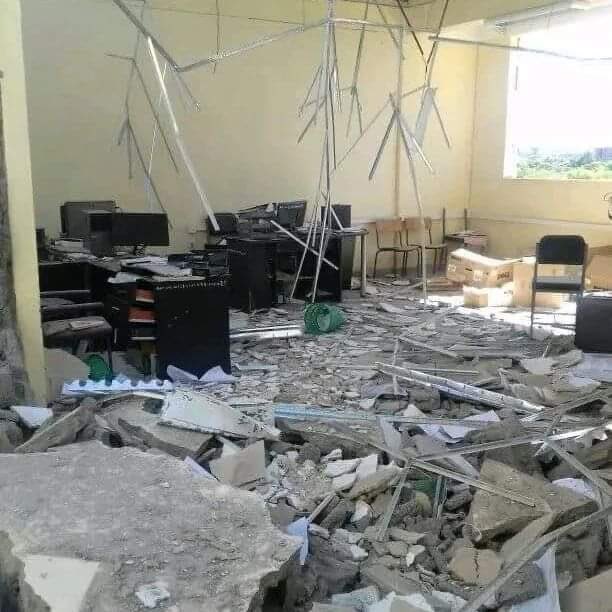
Ethiopia is a diverse country with many ethnic regions and the second most populous country in sub-Saharan Africa. In 2020, a brutal war broke out in the Tigray region bordering Eretria.
There was also a blockade – no access to food or medication.
Ethiopia is currently suffering a major humanitarian crisis – a deadly shortage of water, internal conflicts, hunger and an economic crisis.
According to Human Rights Watch, “over 20 million people required humanitarian assistance in 2022.”
In 2023, Ethiopia is number two on the list of “Top 10 crises the world can’t ignore in 2023.”
Implications:
After two years of a brutal war that is said to have caused an estimated 600 000 deaths alone and then directly the spread of Covid-19, Ethiopians have found themselves in the worst possible situation in 10 years.
Yet, with the peace treaty signed on 2 November 2022, so much stands in the way of any peace in Ethiopia.
Nevertheless, the new conflict between the Oromo and Amhara ethnic groups could disrupt this extremely fragile peace treaty in place.
These two ethnic groups accuse each other of killing civilians and now this has caused people to flee.
There is a history of conflict between these two groups which always results in the displacement of hundreds of people.
However, these issues need to be resolved for there to be trust between all the ethnic groups in Ethiopia, which will take time to rebuild.
Drought and food insecurity:
The IGAD Climate Prediction and Applications Center reported that dry weather conditions will continue “below-normal rainfall is expected in most parts of the Greater Horn of Africa over the next three months.”
This is the sixth consecutive year and the situation currently looks worse than it was during the 2010-2011 drought.
This has impacted over 11 million livestock and has caused 22.6 million people to become food insecure while at the same time battling the increased price of food such as oil, to what it was in 2019.
Furthermore, the impact of the Ukraine-Russia war has further affected the shipment of grain, wheat, and fertilisers to Ethiopia.
Health:
What is more is that with increasing debt in Ethiopia, malnutrition is prevalent in children under 5.
According to Relief Web, “more than 31 500 were severely malnourished and more than 217 300 were moderately malnourished.”
In addition, the need for water, sanitation, and hygiene facilities is desperately required but there is just not enough funding.
There is also a risk of domestic abuse, forced marriages, and sexual harassment, as well as high demand for menstrual hygiene products and no proper mechanism in place that can cut these risks for females as they return to their communities.
Unfortunately, some areas continue to suffer from an outbreak of cholera and 1 million people are at risk.
However, among this, all these major challenges need to be sorted except fighting continues to take place.
There needs to be a focus on the peace agreement between the Tigrayan forces and the Ethiopian government.
There is also an urgent need to escalate aid.
There is a humanitarian emergency in Ethiopia.
Let’s care.