Pretoria – Black women living with HIV continue to experience forced sterilisation at South African public health institutions, the Sexual and Reproductive Justice Conference heard at Diep in Die Berg, in Pretoria, on Wednesday, (22 March 2023).
Organised by the Department of Social Development, the conference has brought together policy makers, Civil Society Organisations, Researchers, and young people to deepen and promote sexual and reproductive justice.
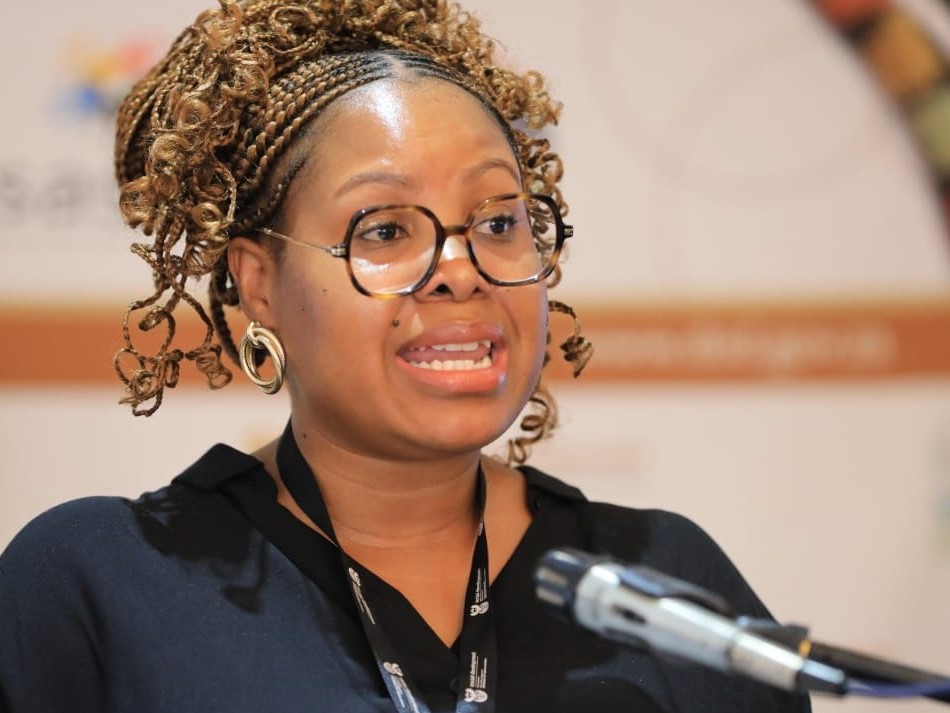
Khensani Motileni, from the Women’s Legal Centre, said many women, especially those living in rural communities were still discriminated against and often did not have equitable access to basic services, such as water, food, and medical treatment.
Motileni made her remarks in her presentation on the topic “Addressing the Legacy of Forced/Coerced Sterilisation of HIV-positive Women in Public Health Care Institutions in South Africa”.
Quoting from an investigation report by the Commission on Gender Equality, Motileni said some women are being sterilised without being given other alternative prevention or birth control measures.
Motileni said the lack of birth control alternatives was equivalent to forced or coerced sterilisation of women in the public health institutions, which has a negative impact on many women living in rural communities, including those living with HIV or chronic diseases.
“The legacy of forced sterilisation is rooted in forms of cultural and institutional power. Government and other role players have failed to provide basic services, there is a lack of accessible and dignified health services,” said Motileni.
“South Africa does not have a women’s health policy and it cannot make informed and adequate provision for women’s health.”
Motileni said there was also a need for policy development and budget allocation targeted towards women’s health.
She said the National Health Act of 2003 does not provide for women’s health, it only provides for maternal health and family planning.
“Presently, interventions targeting HIV related issues are designed to change risk behaviour and reduce HIV transmission rather than address violence against women living with HIV, and therefore, a rights-based approach is necessary,” said Motileni.
Highlighting on intersectional identities of women living with HIV in South Africa, Motileni said that there were various factors that increased the risk of young women contracting the virus.
These factors include women’s traditional subordinate roles in society – caretaking responsibilities and violence.
“Customary practices and habits that entrench women as subordinates in their homes and society, exploit them for the benefit of men, especially, in intimate partner settings, increase women’s vulnerability to contracting HIV,” Motileni said.
Presenting on the same topic, Dr. Sthembiso Mthembu, an activist and a forced sterilisation survivor, from KwaZulu-Natal Province, was at pains to explain that the Commission for Gender Equality has not implemented its findings on the investigation they conducted on forced or coerced sterilisation on women living with HIV.
She said forced sterilisation continued in public health facilities unabated and it was systematic.
“In some instances, a doctor would come to assist a pregnant woman, and once he finds that the patient is HIV positive, they would recommend sterilisation,” said Dr. Mthembu.
She said as people living with HIV, they wanted to have access to health care as human beings first before receiving health care as HIV positive people.
Dr. Mthembu further said that she was convinced that forced sterilisation was not an issue of bad doctors but a systematic issue within the health sector.
Chief Director, Population and Development in the Department of Social Development, Jacques van Zuydam said: “any form of coerced sterilisation and any other invasions of bodily autonomy without expressed permission from the client is illegal in South Africa.”
Van Zuydam also urged victims of such practices and anybody who is aware of such practices and attempts to report it to the appropriate authorities without hesitation.
Amongst its objectives, this three day Sexual and Reproductive Justice conference, seeks to make recommendations on how to facilitate and strengthen SRJ across all spheres of government in collaboration, with Civil Society, Academia, and other relevant stakeholders.
Access to sexual and reproductive rights remains a challenge for many South Africans even though it is a universal right to be equally accessed by all.
The conference continues Thursday, (23 March 2024).
It will focus on, among other issues, children and sexual and reproductive justice, menstrual health rights and economic inequality, sexual and reproductive justice for adolescents with intellectual disabilities and people on the move (migration) and reproductive justice.