African wildlife’s destruction was sealed when British pop stars, comedians, and animal rights groups fundraising industry NGOs recently influenced their parliamentarians to vote for the hunting trophies imports ban bill.
The vote totally ignored the harm such a ban causes to African wildlife and habitat conservation.
A respected Oxford University conservation biologist and British citizen, Dr. Amy Dickman, together with other British scientists and conservationists worldwide have warned against this ill-informed decision.
Sadly, the British parliamentarians didn’t listen to them.
Their decision to vote for the ban on hunting trophies being imported into the United Kingdom is widely viewed as a “moment of madness”.
The parliamentarians rejected a purely scientific wildlife management approach, involving the sustainable harvesting of excessive wildlife populations in specific ecosystems so that large wildlife populations don’t exceed the carrying capacities of their ecosystems.
Hunting helps control wildlife over-population and prevents leaving wildlife with insufficient water and food supply and even space to exist.
Yet, this is the ecological disaster that the British parliamentarians largely influenced by comedians, pop stars, and animal rights groups have just set in motion.
They apparently don’t care about wildlife conservation but to increase their popular ratings, fundraising opportunities, and political votes.
For the animal rights fundraising industry NGOs, the wildlife conservation crisis that conservation scientists have warned would break out is good news.
This is so, particularly in Africa, where the big five – usually labelled as species in peril – are used by wildlife conservationists to solicit donations.
For the record, these donation-seeking “conservationists” have not saved a single elephant in the wilderness.
They selectively focus on elephants in the zoos, to whip up public emotions and then ask for donations. Shame.
International hunting is a purely scientific management measure supported by the UN Convention on International Trade in Endangered Species of Fauna and Flora Species.
It’s also supported by a big international NGO, World Wildlife Fund (WWF).
According to the WWF 1997 Quota Setting Manual, the main purpose of a quota is to identify the number of animals that can be killed without reducing the population.
Science as we know it, is not about the votes of parliamentarians and public referendums.
Neither is it about the support of animal rights groups fundraising industry NGOs, comedians, politicians, and pop stars.
When the Covid-19 pandemic hit the world, resulting in millions of deaths, it didn’t take votes to decide on vaccines and all sorts of scientific measures that needed to be observed to save human lives.
Scientific issues are therefore as factual as they don’t need votes of British parliamentarians.
Why then, in the 21st century do we see the United Kingdom, one of the superpowers that is largely taking the lead towards ensuring poverty alleviation, incredibly violate the means towards poverty alleviation for African hunting communities by banning hunting trophies imports into the UK?
The United Kingdom seemingly can no longer accommodate political and economic refugees.
Ironically the UK is at the same time creating an environmental refugee crisis.
Banning trophy-hunting imports into the UK inadvertently increases poverty and instability in poor countries thus fuelling the exodus of refugees.
These refugees (residents of southern African wildlife producer communities) tend to emigrate to Britain.
They will flee from the human-wildlife conflict that arises when the SADC region becomes overpopulated by harmful wildlife.
Overpopulation will result from reduced wildlife off-take caused by the dwindling of hunting markets largely owing to the hunting trophies imports ban imposed by the UK.
In an intense human-wildlife-conflict scenario, people from SADC wildlife producer communities wouldn’t profitably grow crops.
Neither would they be able to safely store their agricultural produce as wildlife would destroy them.
They wouldn’t be able to move freely or feel safe to move at night, even to relieve themselves in the wee hours.
The conflict over living space could see locals retaliating by killing more wildlife in the quest to be safe and to protect their crops and domesticated animals.
Where in your country, British parliamentarians, will you accommodate the southern African wildlife?
?You neither have the scientific wildlife management know-how, space, appropriate vegetation, nor love for African people and wildlife.
Nevertheless, be ready to welcome southern African wildlife producer communities fleeing from human-wildlife conflict caused by your ill-informed vote for the trophy hunting import ban bill.
An Acting Director of Zambia’s Department of National Parks and Wildlife Management, Andrew Eldred Chomba recently said: “One of the disadvantages of conservation success is that it results in elephant overpopulation that leads to human-wildlife conflict and our people continue to be killed by elephants.”
It’s against such a challenging scenario as is the case in most hunting communities of southern Africa, that international hunting is used as a wildlife management tool to control the wildlife population.
No wonder why before the 17 March 2023 British parliamentarians’ vote for the hunting trophy imports ban; elephant over-populated Botswana warned the British Government that the ban would harm its wildlife and negatively impact human livelihoods.
“If the Bill is passed by Parliament, it will affect Botswana’s wildlife management,” said a press release from Botswana’s Ministry of Environment and Tourism.
“lt will also Increase the risk of poaching and human-wildlife conflict, negatively impacting, for example, the largest herd of elephants that Botswana supports.”
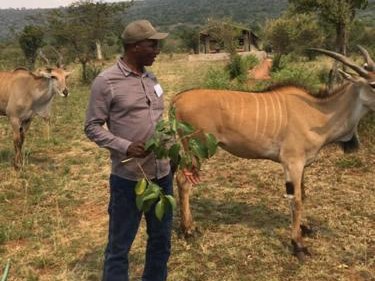
Elsewhere, Ishmael Chaukura of Zimbabwe’s wildlife-rich Masoka wildlife producer community boasts of a wildlife hunting revenue-built school that has produced medical doctors, nurses, accountants, and other professionals.
Chaukura says: “The hunting trophies imports ban bill shows that the British aren’t genuine conservationists, but pretenders and they don’t respect African wildlife producer communities and their leaders.
“They can ban hunting trophies imports into the United Kingdom but can never stop hunting in Africa.”
The British parliamentarians have already approved the hunting trophies import ban into the UK.
However, the bill will be discussed and approved in the House of Lords in May or June 2023.
While it is unable to prevent bills from passing into law, except in certain limited circumstances, the House of Lords can delay bills and force the House of Commons [parliamentarians] to reconsider their decisions.
Therefore, it remains to be seen if the House of Lords can persuade parliamentarians to reconsider their decisions.
*About the Writer: Emmanuel Koro is a Johannesburg-based independent international award-winning environmental journalist who writes extensively on environmental and developmental issues in Africa.
*The views expressed by the author of this article, Emmanuel Koro, are not necessarily those of The Bulrushes