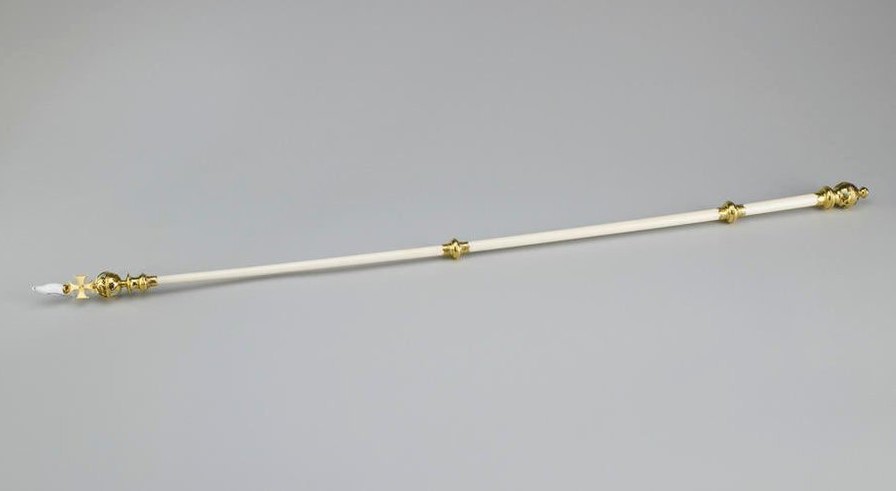
Johannesburg – African conservationists and a U.S.A ivory education specialist have condemned anti-ivory use groups for protesting British Queen Consort Camillas determination to carry a rod made of ivory at the coronation of her husband, King Charles III, on 6 May 2023, reports Johannesburg-based environment writer Emmanuel Koro.
There had been speculation the symbolic object could be dropped from the ceremony due to the Kings environmental advocacy and Prince Williams campaign against the ivory trade.
The ivory sceptre is part of the crown jewels and regalia held in trust by the monarch for the nation.
In a recent interview, Botswana Chieftainess Rebecca Banika said: Its indeed a good move for the Queen of England to show support for the need to use wildlife products such as ivory.
We see this as support for communities co-existing with wildlife such as those in elephant-over-populated Botswana.
We need trade in surplus ivory to help us survive. The anti-ivory groups in Western nations continually turn a blind eye to our cries for help.
They are more interested in soliciting donations so they can enrich themselves and bribe others.
Chieftainess Banika noted the significance of Queen Consort Camilla’s intention to hold an ivory sceptre, saying it gives us hope that ivory is still valued and can be soon acquired by those who can make the best use of it.
Speaking from Los Angeles, U.S.A., the managing director of the Ivory Education Institute, Godfrey Harris, condemned the anti-ivory groups protest, calling it contrived, a clumsy way to try to take advantage of a major world event, and a shameful act by groups that claim to be conservationists.
Harris said that the animal rights groups purport to support elephant conservation but dont exhibit any knowledge of the unique cultures of wildlife-rich and elephant over-populated southern Africa.
I support the British royal households decision to honour history in the use of one of the worlds most precious and most useful materials, said Harris.
Where is there any evidence of what these publicity-seeking groups have done for wild animals?
How much have they spent each year on travel and meetings and their own salaries and how much on the animals?
“Where is the proof that the historic use of ivory ‘stimulates’ the current marketplace?
The queen consort’s planned ivory showcase has inadvertently sparked the debate about the sale of ivory.
Zimbabwes fiercest lobbyist supporting the ivory trade and Chairman of the Hwange Painted Dog Conservation Project, Jerry Gotora, blasted the anti-ivory groups.
He said these groups came up with a “protest that in reality has nothing to do with elephant conservation, but everything to do with trying to hijack the coronation of King Charles III for fundraising purposes”.
Gotora added: Western hunter-pioneers and miners looted tonnes and tonnes of ivory and gold for European markets just a few years ago – when they had colonial control of Africas wildlife.”
The truth is that they wanted ivory and gold from this part of the world for their own benefit and today maintain a straight face when they continue to sponsor policies to maintain that control while selfishly denying us the right to trade in some of these same products for ourbenefit.
Over the years, Westerners have killed more wild animals – such as elephants – than modern-day poachers and true to the hypocrisy of the anti-ivory crowd they pretend to be true conservationists.
Asked if he considers Queen Consort Camillas decision to hold an ivory rod as support for use of ivory by elephant over-populated SADC countries, Gotora responded no.
He said that historically the use of ivory was generally not for everyone but for the aristocracy only – an open display of a level of greediness and selfishness only they could afford.
Gotora added: Remember before independence in Africa, only whites – mostly connected to the royal families in Europe – were allowed to hunt.
Wildlife was considered royal game.
Harris summed up the situation, saying: Deriving value from Africas wildlife products and applying that value to long-lasting conservation projects will only occur when someone of authority, somewhere in southern Africa, shows the selfless courage to stand up to the anti-ivory use groups and animal welfare organisations that are today misguiding CITES, the UNs wildlife trade regulating agency, and select SADC environmental agencies.
That individual is urged to approve pro-sustainable use policies that help elephant-over-populated SADC countries reclaim control of their wildlife from the neo-colonial anti-ivory trade paralysis that they are stuck in now.
However, some reports suggest the queen consort was now leaning towards not using the controversial sceptre that is made of ivory.
A few days ago it was revealed via Express and Private Eye that: The ivory sceptre, which has been used by every Queen Consort since 1685, will be conspicuous in its absence.
“The publication also claims that the veto on the sceptre came from the ‘elephant-loving’ William, a fierce critic of the ivory trade.