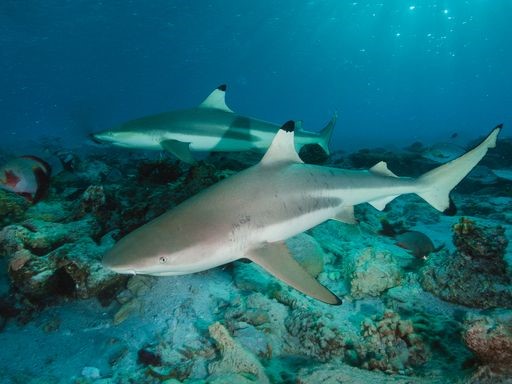
Johannesburg – WILDTRUST, a leading conservation organisation in South Africa, together with multiple collaborators, has undertaken a ground-breaking study to address the pressing need for enhanced protection of sharks and rays in South Africa.
The study, titled “A Systematic Conservation Plan Identifying Critical Areas for Improved Chondrichthyan Protection in South Africa,” aimed to identify key areas within South Africa’s continental waters that are vital for the conservation of these imperilled species.
The study found that if 10% of South Africa’s mainland Ocean area, known as the Exclusive Economic Zone (EEZ), were to be designated as Marine Protected Areas (MPAs), it would meet the 30% range protection conservation target for the species included in the study.
Some species would even have up to 60% of their habitats covered (and protected) and would only require South Africa to increase the current 5.4% MPA network coverage by a further 5%.
Key outcomes from the study:
- 87 shark and ray distribution maps were produced (showing the range of sharks and rays in South Africa’s Ocean – i.e. where they live and habitats they are associated with in our ocean space), which were also provided as input into South Africa’s National Critical Biodiversity Area (CBA) map.
- Findings indicate that a 10% Marine Protected Area target of the South African mainland EEZ is sufficient to meet a 30 % range protection target across all modelled species and range protection targets up to 60 % for other species. This represents a 5% expansion of the current network.
- Important areas for sharks and rays were identified in the context of existing MPAs and fisheries pressure in South Africa. These areas should be targeted for increased protection through either spatial management measures or fisheries measures.
- A starting point to create a shark and ray species list per Marine Protected Area (x41 in total currently) in South Africa.
Sharks and rays are among the most endangered species on the planet, primarily due to overfishing.
Their slow growth, late maturity, and low reproductive rates make them particularly susceptible to threats that result in population declines.
Recognising this, as well as the significance of South Africa as a global hotspot for shark and ray diversity, WILDTRUST (with funding from the Shark Conservation Fund) initiated the South African “Shark and Ray Protection Project” in 2019.
One of the primary objectives of the project was to identify areas in South Africa’s waters crucial for the conservation of threatened and endemic species, as defined by the IUCN Red List.
As part of the study, a total of 87 distribution maps were produced, providing essential information for the conservation of sharks and rays.
These distribution maps were also incorporated into South Africa’s Critical Biodiversity Area map, ensuring the representation of sharks and rays in the identification of important biodiversity habitats.
To achieve this, a comprehensive four-step approach was employed, which involved collaborating with experts and researchers from across the country to facilitate the collection of data from various sources, including fisheries catches, boat sightings, baited remote underwater video (BRUV) sightings, and acoustic telemetry sightings.
This collaborative endeavour showcased the breadth of shark and ray research conducted in South Africa.
“To ensure the accuracy of the collected occurrence data, ongoing expert consultations were conducted,” said Nina Faure-Beaulieu, lead author on the paper and Research Assistant at WILDTRUST.
“Since distinguishing between certain species can be challenging, discussions with experts in the field were crucial to validate the data.
“Factors such as anomalous events and species with migratory patterns were carefully considered to ensure the reliability of the distribution maps.
“Sometimes a warm current can result in species going far out of their usual distribution and such events need to be considered an anomaly so as not to skew their distribution map too much.
“We also focused our efforts on species that do not migrate long distances or that are not mostly offshore pelagic species.
“Those species are not as suited to spatial protection since they will not stay in any one area for a prolonged period of time.”
Once the data was validated, it was used to create distribution maps that predict the areas where a species is likely to be found, as well as carefully identifying key areas for conservation whilst limiting as much as possible the impact on conflicting uses.
In the context of sharks and rays, this would mean identifying where increased protection from fisheries could occur, especially for critically endangered and vulnerable species, while also not overlapping too much with major fishing grounds.
Looking ahead, the study provides a significant milestone in the conservation of sharks and rays in South Africa as well as a solid foundation for further improvement and action for shark and ray conservation in South Africa’s waters.
It demonstrates the power of collaboration, data-driven approaches, and innovative conservation planning to address the critical threats facing these iconic marine species.
“A special thank you to all the co-authors and collaborators on this study, as well as all the organisations, individuals and institutions that contributed data – we certainly couldn’t have done this without you,” concluded Faure-Beaulieu.