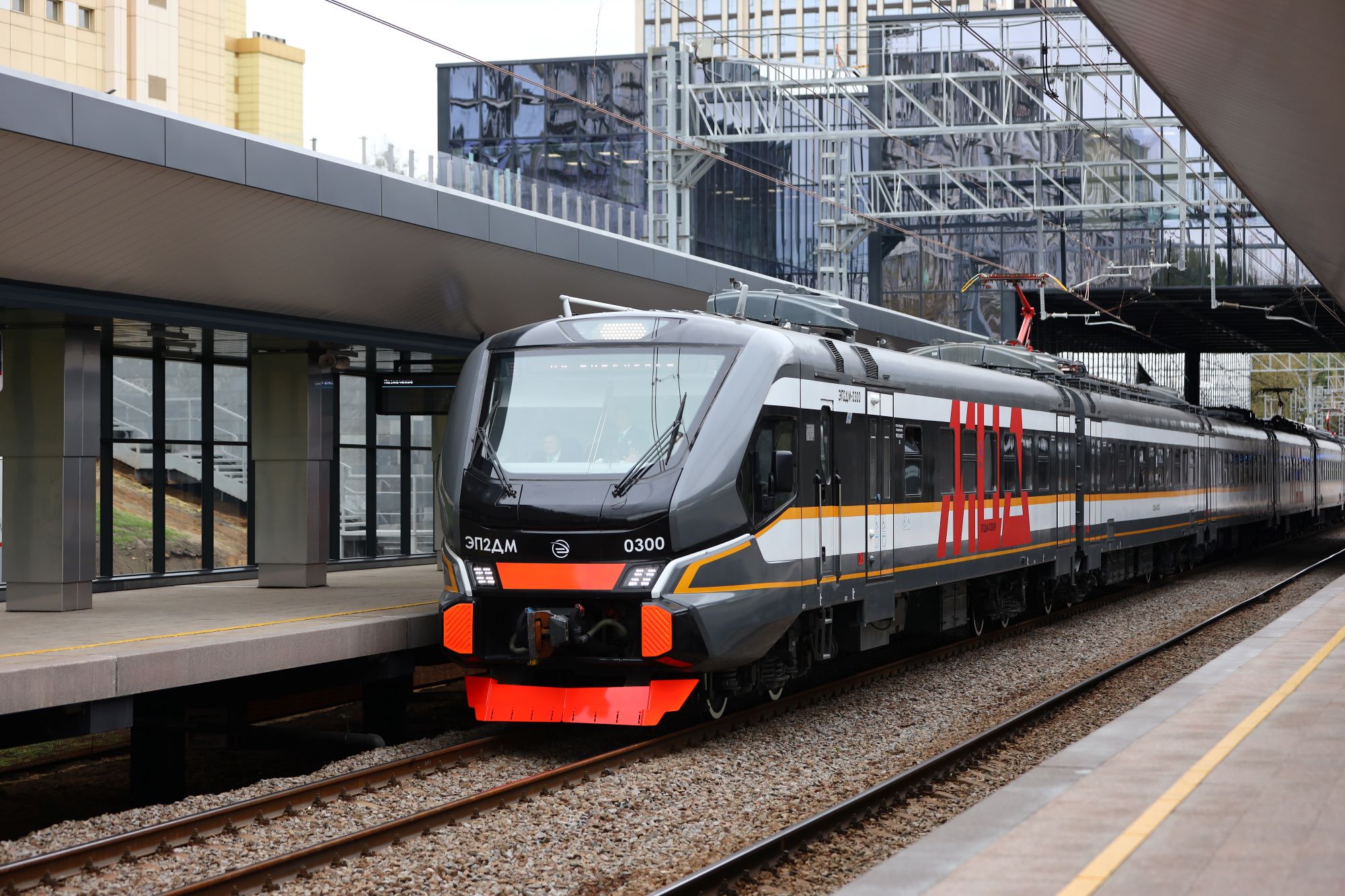
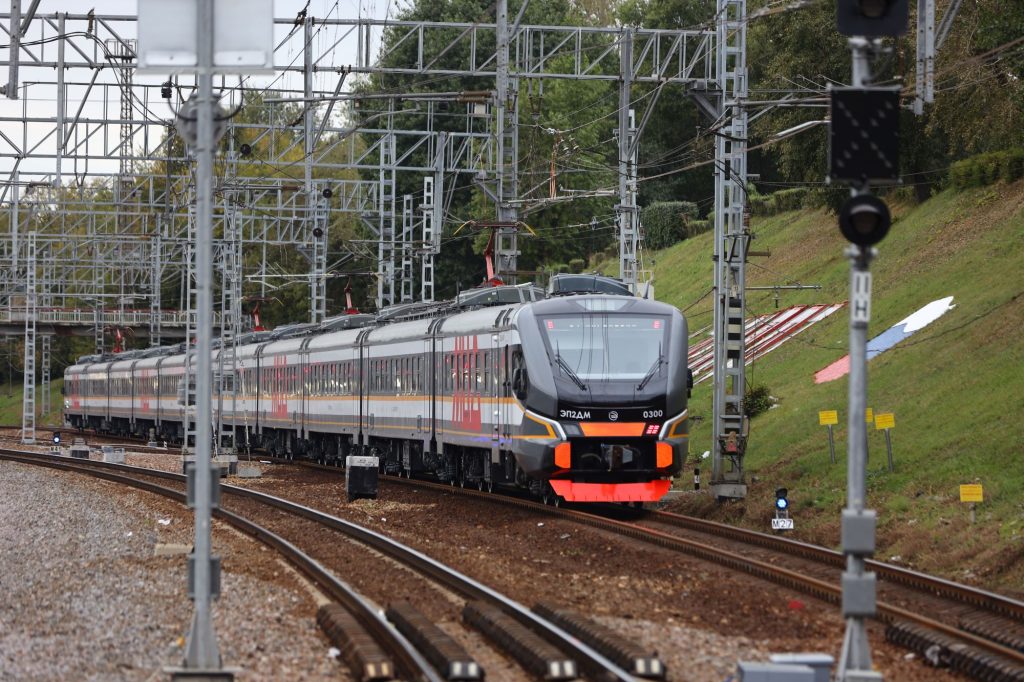
The fourth Moscow Central Diameter (MCD-4) has been launched in the capital city of Russia.
The new commuter line intersects Moscow from west to east and connects seven central railroad stations of the metropolis.
MCD-4, which now extends up to 86 km, is the longest diameter among all Moscow Central Diameters.
Dozens of new services are now available for commuters with faster travel times, better comfort, and cheaper tariffs.
The new diameter opened less than a month after MCD-3 and became the longest line of rapid transit system yet, stretching for 86 km.
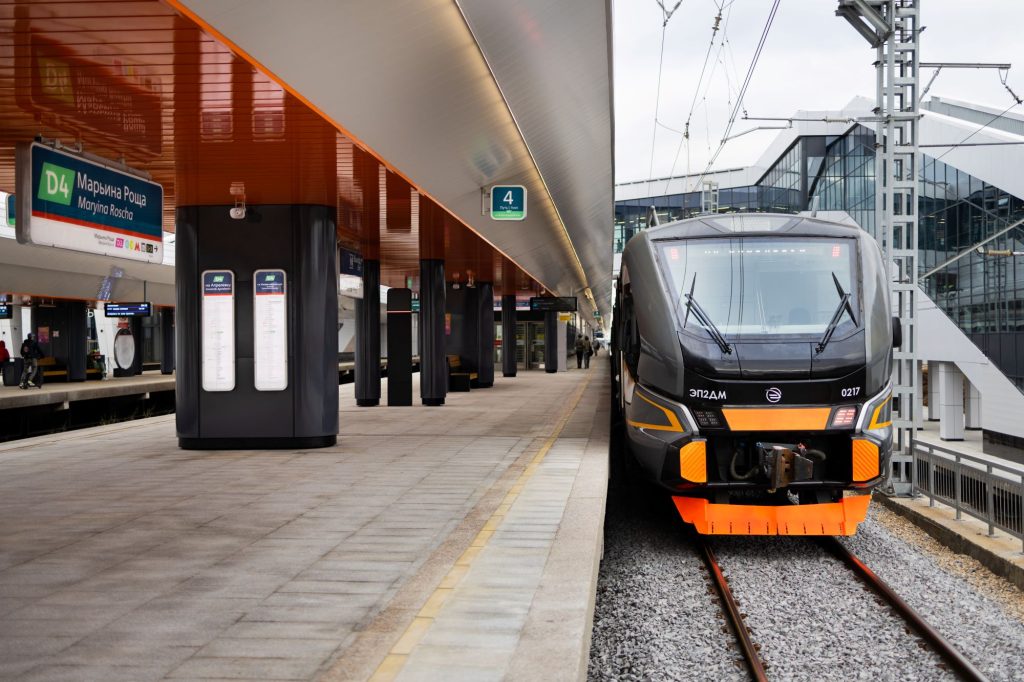
It has 36 stations with 38 connection options to the subway, MCC, and other MCDs.
Having the most up-to-date infrastructure among all four lines, MCD-4 will soon have two more stations.
About 67% of all stations (24) have become Moscow transportation hubs and meet the high standards of urban mobility systems.
Convenient travel for passengers
The traffic interval on MCD-4 will only be 5.5 minutes during peak hours, and the new fare has been reduced from 200 to 65 rubles.
Passengers can make free connections to the subway, MCC and other MCD lines in 90 and 120 minutes on some routes.
Moscow’s advanced ticketing system won Transport Ticketing Awards in 2020 and 2021.
The launch of the fourth diameter will have a significant effect on the entire mobility system of Moscow.
Transport authorities said the neighbouring subway lines will see a decrease in traffic by 9%, and the number of cars on some of the highways will be reduced.
“Russian President Vladimir Putin and Moscow Mayor Sergey Sobyanin launched another diameter,” said Maksim Liksutov, the Head of the Department of Transport and Development of Road Transport Infrastructure of the City of Moscow.
“MCD-4 connected more than 20 districts of Moscow and 4 cities within the Moscow suburbs.
“We forecast that by the end of 2023, it will be used by 260-270 thousand people per day with extra capacity for many years to come.”
The commuter rail development comes as Russia is engaged in a military conflict with Ukraine.