
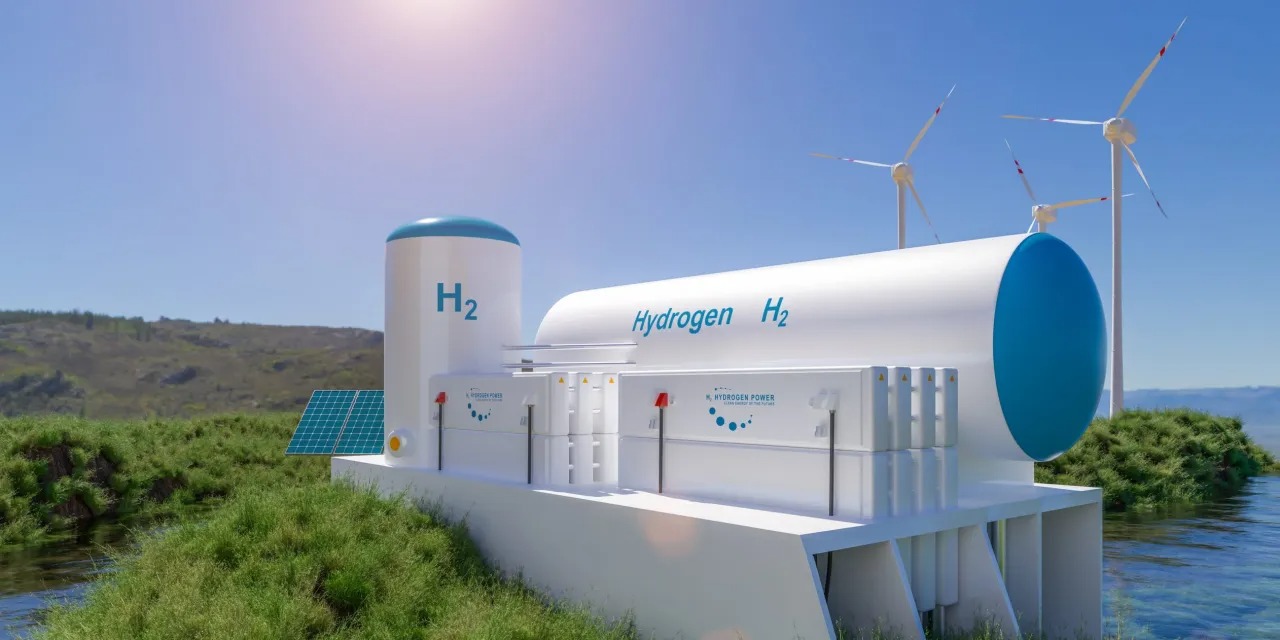
Theres a new powerhouse in African renewables. And it has plenty of experts talking about it, writes NJ Ayuk, Executive Chairman, African Energy Chamber (www.EnergyChamber.org)
The report “The State of African Energy 2Q 2023 Outlook,” recently released by The African Energy Chamber (AEC), discusses the current and future projections for renewables on the continent.
The most exciting finding is the competitive growth within the hydrogen electrolyzer space.
Africas current announced capacity of hydrogen, of about 125 gigawatts (GW), has overtaken solar capacity on the continent and is now second only to wind when it comes to renewables.
Contributing almost all the capacity are Egypt, Mauritania, South Africa, Morocco, Namibia, and Djibouti – the same group of nations that recently formed the Africa Green Hydrogen Alliance (AGHA).
AGHA is an ambitious group, aiming to produce 30 to 60 million tons of clean hydrogen a year to add up to USD126 billion to the gross domestic product (GDP) of its members by 2050 and create up to 4 million new jobs.
If AGHA can hit these goals or even come close to their projections these prospects will go a long way in securing reliable access to power for millions of Africans currently suffering from energy poverty.
Plus, the group will likely pave the way for hydrogens foray into other regions of the continent. We at the chamber are watching this development closely.
Why Hydrogen?
Hydrogen can be used as a feedstock for everything from steel and ammonia production to energy generation and storage to some types of fuel.
Traditional hydrogen production processes generate high volumes of carbon emissions.
But when produced with electrolysis powered by renewable energy – as AGHA is undertaking – hydrogen is an environmentally positive fuel with very low emissions across its life cycle.
Fortunately, Africa boasts a bounty of renewable energy inputs, like solar and wind, that can be harnessed to turn hydrogen into a viable sustainable power supply – as well as a powerful decarbonization tool.
According to a Deloitte analysis, hydrogen producers in Africa are well-situated to be able to produce clean hydrogen far more affordably than their European counterparts by as much as three-fourths thanks to the wide availability of renewable energy and lower production costs.
And our report indicates that, as hydrogen capacity picks up over the 2030s, our continents average cumulative solar and wind capacity will reach 75% of their total capacity.
This means that African solar, wind, and hydrogen efforts will all help each other and grow in tandem into important energy sources.
Its true that African economies are less developed than Western nations.
In some ways, it seems that in this case, Africa may benefit from its comparative lack of industrialization by learning from others mistakes and circumventing some ineffective or short-lasting technologies.
Projects Already Underway
Industry experts are noticing a rapid uptick in green hydrogen development on the continent.
The vast labor pool required on the front end during the construction phase is creating jobs along the value chain and offering specialized training opportunities for continued benefit to local communities.
Already in 2023, weve seen several important hydrogen projects really take off in Africa.
Mauritanias AMAN project is the continents biggest green hydrogen development to date, with an expected output of 1.7 million tons per annum (tpa).
Namibia also boasts major developments in its green hydrogen economy, including the 3 GW Tsau Khaeb project with a production capacity of 300,000 tpa and the development of three hydrogen valleys in Kharas, Kunene, and Walvis Bay.
South Africa has initiated several key green hydrogen projects, like its 780,000 tpa green ammonia plant and the HySHiFT renewable hydrogen project, partially funded by a 15 million subsidy from Germany.
Egypt, meanwhile, has plans for a 4 GW electrolyzer plant at the Suez Canal Economic Zone (SCZONE), among others.
Morocco has been collaborating with international companies to launch its own green hydrogen initiatives, including the 900,000-tpa AMUN project.
And Djibouti has announced plans for the construction of a 10 GW green hydrogen hub, as well as a partnership with IPP Fortescue Future to study the feasibility of green hydrogen at two sites in the country.
An Exciting and Profitable Investment
All of this construction requires serious capital. And equally exciting is that the potential for investment in green hydrogen is creating a buzz.
Consider this statement from a joint study by the European Investment Bank (EIB), African Union, and the International Solar Alliance: The exciting thing with green hydrogen is as you scale up the investment it remains commercially attractive and, in the end, profitable.
In fact, Deloitte anticipates that export revenues from African hydrogen will reach USD110 billion by 2050. By that year, the consulting firm predicts that North Africa – with an export potential of some 44 million tons – will be one of four regions worldwide that will account for almost half of global hydrogen production and 90% of trade.
Which makes this the ideal time for interested investors to get in on the ground floor.
United Nations Office of the Special Adviser on Africa (OSAA) cluster lead for Energy and Climate Bitsat Yohannes really hit the nail on the head in a recent article: For many African countries, the question is not how to reduce their carbon footprint, because the continents overall contribution to global GHG (greenhouse gas) emissions is already low at less than 4%…
“Instead, we must examine how the continent can sustainably harness its existing resources to meet the growing demand for energy needed for economic development and to lift citizens out of poverty, while following a sustainable path to a net-zero future.
We at the AEC couldnt agree more.
To download a copy of “The State of African Energy 2Q 2023,” visit https://apo-opa.info/3LyHvjE.
*The writer of this article is By NJ Ayuk, is Executive Chairman, African Energy Chamber. The views expressed by NJ Ayuk are not necessarty thse of The Bulrushes