South Africa has begun 2024 on an interesting note.
It has stood on the world stage and made declarations against the Israeli military campaign in Gaza.
These acts of genocide began following the bombing of Israeli citizens by the Palestinian radical group, Hamas, on 7 October 2023.
Due to significant advancements in technology, the world is able to experience everything in real-time.
Previously, acts of genocide were post-factoral exercises such as in Beirut, Darfur, and Rwanda.
The response to the atrocities that are being witnessed daily compelled South Africa to act swiftly.
South Africa has always supported the Palestinian’s right to self-determination and the two-state solution.
On 11 and 12 January 2024, the International Court of Justice (ICJ) held at the Hague in the Netherlands, public hearings in the case brought by South Africa against Israel for alleged violations of the Genocide Convention.
The South African delegation comprised internationally renowned legal experts and its case presented findings of Israel’s destructive behaviour since it launched its offensive.
It requested that Israel adhere to an immediate ceasefire.
This has been seen as a bold step in South Africa’s diplomatic efforts to assist a people who have for decades fought against the illegal occupation of their land.
The fraternal bond between South Africa and Palestine is stronger than ever.
Due to my interest in matters relating to Africa’s International Relations (IR), my attention turned to the Democratic Republic of Congo (DRC).
South Africa brought the application to the ICJ and at around the same time, DRC held national elections on 20 December 2023.
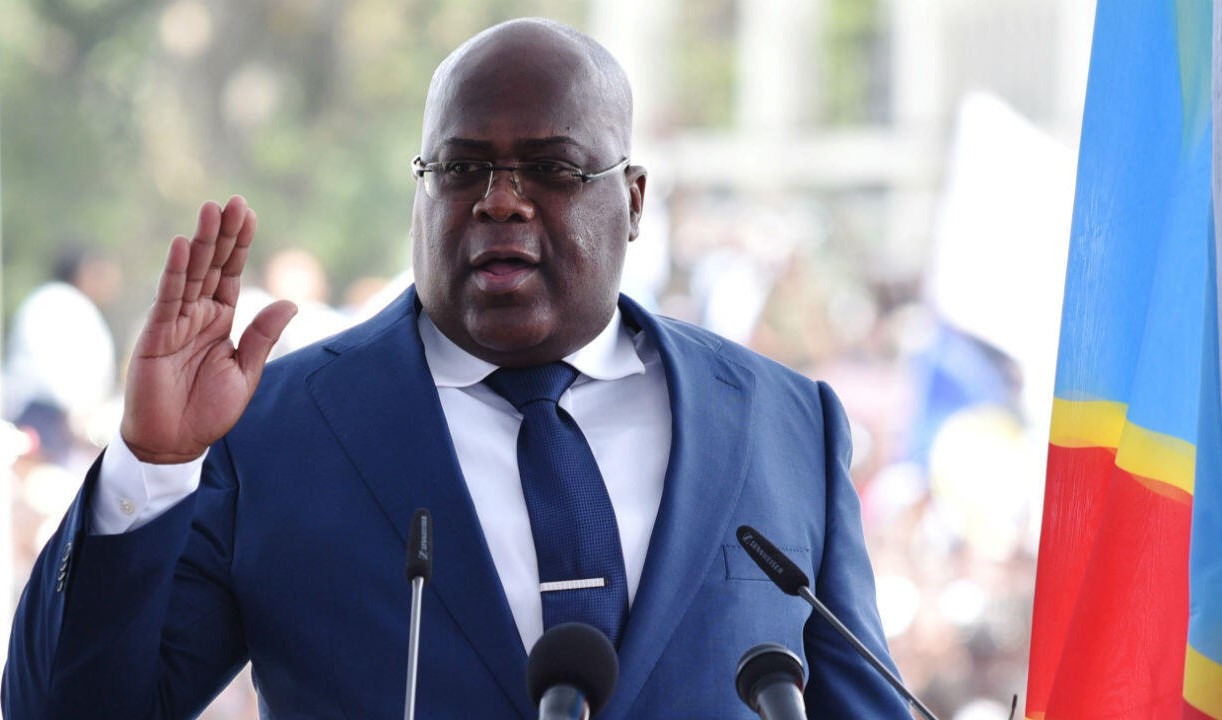
The incumbent, Felix Tshisekedi has been re-elected, winning by a majority vote of 72%– the largest ever majority gained by any Congolese President.
Voting day was further extended to 27 December 2023, which remains a surprising development.
An independent audit conducted by the respected National Episcopal (Catholic) Conference of the Congo (CENCO) showed that there has been no breakdown of the results by polling station and irregularities made it difficult to validate the Independent National Elections Commission’s (CENI) results.
CENCO also stated that there was clear electoral manipulation as over 27% of polling stations did not open and 45% of voting machines malfunctioned.
There are continuous allegations of vote-buying, torn election lists, ballot stuffing and the denial of access to local observers.
In essence, questions have arisen about the legitimacy of the elections as these were chaotic.
Prior to these elections, various stakeholders raised concerns about the possible outcomes, particularly the DRC Catholic Bishops.
Electoral fraud seems to have become common practice and systemic in the DRC and other Southern African Development Community (SADC) countries.
In June 2023, in an effort to avoid another manipulated election, Congolese stakeholders met in Kinshasa and appealed to the international community not to settle for a process that is likely to fail.
These pleas seemingly fell on deaf ears – South Africa being one of them. President Tshisekedi has even issued warnings to the Catholic Bishops that he would attack without hesitation or remorse, anything that would jeopardise the stability of the country.
Moreso, he has shown to be mimicking the leadership styles of the Kabilas by taking control of the judiciary – hence many see no point in opposing this election to a judiciary that is not independent.
Nantulya, P ends his 2 January 2024 article for the Africa Center for Strategic Studies by stating “Free and fair elections have largely been absent”.
Another country, closer to home, Zimbabwe has failed to have democratic elections since 1980 and literally has no real opposition party.
The most recent general elections in August 2023 were in shambles and post-election political violence continues.
Yet, President Cyril Ramaphosa has openly endorsed the elections and it is chaotic business as usual in Zimbabwe.
Our immediate neighbours find themselves in desperate and vulnerable situations where the rule of law is ignored and leaders continue to fail their citizens.
How do these issues not warrant a response so swift and immediate from South Africa, such as what we are currently seeing in the Hague?
What does South Africa as a hegemonic state in SADC stand to benefit from a region that continues to be destabilised?
At the African National Congress (ANC) January 8 celebrations, President Ramaphosa continued to reiterate the need to support the Palestinian cause for the right to self-determination.
He made similar remarks in his country statement at the Non-Aligned Movement Summit held in Uganda earlier this month.
South Africa has clearly shown its intensified solidarity with Palestine.
Where is this same stance and support towards its own continent, to fellow African people?
There is a credibility gap between theory and praxis and South Africa needs to continue to interrogate its contradictory foreign policy.
* The writer of this article is Botshelo Motuba, an Independent Scholar. The views expressed by Botshelo Motuba, are not necessarily those of The Bulrushes