Durban – This week President Cyril Ramaphosa launched the Welisizwe Rural Bridges initiative in Umgungundlovu District, KwaZulu-Natal Province.
Speaking at the launch on Wednesday President Ramaphosa said: “Today is a great day for the people of KwaZulu-Natal and for many rural communities across the country”.
The President added: “It is a mark of the progress we have made in building bridges in areas of the country where such basic infrastructure is vital for their development.
“The Welisizwe Rural Bridges Programme is one of government’s most important initiatives to improve safety, wellbeing, and access for rural communities.
“This programme has been undertaken with greater urgency in the wake of the catastrophic floods that struck KwaZulu-Natal and parts of the Eastern Cape and North West in April 2022.”
The flooding washed away homes, roads, shops, schools, clinics, and many other critical infrastructure that people need for their daily lives.
“Many of the rivers here in KwaZulu-Natal and in other provinces are difficult – and often dangerous – to cross, especially after heavy rains,” said President Ramaphosa.
“This makes it difficult for learners to get to school and for community members to get to work.”
This collaborative effort between the Department of Public Works and Infrastructure and the South African National Defence Force aims to construct 96 bridges during the 2023/2024 financial year, as outlined in the 2023 State of the Nation Address.
Highlighting the pivotal role of infrastructure in rural development, the President emphasised in the State of the Nation Address the importance of roads and bridges in providing access to markets, employment opportunities, and essential social services for South Africans in remote areas.

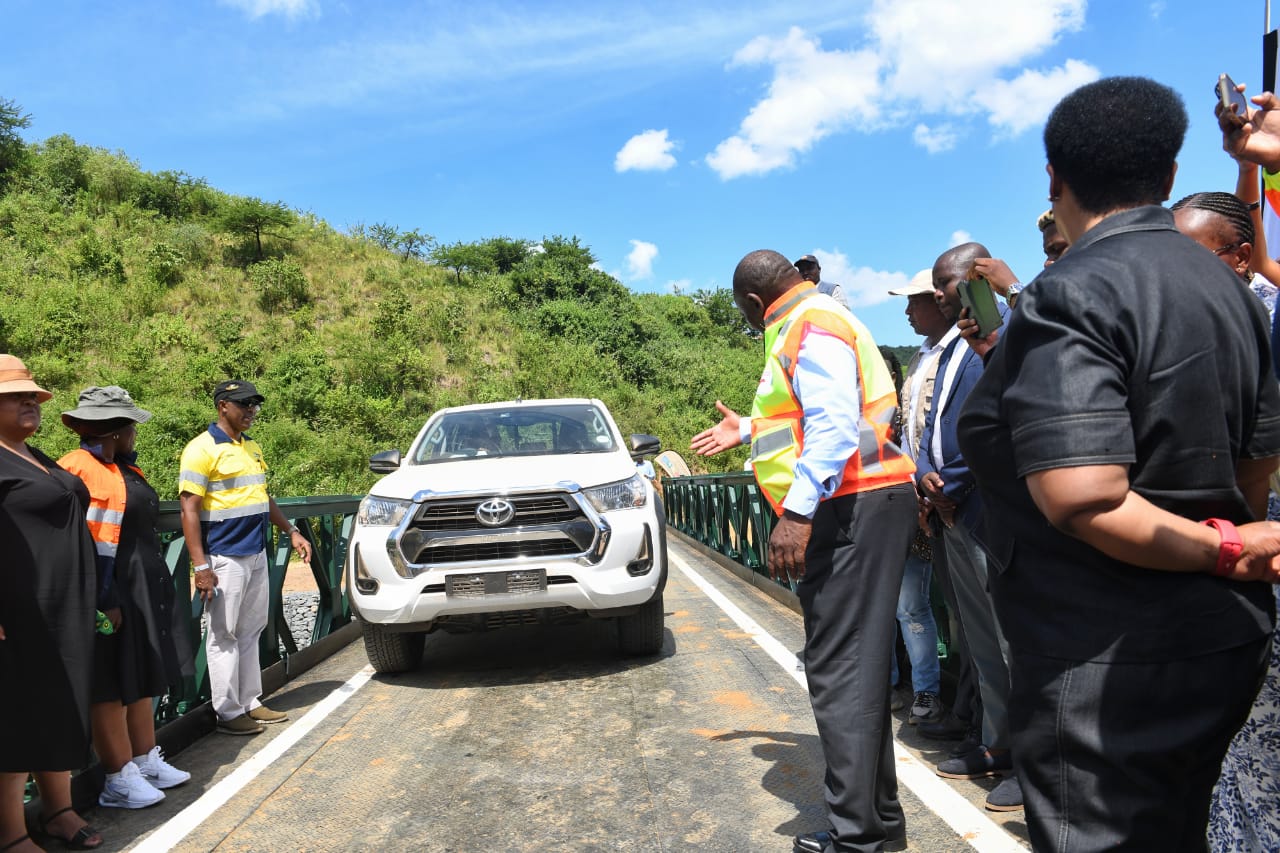
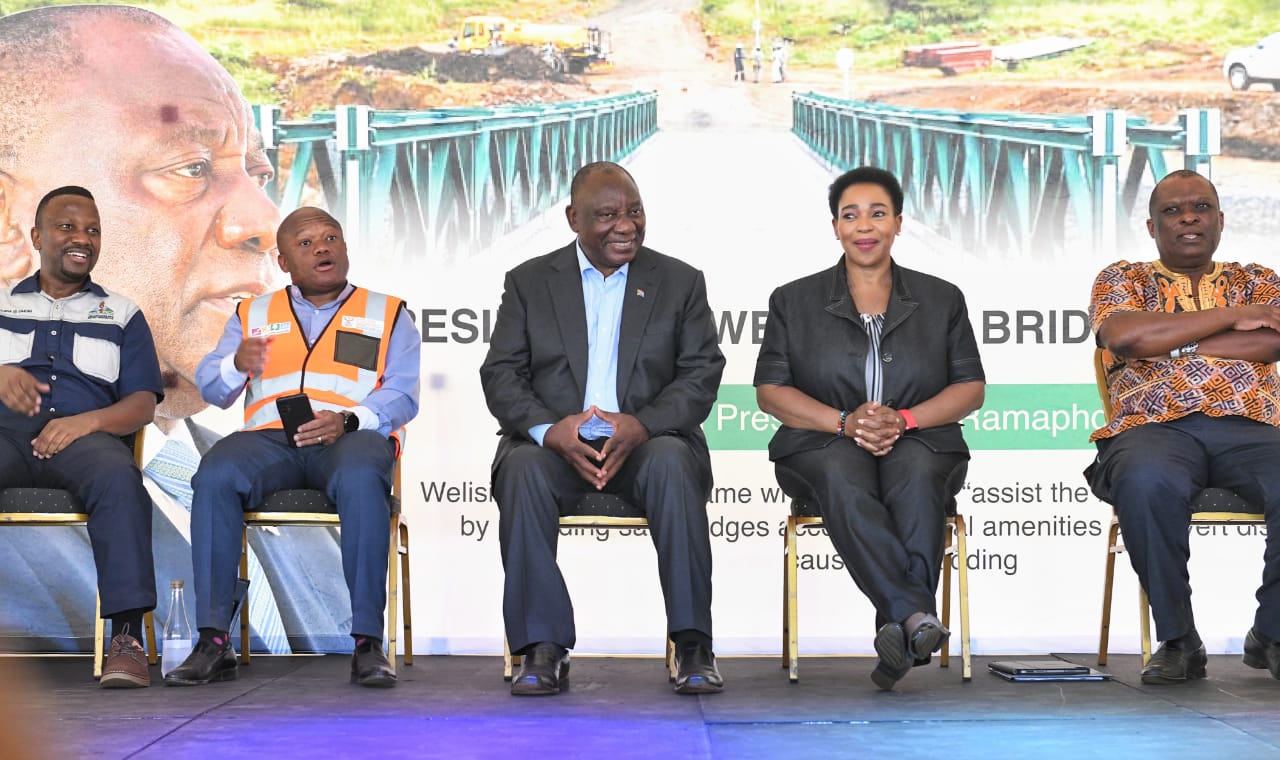
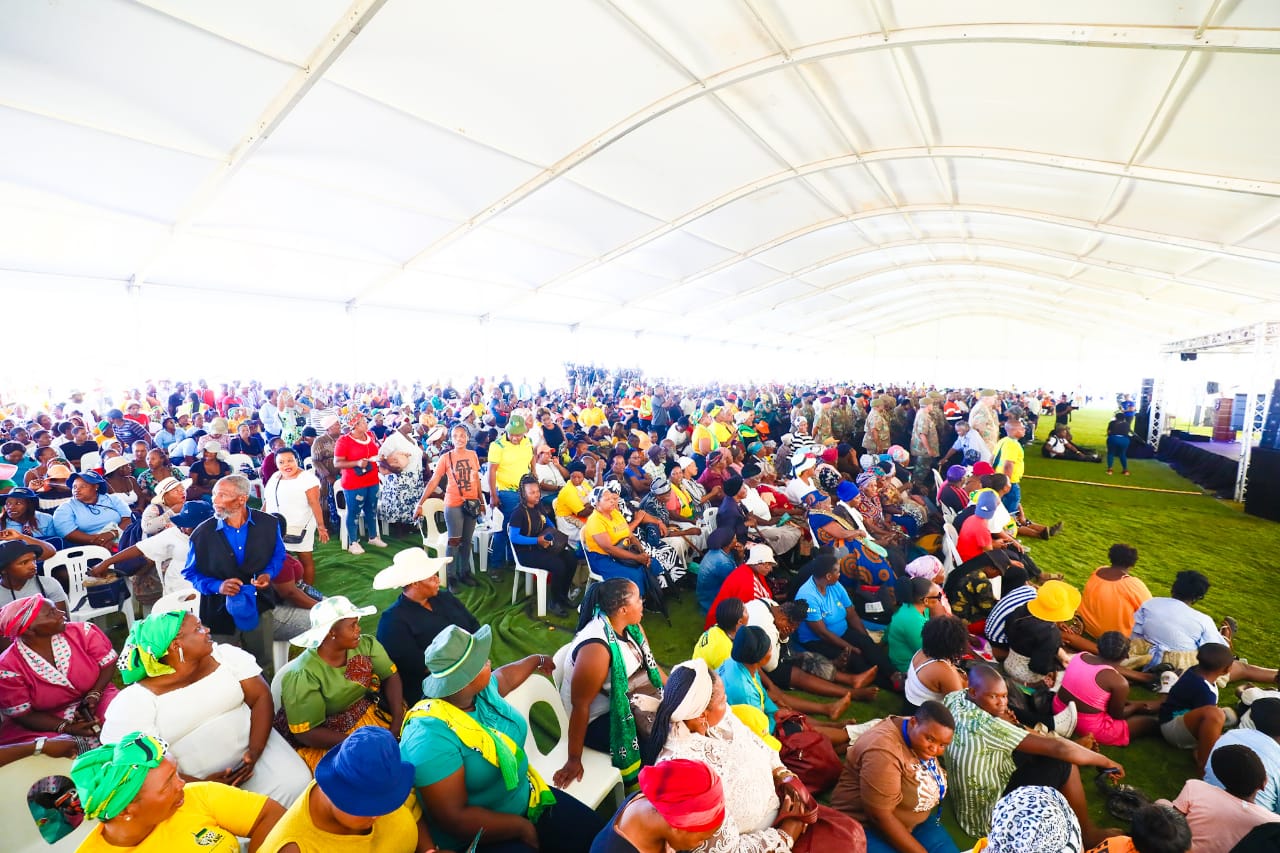
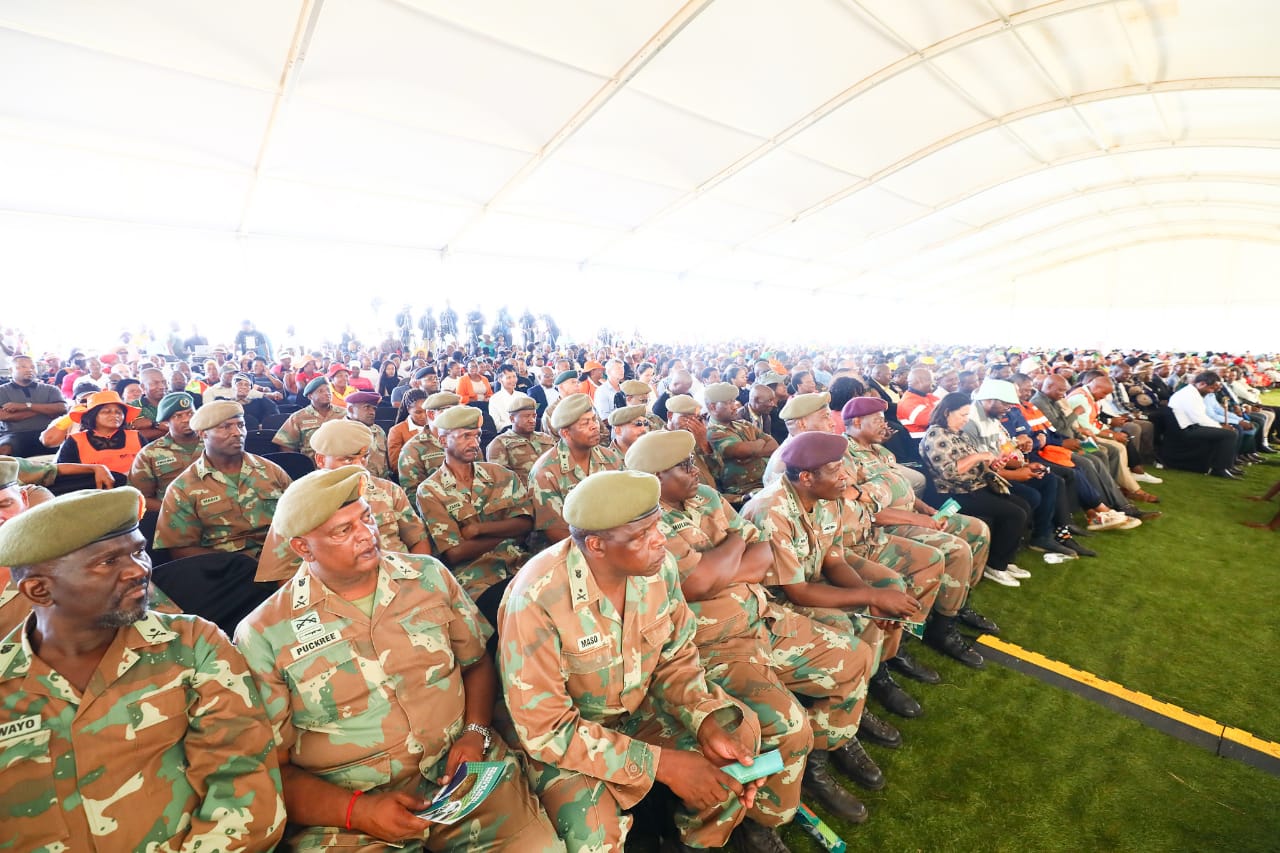

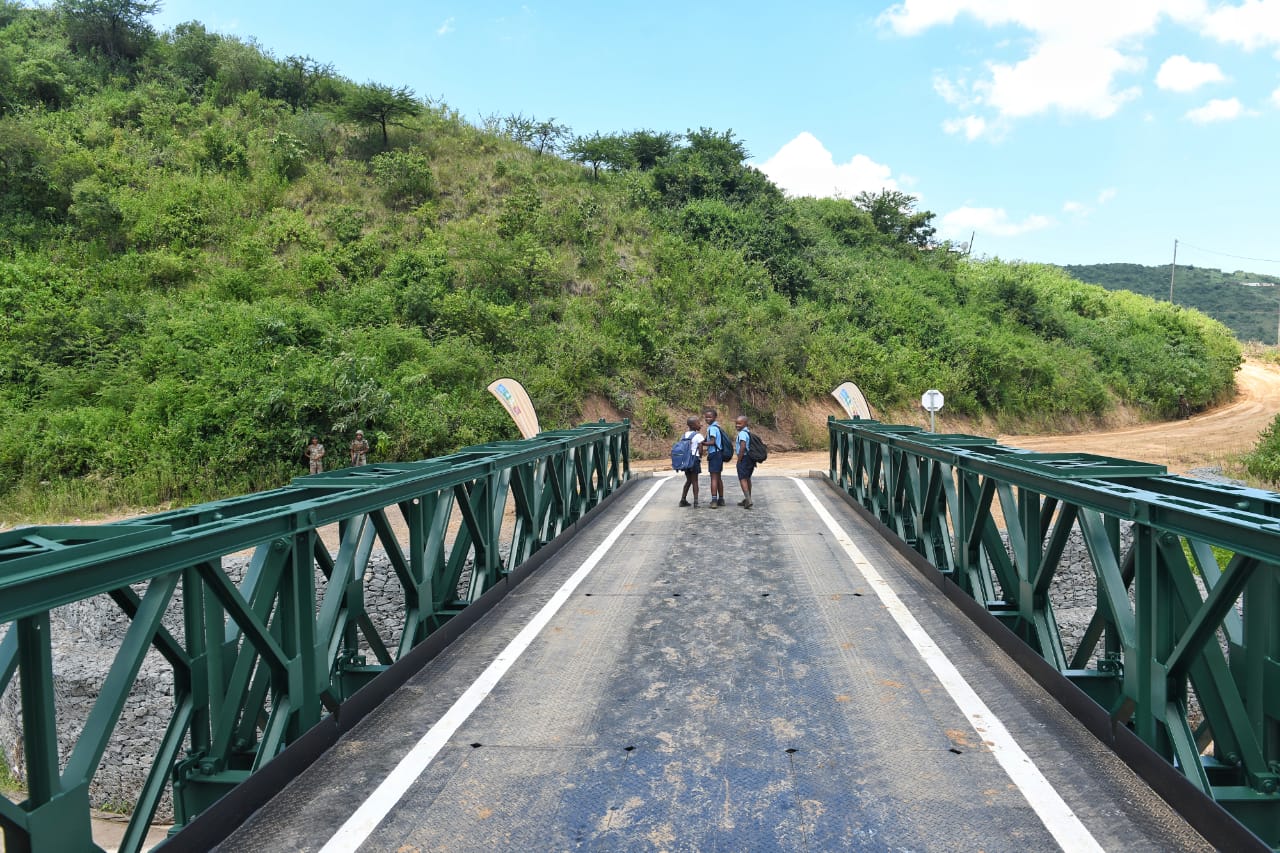


The Welisizwe Rural Bridges Programme is poised for expansion, targeting the delivery of 96 bridges annually over three years, with the South African National Defence Force showcasing its engineering expertise in bridge construction.
Derived from the Nguni word meaning “to assist the nation in crossing over,” Welisizwe represents a strategic Integrated Project (SIP) under the sixth administration.
The Welisizwe Rural Bridges initiative is a collaborative effort between the Department of Public Works and Infrastructure and the Department of Defence.
The initiative has already commenced implementation in provinces such as KwaZulu-Natal, Eastern Cape, Limpopo, Mpumalanga, Free State, and North West.
These bridges are essential in addressing the challenges faced by citizens and children who previously navigated perilous rivers to access schools and essential social services.
“Across the country, 58 rural bridges are currently under construction, with 11 bridges completed in KwaZulu-Natal,” said President Ramaphosa.
“The bridges that have been handed over today will make it easier for communities to get to the clinic and hospital, to school, to town and places of work.
“It will make it easier for them to fetch supplies and to take produce to market.”
President Ramaphosa said communities were also benefiting from the construction of the bridge, with many participating through the Expanded Public Works Programme.
In addition to these workers, each bridge site uses SANDF engineers and artisans who do work like welding, groundwork, earth moving, and soil retention.
Since its inception, this programme has supported skills development by appointing graduates to work in bridge assessment, project management, and maintenance, as assistant engineers, and as candidate construction project managers.
The bridge components are all locally sourced from South African companies that specialise in the manufacture and supply of steel-modular type bridges.
Local suppliers have also benefitted through the supply of materials such as stones, cement, concrete, road sign paint, and personal protective equipment.
President Ramaphosa reminded his audience that over centuries of colonialism and decades of apartheid, the needs of the majority of South Africans were deliberately neglected, especially in rural communities.
Infrastructure was built for the benefit of a privileged minority.
“The historical lack of infrastructure in black communities contributed to the deep levels of poverty and inequality that we continue to grapple with today,” said President Ramaphosa.
“We remain determined to correct the imbalances in infrastructure. Our country’s infrastructure backlog is large and government cannot attend to it alone.
“We invite the private sector to invest in infrastructure development, especially in rural areas, understanding that it supports better conditions for economic growth.
“As government, we will continue to create an enabling environment that will attract investment and support infrastructure-led growth so that no one is left behind.”
President Ramaphosa added: “We have a shared responsibility to restore the dignity and hopes of the people.
“It is time to build bridges, not to destroy or burn them. It is time to build together a South Africa that we will be proud to leave for future generations.
“Today, the children of these areas can safely cross flooded rivers and attend school.
“Today, our grandparents can safely travel to health care facilities or to access government services.”
Notable dignitaries at the launch included: KwaZulu-Natal Premier Nomsa Dube-Ncube, Public Works and Infrastructure Minister Sihle Zikalala, Executive Mayor of the uMgungundlovu District Municipality, Cllr Mzi Zuma, and Chairperson of the Provincial House of Traditional and Khoi-San Leaders, Inkosi RS Shinga.
*All photos courtessy GCIS