Johannesburg – Two music greats – the late Ray Chikapa Phiri and Dr Abdullah Ibrahim – will be honoured in separate ceremonies in different cities today, Friday, (12 April 2024).
In Pretoria, the University of South Africa (UNISA) will honour late South African music doyen, Ray Chikapa Phiri, with a philosophy doctorate at a graduation ceremony to be held at its Muckleneuk Campus.
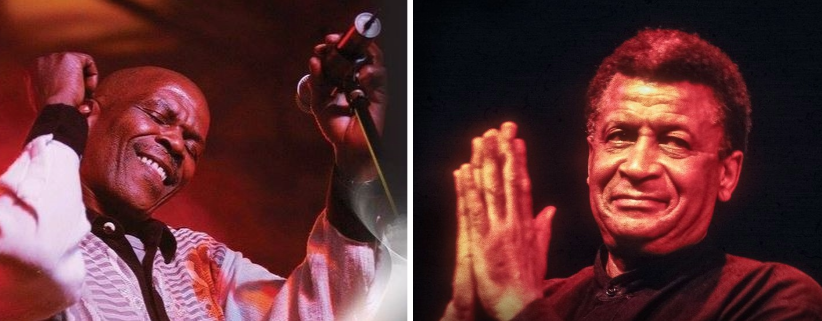
Some 1 400 km south, in Cape Town, the Department of Sport, Arts, and Culture Minister Goodenough Zizi Kodwa will today honour music great Dr Abdullah Ibrahim with the Van Toeka Af Living Legends Recognition.
In a nearly 70-year career, Dr Ibrahim – formerly known as “Dollar Brand” – has consistently elevated South African music and jazz with his fusion of classic jazz and uniquely South African influences.
Through his experiences in exile and the influence of his music, Abdullah Ibrahim underwent a spiritual and cultural evolution through which he became a voice for oppressed people to help break the oppression of apartheid and aid in the reconstruction of South African culture.
Dr Ibrahim used his music as a tool in the liberation struggle against apartheid.
During apartheid, jazz became a symbol of resistance.
His music has also been among the defining sounds that give expression to democratic South Africa’s diversity.
Meanwhile, the Council of UNISA has unanimously agreed to confer the degree of Doctor of Philosophy in Music (Honoris Causa, Posthumously) to Ray Chikapa Phiri in recognition of the impact he made with his outstanding contributions and singular accomplishments in music.
Ray Chikapa Phiri distinguished himself as a talented, hardworking artist, lead guitarist, and songwriter extraordinaire who produced a vast body of work during his lifetime that touched many lives, contributed to social cohesion as well as impacted societal and cultural matters locally and internationally.
His musical catalogue, spanning from the 1970s to his passing on 12 July 2017 is almost unmatched.
Ray Phiri was highly conscious of current issues, including the socio-political conditions in the country, which spurred him to compose such politically conscious tracks as Highland Drifter (1974) and the evergreen masterpiece, Whispers in the Deep/Phinda Mzala (1986), both of which were banned by the Apartheid regime.
His musical prowess caught the attention of American artist Paul Simon who, in 1986, invited him to collaborate with him and Ladysmith Black Mambazo in the recording of the internationally acclaimed album, Graceland.