In his insightful analysis, Development writer Kevin Mofokeng sheds light on the aftermath of a year-long conflict in Sudan, where the death toll has soared and nine million individuals find themselves displaced.
Mofokeng articulates strategies for the European Union (EU) and its member states to strengthen mediation efforts and address the unfolding humanitarian catastrophe.
The devastating war in Sudan has entered its second year, showing no signs of abating.
The conflict, which began in April 2023, is rooted in a power struggle between the Sudanese army, led by General Abdel Fattah al-Burhan, and the paramilitary Rapid Support Forces (RSF), commanded by Mohamed Hamdan Dagalo, known as Hemedti.
After a year of relentless fighting, Khartoum is largely in ruins, with major battles continuing in the capital, other cities, and rural areas. The state has effectively collapsed.
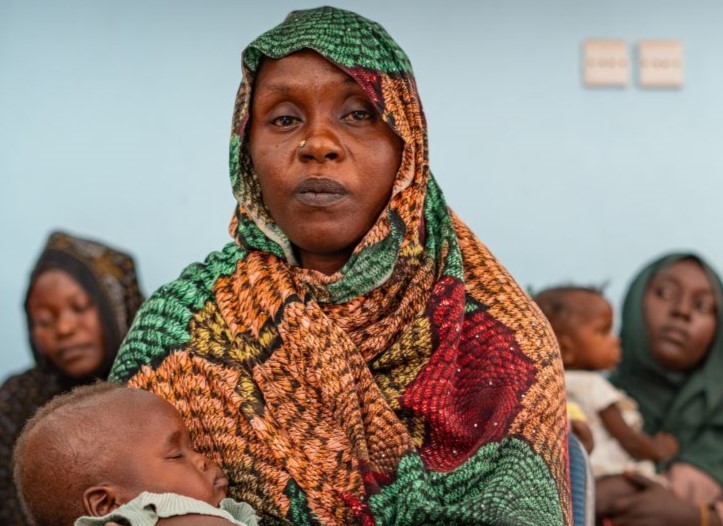
The war has resulted in tens of thousands of deaths, displaced nine million people, and left millions more at risk of starvation, exacerbated by the deliberate obstruction of food aid, particularly by the army.
Mediation efforts are faltering, while external powers are deepening the conflict by supporting opposing factions.
The urgency to end the war cannot be overstated. Prolonged conflict will only complicate resolution efforts as internal divisions within the main factions deepen and more armed groups emerge.
Sudan’s already dire humanitarian crisis will continue to worsen until the fighting ceases.
To bolster mediation efforts and avert mass starvation, the European Union and its member states should:
– Actively support the formal ceasefire talks in Jeddah, Saudi Arabia.
– Coordinate the peace efforts of key stakeholders, including the UN, African Union (AU), Intergovernmental Authority on Development (IGAD), U.S.A., Saudi Arabia, Egypt, and the UAE.
– Promote a future political process in Sudan by facilitating dialogue among Sudanese political and civil leaders.
– Fulfill their aid commitments and spearhead demands for unhindered humanitarian access across Sudan.
– Ensure that resolving Sudan’s conflict remains a priority, despite the global focus on crises in Ukraine and Gaza.
A Catastrophic Conflict
The conflict in Sudan erupted in April 2023, just four years after the Sudanese people overthrew Omar al-Bashir’s 30-year dictatorship.
This war pits the two most powerful remnants of Bashir’s regime – the Sudanese army and the Rapid Support Forces (RSF), partly formed from the Janjaweed militias of the Darfur campaign – against each other.
Recently, various militias have joined the fighting on both sides.
Following Bashir’s ouster by his generals in April 2019 amid widespread protests, a civilian transitional government was established to appease the protesters and pave the way for elections.
However, real power remained with the military, with General Abdel Fattah al-Burhan, head of the Sovereign Council, serving as Sudan’s de facto leader, and the RSF’s Mohamed Hamdan Dagalo (Hemedti) as his deputy.
In October 2021, Burhan and Hemedti dissolved the civilian government in a military coup, taking full control. Their alliance soon unraveled, leading to civil war.
A key trigger was Burhan’s reinstatement of Bashir-era officials to counter Hemedti’s growing influence.
The RSF’s massive recruitment, political alliances, commercial interests, and Darfur roots alarmed the army, which has dominated Sudan’s institutions and economy since independence in 1956.
Tensions culminated in a standoff in Khartoum in early 2023 amid negotiations over integrating the RSF into the army and external pressure to restore civilian rule.
Conflict broke out on April 15, 2023, with the first shot’s origin unclear.
The RSF initially held the advantage, leveraging its battlefield experience from Darfur and Yemen.
Within a month, they controlled much of Khartoum and the sister cities of Omdurman and Bahri.
By the end of 2023, the RSF had seized vast territories, including most of Darfur and Kordofan and, following a surprise December offensive, Gezira state south of Khartoum.
In 2024, the dynamics of the conflict in Sudan shifted, with momentum swinging back and forth.
The RSF, previously dominant, found itself mired, while the army secured its first significant victories by gaining control over parts of Omdurman, situated across the Nile from Khartoum.
Expanding its offensive into Bahri, directly north of the capital, the army now aims to capture the strategically vital al-Jaili oil refinery, approximately 70km north of Khartoum – a crucial asset for RSF ground operations.
This offensive received support from Iranian drones, acquired after Burhan restored diplomatic ties with Tehran in October 2023, and airstrikes were utilised to pressure RSF positions in Darfur and Gezira.
Simultaneously, the RSF’s advance into Gezira, the country’s riverine heartland, provoked widespread public mobilisation against it.
Throughout the war, the RSF and its allies have perpetrated numerous atrocities, including looting, civilian killings, and sexual violence, particularly in Gezira.
Recent weeks have seen neither side making significant gains, hinting at a potential stalemate.
However, both factions are likely to attempt new offensives, requiring time for regrouping and resupply.
Despite the apparent deadlock, Sudan is plunging deeper into disintegration.
Both main belligerents are grappling with issues of command and control, with Burhan increasingly reliant on ex-Bashir and Islamist factions, communal militias, and other armed groups.
Conversely, the RSF has become a disparate assembly of tribal militias and warlords, driven by opportunism and varied local agendas.
The proliferation of groups aligned with the warring parties has complicated the wartime coalitions, rendering them more unwieldy.
Moreover, the conflict between the army and RSF has exacerbated existing inter-communal conflicts across the country.
Ethnic-based recruitment has resulted in mass atrocities, such as the displacement and killings of the Masalit community by the RSF and allied militias in West Darfur at the conflict’s outset.
Other Darfuri non-Arab armed groups have aligned with the army, engaging in battles against the RSF in regions like Gezira, far removed from Darfur.
The involvement of Darfuri armed groups and their affiliated militias in support of the army has heightened tensions between Arab and non-Arab communities around El Fasher, a city in North Darfur state.
RSF fighters have surrounded El Fasher, indicating a potential imminent assault on the army’s last stronghold in Darfur.
Such a large-scale confrontation could lead to further atrocities along communal lines.
These tensions are compounded by the army’s continued airstrikes on Arab-inhabited areas of Darfur, the mobilisation of pro-army Darfuri groups against the RSF, and ongoing clashes between the two sides.
Both the RSF and the army fuel their supporters with narratives of existential threats.
Internal divisions within many of these groups contribute to the trend of fragmentation, heightening the risk of inter- and intra-communal violence.
Sudan is grappling with one of the most severe humanitarian crises in recent memory.
Famine looms, with nearly 90% of those facing acute food insecurity trapped in active conflict zones, including millions in areas like greater Khartoum, Gezira, and El Fasher.
Compounding the crisis, both the army and RSF are obstructing aid delivery, with hunger most acute in RSF-controlled regions, where the army has largely denied UN agencies permission to provide assistance, exacerbating an already dire situation.
The conflict in Sudan has broad-reaching implications that stretch beyond its borders, entangling neighboring states and contributing to regional instability.
Involvement from external powers like Egypt, Iran, and the UAE further complicates efforts to resolve the conflict and increases the risk of spillage into neighboring countries like Chad, South Sudan, Ethiopia, and Eritrea.
Additionally, there’s concern that jihadist groups may exploit the chaos to establish a presence in the region.
Despite ongoing mediation efforts, progress remains elusive, partly due to General Burhan’s reluctance to engage.
Attempts to convene negotiations, including recent efforts by the U.S.A. and Saudi Arabia to broaden discussions in Jeddah, have struggled to bring the army back to the table.
While initiatives like the meetings in Bahrain and those by IGAD initially showed promise, they faltered due to political maneouvering and disagreements between the factions.
Recent diplomatic moves by key players offer some hope for a more concerted response.
The appointments of respected envoys by the U.S.A. and UN, as well as the establishment of a new high-level panel by the AU, signal a renewed commitment to finding a solution.
Additionally, the success of the high-level donor conference in Paris, which raised significant aid pledges and facilitated important discussions among Sudanese civil actors, demonstrates an international willingness to address the crisis.
However, despite these efforts, a lack of cohesion and urgency persists, with key stakeholders failing to synchronize their approaches and the political landscape remaining fragmented.
What should the EU do?
To effectively address Sudan’s escalating crisis, the European Union (EU) and its member states must align their efforts cohesively.
Firstly, the EU should mobilize its member states to endorse a fresh round of formal negotiations in Jeddah, regardless of direct participation.
This entails exerting pressure on the conflicting parties to engage in dialogue, while also encouraging key external actors like the U.S.A., Saudi Arabia, the UAE, and Egypt, as well as regional bodies like the AU and IGAD, to collaborate effectively, thus preventing fragmentation and competition.
Annette Weber, the EU Special Representative for the Horn of Africa, plays a pivotal role in bridging influential powers across the Red Sea and advocating for conflict resolution, and her endeavors should be strongly supported by EU member states.
Secondly, the EU and its members should urge influential regional actors, such as Egypt and the UAE, to honor their commitments made at the Paris donor conference, specifically refraining from exacerbating the conflict through arms provision and political polarisation.
Thirdly, the EU should persist in endorsing an African-led political process, a stance it has maintained since the conflict’s onset.
Leveraging its position as a member of the AU Core Group overseeing external engagement in Sudan, the EU can play a significant role in advocating for this approach.
Despite the AU’s delayed initiation of such a process, the EU has actively facilitated dialogues among Sudanese civilian leaders, including the recent gathering on the sidelines of the Paris Conference.
This meeting marked a significant milestone, fostering discussions among Sudanese actors with divergent perspectives on the country’s future.
The EU’s continued support for transparent, inclusive consultations, reflective of Sudan’s diverse political landscape, can pave the way for substantive deliberations and ultimately aid Sudanese efforts in finding common ground amidst their political differences.
Continuing in its efforts to address Sudan’s crisis comprehensively, the EU and its member states must uphold their roles as primary providers of humanitarian assistance to Sudan.
In 2023 alone, the EU allocated over €128 million in humanitarian aid, with additional pledges made at the Paris conference.
These pledges, coupled with commitments from member states, accounted for close to half of the €2 billion pledged at the conference.
However, it is essential for Europe to ensure that these commitments are fulfilled promptly, with Brussels actively holding member states accountable for their pledges.
Moreover, the EU should exert both public and private pressure on the conflicting parties and their supporters to facilitate the unhindered delivery of humanitarian aid to all Sudanese citizens, regardless of their location.
Furthermore, amid the ongoing conflict in Sudan, the EU must maintain pressure on both the army and the RSF to engage in negotiations for a peaceful resolution.
It is imperative that Sudan’s plight remains at the forefront of the global agenda, notwithstanding the prominence of other crises such as those in Ukraine and Gaza.
The further deterioration of Sudan’s situation would not only exacerbate the already dire humanitarian crisis but also pose significant threats to regional peace and security.
Such a scenario could have far-reaching consequences, potentially destabilising the entire Red Sea and Sahel regions and providing fertile ground for jihadist activities.
Urgent action is therefore paramount to mitigate the escalating violence and famine in Sudan.
By actively advocating for global attention to Sudan’s tragedy and collaborating closely with key stakeholders, the EU can play a pivotal role in halting the country’s downward spiral.
Additionally, concerted efforts by the EU can help prevent widespread famine and alleviate the growing instability plaguing the Horn of Africa.
*The writer of this article is Kevin Mofokeng, a Developmental Writer and digital PR strategist based in Gaborone, Botswana. The views expressed by Kevin Mofokeng are not necessarily those of The Bulrushes