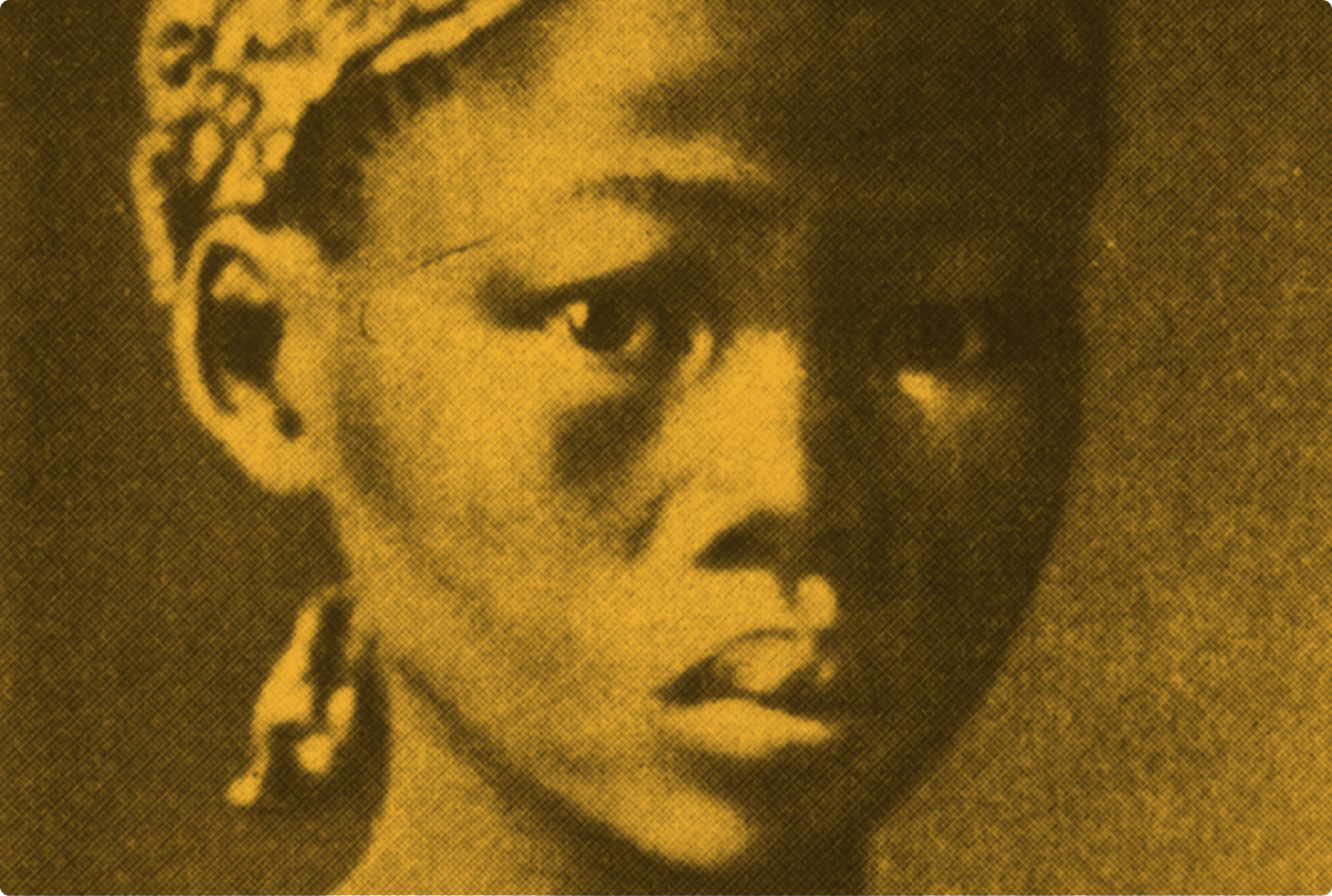
Johannesburg – If existing records are accurate, then 2024 arguably marks a seminal 350 years since Krotoa (1643-1674) transitioned to the ancestral realm.
After attending an inaugural workshop concerning the “Histories of Universities in South Africa” hosted at Stellenbosch University (SU), led by Professor Salim Badat, while he was still affiliated with the University of KwaZulu-Natal (UKZN), in March 2023, I have mused at why the formerly named RW Wilcocks Building was renamed in honor of Krotoa.
The SU’s website gives reasons for renaming the RW Wilcocks Building, originally named after Professor RW Wilcocks, a former rector of SU.
Although staff, students, alumni, and the public have strong and differing opinions on what the name symbolises, the fact is that due to perceptions regarding his involvement in apartheid-related matters and race-based policies, as well as his connections to Hendrik Verwoerd, the legacy of Professor RW Wilcocks is shrouded in controversy.
In addition, there is also well-documented criticism from the current national psychology (Professor Wilcocks’s field of expertise) community on the current name, as well as pleas from successive Student Representative Councils, other student movement leaders, as well as staff, to change the name.
Academic disciplines and divisions housed in the building have also requested to change the name.
These include the Department of Psychology, the Division of Research Development, and Stellenbosch University International (www.sun.ac.za/english/Documents/2020/Wilcocks-FAQ.pdf).
Although so much more can be expanded about the racist notoriety of SU’s past figures, such as SU’s alumni and past rector’s in the form of Professor Raymond William (RW) Wilcocks (1892-1967), my attention, however, seeks to remain upon Krotoa and her story.
Typical of existing sources, some narratives about Krotoa are consistent, while others present contradictory details.
My first shock was that the very name Krotoa was questionable.
The name “Krotoa” or “Kroket” was most likely not a name, but a Dutch spelling of the designation !Oroǀõas (Khoekhoegowab spelling: !Goroǀgôas), referring to the fact that she was put under guardianship, either of her uncle Autshumato (also known as Kx’aothumathub) or of Jan van Riebeeck and Maria de la Quellerie” https://en.wikipedia.org/wiki/Krotoa).
Elsewhere Krotoa was called Eva.
Krotoa (known as Eva to the Dutch and English settlers) was the niece of Autshumao, a Khoi leader and interpreter to the Dutch (he was known as Harry/Herry first by the English and then by the Dutch).
A young Krotoa, about 10 or 11 years old, was taken in by Jan van Riebeeck during the first few days of Dutch settlement in the Cape.
She worked as a servant to the Commander’s wife, Maria van Riebeek (nee de la Quellerie), and is first mentioned in Van Riebeeck’s diary in January 1654 as “a girl who had lived with us”.
She mastered Dutch and Portuguese and responded eagerly to Christian instruction given to her by Maria (sahistory.org.za/people/krotoa-eva).
Owing to Krotoa’s upbringing among the Khoi and the Dutch, she mastered the languages of English, Dutch, and Portuguese.
The latter mastery of languages consequently led to her role as a chief interpreter/translator among the latter groups of people, including her marriage to Pieter van Meerhof (1635-1668) which ended due to endless expeditions of the latter.
Most accounts agree that her marriage was nothing more than an experiment in intercultural affairs, which sadly led to her giving birth to her first child at age 15.
Most records also agree that Krotoa had seven children and thus was criticised by her society for having been “a vixen, a hoe, and drunkard’”.
In the final years of her life, Krotoa became an alcoholic and was cast aside by colonial society.
Her actions consequently led to her banishment to Robben Island, additionally for her perceived transgression of prostitution.
Contemporary social historians such as Tariq Mellet et al remind us that Krotoa’s life cannot be fully understood, outside of the broader context of enslaved societies.
Although the Khoi were a matriarchal society, it’s important to note that prostitution was introduced to them, by the colonial settlers.
Although Krotoa seems to have passed away at the tender age of 31 or 32, she, however, left her respective mark in South Africa’s historiography as a pioneering woman belonging to the First Nations of South Africa.
In the final analysis, it may be stated that Krotoa’s historical significance includes her unique pioneering role as a translator, which has been a downplayed contribution towards the fields of diplomacy in intercultural affairs in South Africa.
To return to SU renaming the RW Wilcocks Building to Krotoa in 2018, Anne Marie van Zyl (Researcher at the Taal Museum) and Mantoa Rose Smouse (lecturer in the School of Languages and Literature at the University of Cape Town) agree that SU’s symbolic act, ought to serve as a reminder, that Krotoa deserves recognition as a pioneering mother towards the origins of the initial dialect and later official language of Afrikaans.
Remembering Krotoa is remembering a pioneering activist in South Africa’s lengthy history of struggle against colonial settlers, her story must be featured in the history curriculum taught across all South African schools.
Malibongwe igama lamakosikazi!
*Written by Dr. Tshepo Mvulane Moloi, Doctoral Candidate, Fort Hare University