International hunting is coming soon to the wilderness areas outside Kruger National Park, into which herds of elephants overpopulating the Park “spill over” and roam daily, together with other wildlife such as lions, buffaloes, and crocodiles.
A leader of South Africa’s Kruger National Park neighbouring Makuleke Community said that they always hear about international hunting’s significant socio-economic and conservation benefits almost everywhere in Southern Africa and “we now want to start international hunting in our community, in order to enjoy its life-changing benefits.”
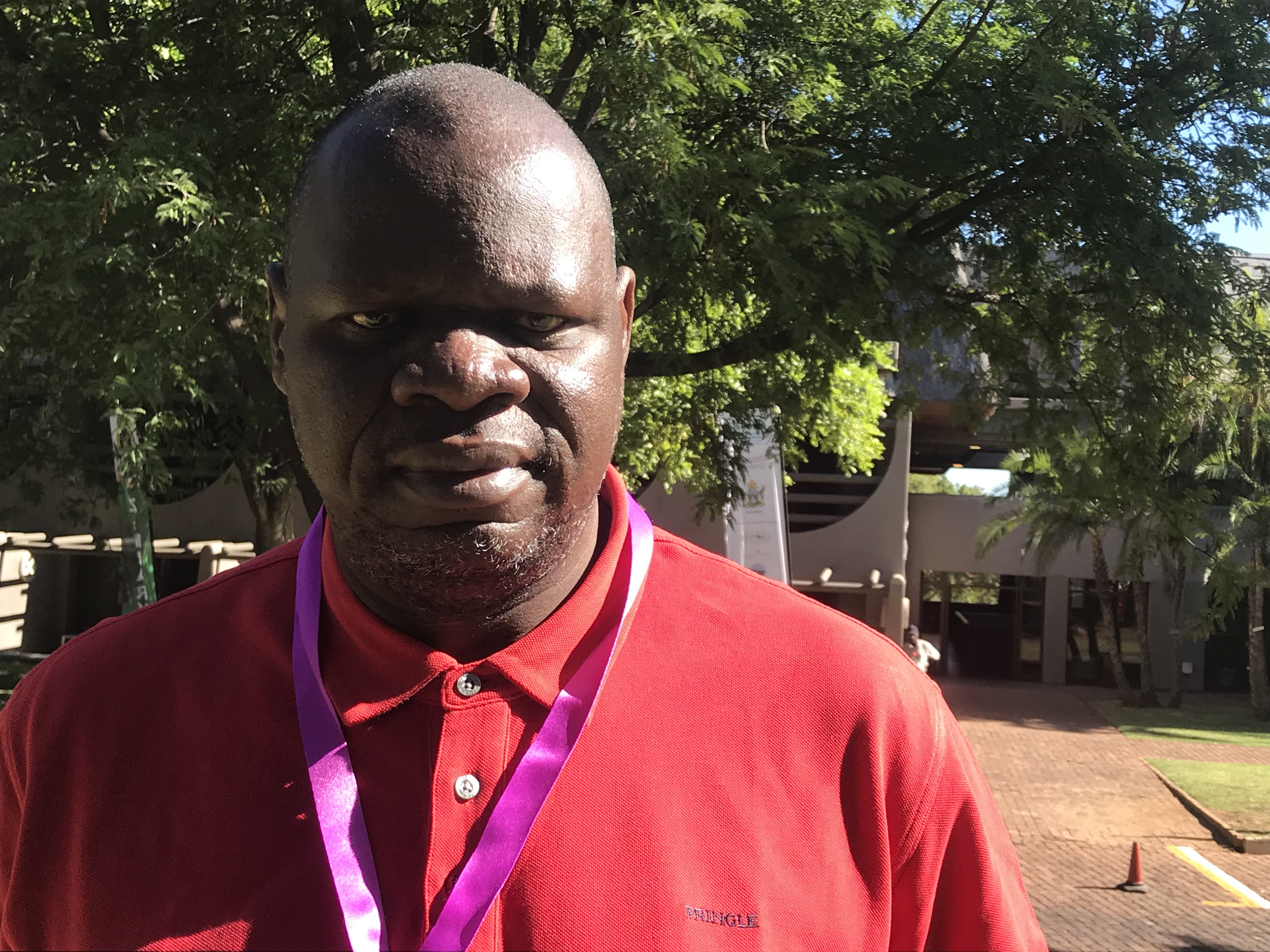
“As a community, our position is that we need to look after our natural resources, including wildlife and that wildlife also needs to look after us through international hunting,” said the Makuleke Communal Property Association Project Manager Sydney Shibambu.
He said that the Makuleke Communal Property Association was ready to run an international hunting business, working together with safari hunting companies.
“If the people of Makuleke want international hunting, there is nothing wrong with that,” said Dr. Lamson Maluleke, Technical Advisor Makuleke Communal Property Association, with many years of experience in community conservation and developmental work.
“If they want to benefit from international hunting, I will be the first one to support them.”
The South African government permits international hunting.
Photographic safaris and lodge business was the Makuleke Community’s first “taste” of benefits from natural resources.
The Community boasts of two upmarket lodges built in the late 1990s, with one of them enjoying a record-breaking customer attraction that saw it being fully booked while its foundation was being laid.
Notably, the Makuleke Community’s love for natural resources conservation (including wildlife) was shown by its opting not to settle on the land (Pafuri Triangle) inside Kruger National Park from where their ancestors were forcibly removed in 1969 but reclaimed it in the late 1990s, in post-independence South Africa.
Instead, of using their reclaimed land for permanent human settlements and agricultural activities they chose to use it for photographic tourism and lodge businesses.
However, they continue to hear that other Southern African countries’ communities co-existing with wildlife are benefiting from both photographic tourism and lodge business, including international hunting that comparatively generates much more revenue than photographic tourism and lodge businesses combined (Prof. Brian Child, Victoria Falls Africa Wildlife Economy Summit, June 2019).
They also learnt with great interest that a busload of photographic tourists staying in a lodge for two weeks brings less income than that generated by a single international hunter coming to hunt and stay for the same period.
Besides bringing comparatively more money to a hunting community, the single international hunter also has a comparatively far less impact on the environment.
In contrast, the busload tourists have a far greater impact on the environment and bring far less income than that brought by a single international hunter.
Over the years, the Makuleke Community leaders, together with the local residents have been continuously bombarded with international hunting benefits information, including at a recent workshop in Limpopo Province.
They have now decided that it’s high time that they started enjoying the same international hunting benefits being enjoyed by their counterparts from countries like Botswana; where hunting communities generate multi-million pulas annually, from international hunting and use the income to support community conservation and developmental initiatives.
Elsewhere, in Southern Africa, their Zimbabwean counterparts recently told them that hunted crocodiles, elephants, baboons, monkeys, leopards, buffaloes, and lions are sending their children to school and then to university where they graduate and lift themselves and their families out of poverty.
The hunting revenue-funded schools have produced graduates in finance, medicine, nursing, teaching, and engineering.
Some of these university graduates have already been poached by Western countries such as the United Kingdom which ironically continues to oppose international hunting.
Notably, they oppose the practice (international hunting) but love its products (university graduates).
Hypocrites!
With elephant over-populated Kruger National Park right at their doorstep and elephants even spilling not only into their community but further into the nearby Thohoyandou Town (head of the elephant town), the time is ripe for international hunting in Makuleke.
Their appetite for international hunting grows bigger and bigger each time they get told about the significant conservation and development benefits from international hunting that their counterparts from Southern African countries are enjoying.
The Makuleke Community residents also want to visit these Southern African countries to see how the international hunting industry is being run.
They want the industry to be introduced to their community as soon as possible.
Meanwhile, the Southern African communities that are already benefiting from the international hunting industry have vowed that the industry will never stop in Africa because “the benefits are significant, sustainable, and life-changing.”
“Nothing and no one can ever stop hunting in Africa and Southern Africa, including Zimbabwe,” said a Masoka hunting community representative, Ishmael Chaukura.
“The wildlife hunting revenue-built Masoka Secondary School has so far produced two medical doctors and more doctors and professionals will be produced in the future.
“The school also produced accountants, teachers, nurses, technicians, and engineers etc.
“Wildlife revenue enables children born into poverty to escape from it; through education.
“These hunting benefits make us appreciate the need to conserve wildlife and its habitat.”
Elsewhere, Botswana and Namibia hunting communities recently issued powerful international hunting industry endorsement statements.
“Wildlife hunting revenue has built a four-star lodge, and community store, created employment, and made us see the need to conserve not only wildlife but also its habitat,” said Claudia Nchunga of Botswana’s wildlife-rich Chobe District, Kavimba village.
“Therefore, hunting is promoting conservation and development in our community.”
In a Namibian hunting community, wildlife impressively ‘argued’ that it has greater value than cattle production and won.
“If you sell one cow you get US$125(N$2000) while a kudu fetches US$935 (N$15 000) or more depending on size,” said Anabeb Conservancy Chairman, Ovehi Kasaona, in a recent interview.
“Therefore, our Conservancy decided last year to sell all our cattle and use the land for wildlife hunting and tourism lodges that we have built using hunting revenue.”
The hunting benefits to Namibia’s Anabeb Conservancy include the provision of water “within a five-metre distance for each household.”
This has drastically reduced the long distances women and children would walk every day in the past, to fetch water in the punishingly dry landscape.
Go there to see for yourself.
*About the writer: Emmanuel Koro is a Johannesburg-based independent international award-winning environmental journalist who writes extensively on environmental and developmental issues in Africa.
*The views expressed by the author of this article, Emmanuel Koro, are not necessarily those of The Bulrushes