Globally, buildings are responsible for a substantial share of energy, electricity, water, and materials consumption using between 35-40% of energy demand and contributing 37% of world carbon dioxide (CO2) emissions. Including the manufacturing of building materials.
The 2022 updated Global Buildings Climate Tracker (GBCT) (https://apo-opa.co/3YLJiZG) shows that there is a significant gap between the current state and the desired decarbonisation path which is concerning.
In effect, it means that to align with the 2030 milestone, an annual increase of 10 decarbonisation points is now necessary which is a substantial jump from the six points per year anticipated starting in 2015.
In 2019 in Africa, buildings accounted (https://apo-opa.co/4e8NIhN) for 57% of total final energy consumption and 32% of total process-related CO2 emissions.
Despite continental issues of poverty, unemployment, and rapidly developing informal settlements among other issues, many countries in Africa are embracing green, sustainable building practices.
With its burgeoning population, expected to add some 1.2 billion people by 2050 (https://apo-opa.co/3AxgxXo) Africa faces rapid urbanization.
Urbanisation provides an opportunity for countries across Africa to embrace green building practices, access available international green funding opportunities, and set a foundation for sustainability for future generations.
In 2023 the Africa Regional Network of World Green Building Council (WorldGBC) launched the Africa Manifesto for Sustainable Cities and the Built Environment.
The manifesto sets out the actions that policymakers and businesses across the continent need to take to achieve a net zero carbon, healthy, resilient, equitable, socially – and economically inclusive built environment for everyone, everywhere.
Achieving these goals requires policymakers and business leaders across the continent to recognise the untapped potential of the built environment.
But this can only be realised with the implementation of policies that support transformative action, through intense collaboration between governments, city and regional leaders, businesses, and investors.
South Africa is leading Africa’s green building sector (https://apo-opa.co/3YLdq7N).
It has over two million square metres of certified green buildings that reduce water consumption, electricity, and waste disposal; 50 certified projects are projected to result in an annual saving of 76 million kilowatt hours which is equivalent to the electricity needs of 5 300 households every year.
South Africa has its own National Standard 10400 Part XA that deals with optimizing energy efficiency in buildings and in light of this, the Green Star South Africa and EDGE green building tools have been adapted and are widely used in the country.
International rating systems like LEED and WELL are also used.
The scope of green construction in Egypt has been slow to grow but Egypt has two local rating systems in place called TARSHEED and the Green Pyramid Rating System.
These, along with EDGE, LEED, and WELL are used in various projects.
The Nigerian government has pledged to achieve a 20% reduction in its greenhouse gas emissions by 2030 and 45% with international support.
Green building will likely be a big part of this change.
This country’s National Building Code, developed by the National Council on Housing and Urban Development, and the Building Energy Efficiency Guideline (BEEG), also support the agenda of sustainable development by setting requirements for occupant health and safety, use of local and safe building materials and energy efficiency among other criteria.
Morocco has several legal provisions in place to promote sustainability and environmental protection through construction impact assessments for new building projects as well as energy-efficient construction requirements applicable to most residential and commercial projects.
Several projects in the country have also achieved LEED green building credentials.
It also has several renewable energy projects such as the Noor Midelt Solar Plant and Tarfaya Wind Farm, one of the biggest wind farms in the continent.
As the drive towards net zero heightens more African countries are joining the African Regional Network of the World Green Building Council.
NGOs and other industry professionals are setting up green building councils in South Africa, Egypt, Tunisia, Nigeria, Botswana, Zimbabwe, Namibia, Mauritius, Tanzania, Kenya, Cameroon and Uganda.
One of the big hurdles restraining a sustainable development movement in the construction industry is a lack of awareness for practical sustainable actions among many developers and investors.
In South Africa there is a broad awareness of Green Buildings and the market share of certified buildings among all new builds is increasing.
The 2021 International Finance Corporation’s (IFC) Green Building Market Stakeholder Assessment for South Africa showed that on the supply side, key motivating factors for Green Buildings are their reduced carbon footprint increased end-user demand, and increased marketability.
From the occupier’s perspective, the motivating factors for buying or leasing a Green Building are lower utility bills and lower operating costs.
Yet, at a residential level occupiers are only willing to pay a two percent premium for these benefits.
The IFC report points out that the perceived cost of construction and certification of green buildings are also considered major obstacles to the expansion of certified Green Buildings in South Africa (https://WorldGBC.org/).
Its research indicates that those in the know estimated the additional construction cost to be 10% or higher, while those unfamiliar with Green Buildings are likely to significantly overestimate costs.
Currently, four out of six financial institutions provide financing for Green Building projects in some form or another, and three require a certification to approve the loan.
The portfolios of two consist of retrofitting existing buildings into Green Buildings; two of commercial and industrial Green Building construction finance and only one residential Green Building construction finance.
Of the two FI’s that currently do not fund any Green Building one plans to do so in the future while the other does not see this as part of their strategy.
The investment into green construction (https://apo-opa.co/4e8NYgL) has multiple benefits; it facilitates growth while addressing issues like employment, climate change, and poverty.
However, more needs to be done to improve the understanding of the benefits of green buildings such as lower operational costs, increased ROI as well as an overall improvement in occupant health and wellbeing.
Financial institutions need to do more to support green construction.
Those who have pledged to lower their investments in carbon-producing industries could create green bonds or funds for the African construction sector.
Governments need to provide policy support along with incentives to catalyze market development.
All this suggests that there is still a sizable information gap regarding the cost, certification, and benefits of Green Building and that further knowledge dissemination efforts are needed to close it.
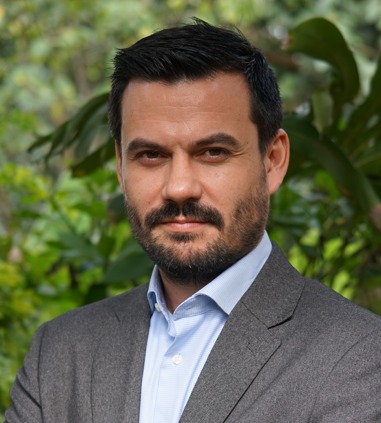
*The author of this article is Julien Fouilliart, Building & Infrastructure Growth Leader Middle East, Caspian and Africa, Bureau Veritas (https://group.BureauVeritas.com). The views expressed by Julien Fouilliart are not necessarily those of The Bulrushes