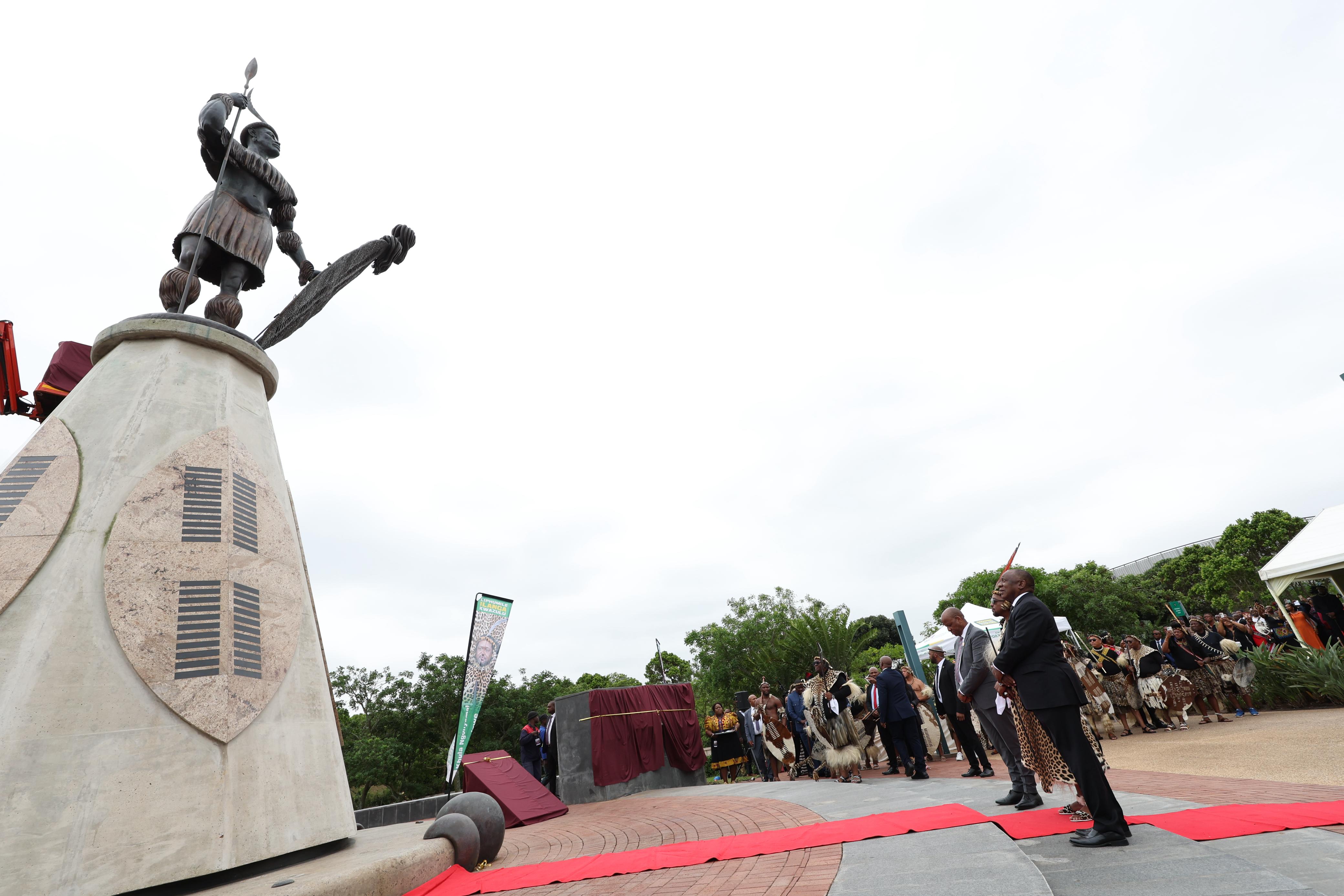
Durban – The Airports Company South Africa (ACSA) has “welcomed” the official unveiling ceremony of the King Shaka Zulu statue at King Shaka International Airport (KSIA) in Durban.
The official unveiling ceremony of the King Shaka Zulu statue at KSIA took place on Thursday, (7 November 2024).
“This significant cultural and historical initiative reflects our commitment to honouring the rich heritage of the region, and we are pleased to contribute to its realisation,” ACSA said in a statement on Friday, (8 November 2024).
The commissioning and installation of the statue were undertaken by the KwaZulu-Natal Department of Sports, Arts, and Culture.
ACSA said it was proud to have collaborated in this initiative, which emphasises “our role in supporting community-driven projects that enhance local culture”.
In collaboration with the province, ACSA carefully selected a prominent location for the statue, ensuring it serves as an attraction for airport users and the broader local community while remaining in alignment with the airport’s Master Plan.
A memorandum of understanding fulfilling the undertaking of the statue’s erection was signed by ACSA CEO Mpumi Mpofu and the KwaZulu-Natal Department of Sports, Arts and Culture.
The statue stands as a tribute to King Shaka, a formidable leader who played a crucial role in shaping the Zulu nation and its history.
“We believe that the statue will not only enhance the aesthetic appeal of our airport but also serve as a symbol of pride and heritage for our community,” said ACSA CEO Mpofu.
“It is a testament to our commitment to celebrating and preserving the rich culture of KwaZulu-Natal.”
The unveiling comes shortly after South Africa’s commemoration of 30 years of democracy, a period marked by progress and transformation.
King Shaka International Airport has been pivotal in providing world-class airport services, driving economic growth, and making a positive impact on the region and its communities.
This event also follows ACSA’s celebration of KSIA’s 14th anniversary on 1 May 2024, marking over a decade of service as a central hub for the movement of people and goods in the region.
ACSA said it will take responsibility for the maintenance and upkeep of the statue, “ensuring that it remains a proud symbol of our heritage for years to come”.
Dignitaries in attendance for the historic occasion included His Majesty King Misuzulu KwaZwelithini, President Cyril Ramaphosa, Transport Minister Barbara Creecy, KZN Premier Thamsanqa Ntuli, MPs and provincial MECs.
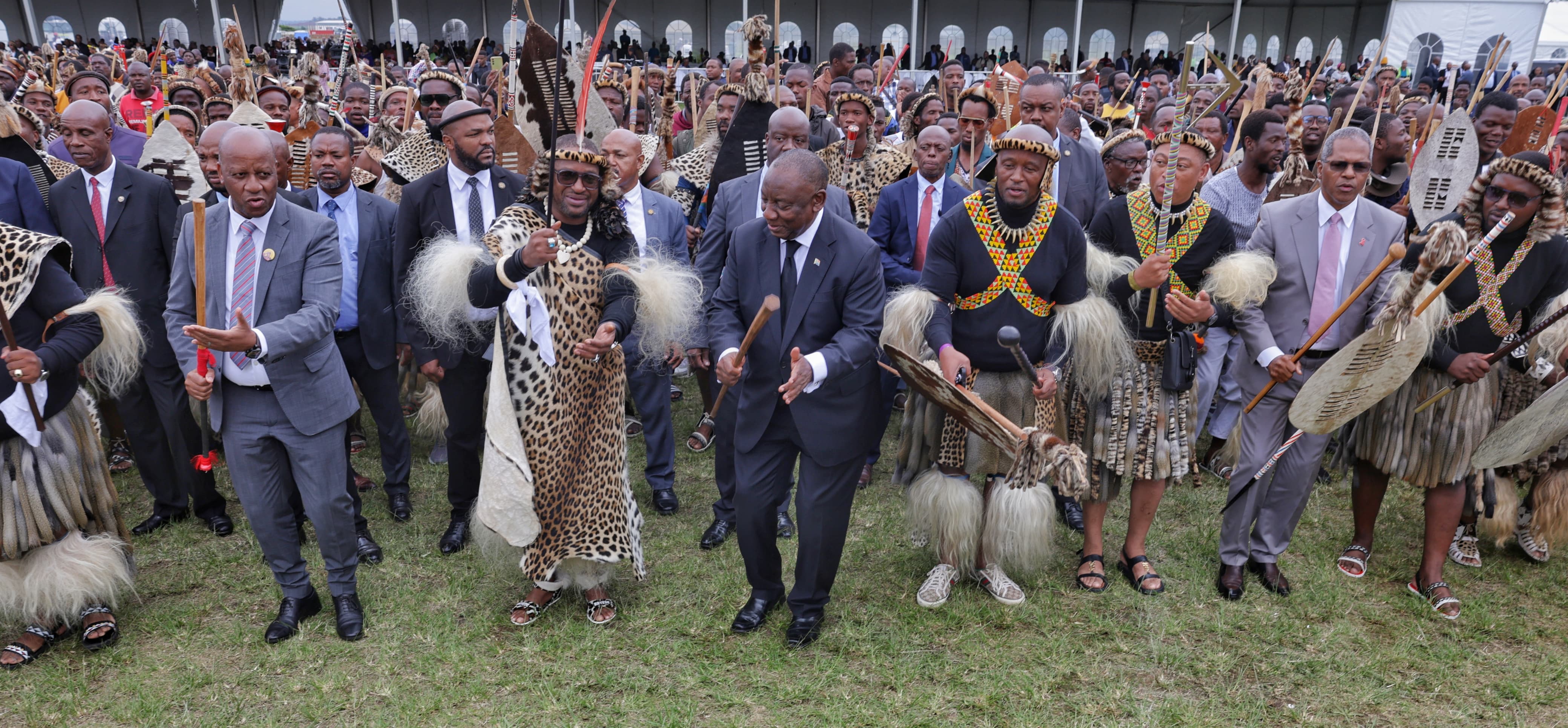
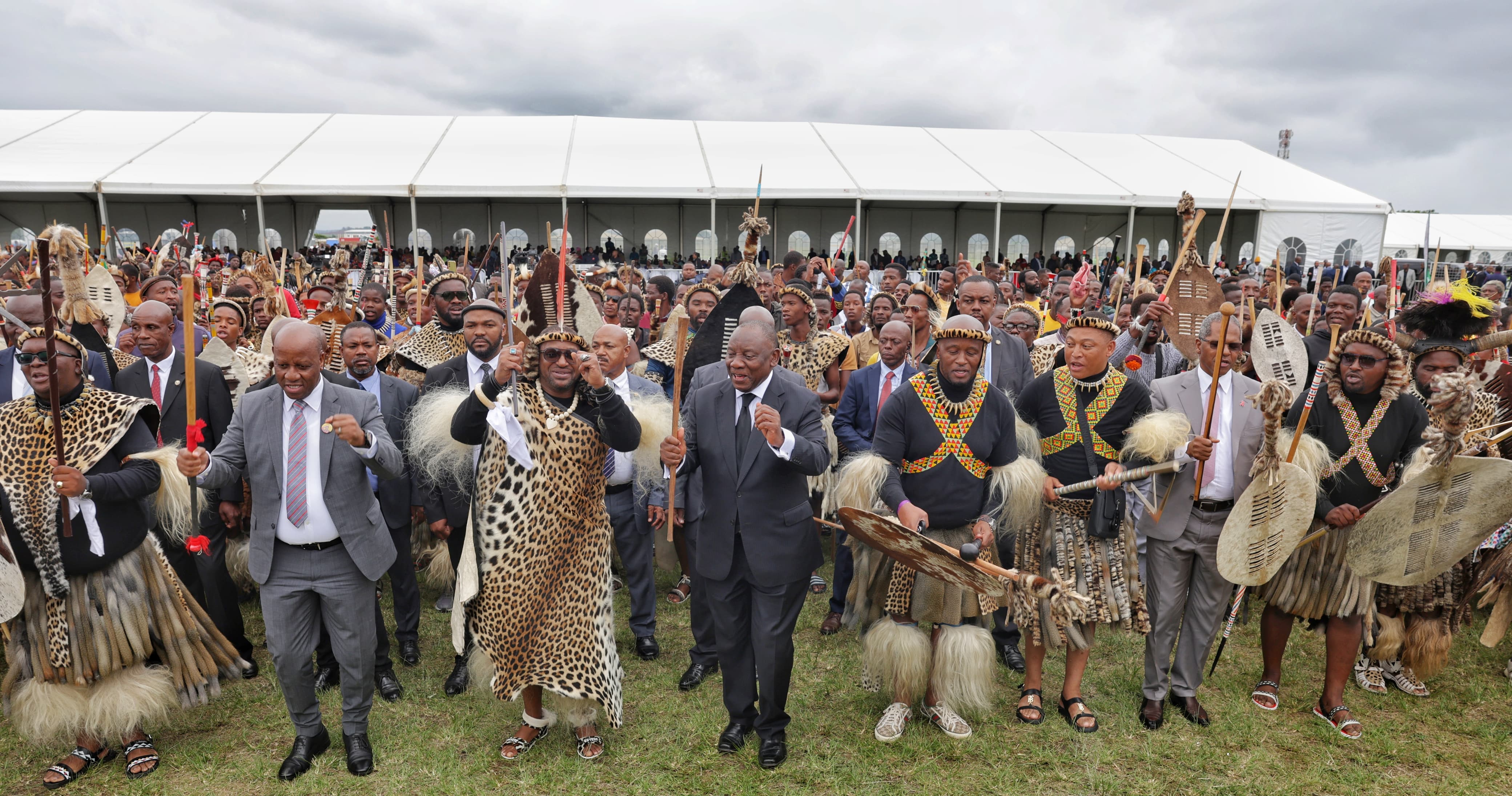
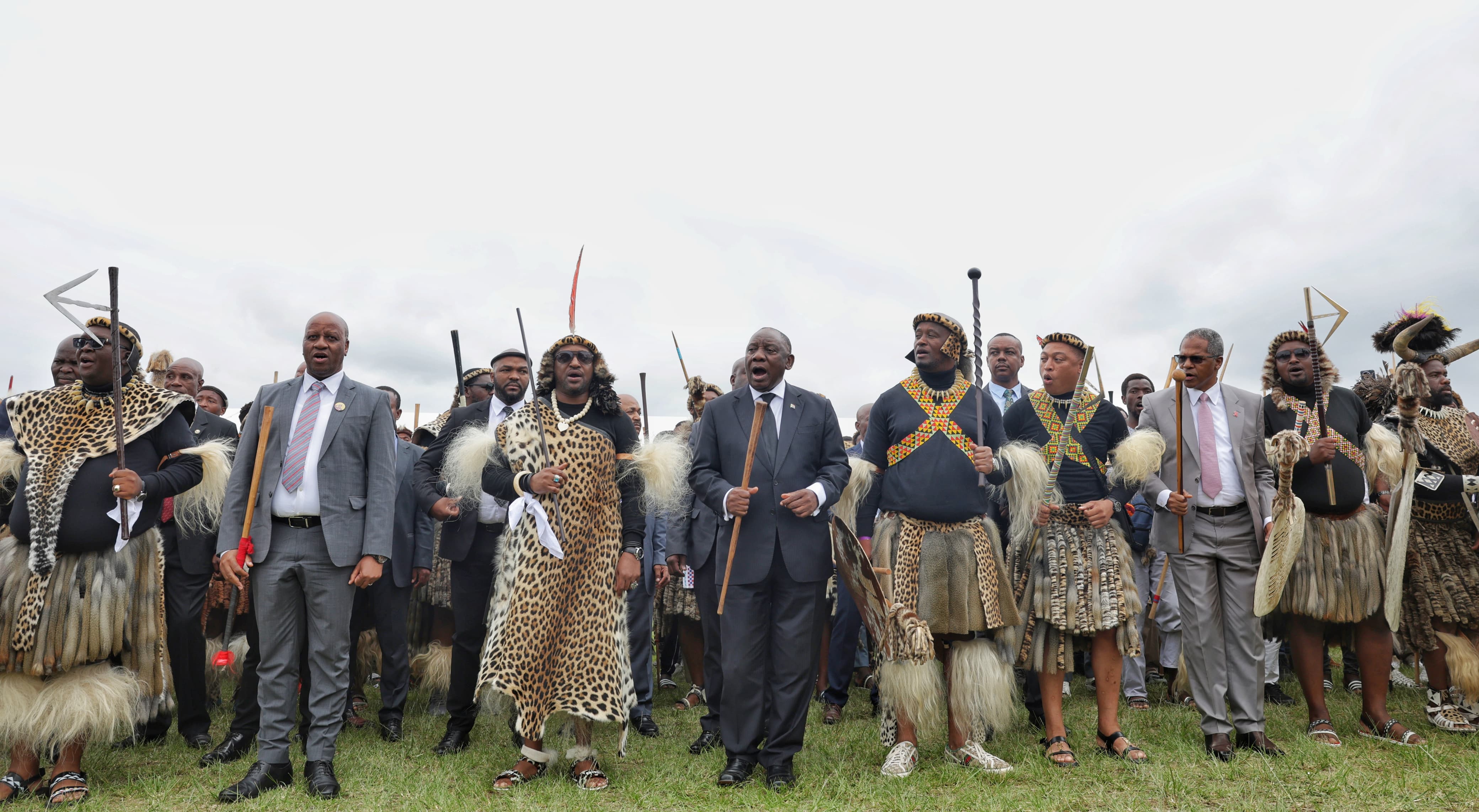
During the unveiling of the statue President Ramaphosa said: “Long, long before we waged the struggle for our liberation from apartheid rule, there were the great warrior kings and queens who took up the spear of resistance against colonial invaders.
“King Shaka’s illustrious history is well-known. He is among those leaders with so great a reputation that it has passed into legend.
“And yet for centuries, those who oppressed the South African people sought to denigrate his name to suit their own ends.”
President Ramaphosa added: “Since the advent of democracy, we have worked to restore pride in the history of all the people of this great land.
“We have been deliberate about reconstructing and rebuilding what is taught in our schools.
“A statue such as the one we are unveiling today represents not just a great person, but a history, a value system, and the aspirations of a people.
“This statue is a testament to unity.”
Since his reign began in the early 1800s, King Shaka used the military and political systems he established to bring his people together.
He forged alliances, integrated rival clans, and reformed social structures to unite AmaZulu towards a common identity and a common purpose.
“This is an aspiration that transcends generations,” President Ramaphosa said.
“It is our responsibility to strive towards this goal no matter how difficult it is or how long it takes.
“Building unity takes courage.
“It takes principled leadership that puts the greater good above narrow self-interest.
“King Shaka gave wise counsel, but also took it.
“He had respect for rival kings, even those with which he waged wars.
“He put the interests of his people first.”