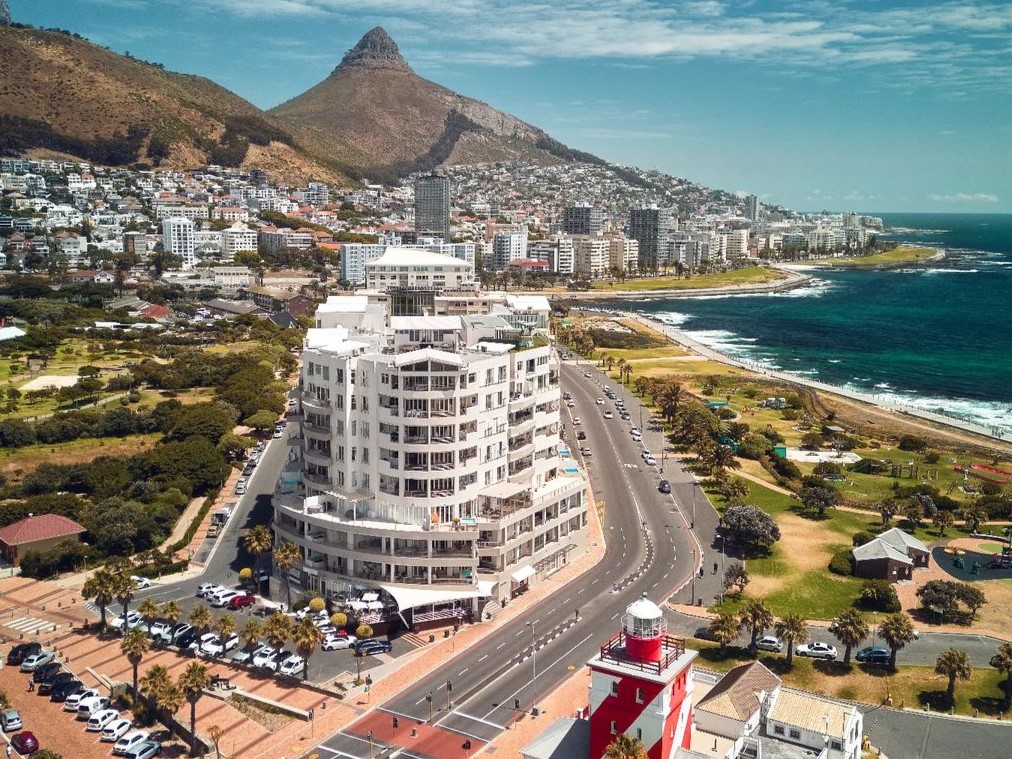
Cape Town has long been a poster child for South African tourism.
By any measure, the metropolis is a beautiful city with impressive mountains, pristine beaches, and the charm of its vibrant neighbourhoods.
But that’s only one side of the picture.
Away from the famed tourist attractions, the city holds a different story for some.
While on a recent visit to the “Mother City“, my colleagues and I had a memorable encounter at the Taj Cape Town Whiskey Lounge that gave the narrative sharp relief.
We met an advertising executive from Germany with a rather grim perspective on Cape Town.
“What’s there to like about this city?” she asked with a clear disdain, her voice loud enough to cut through the lounge.
My colleague Mike from Johannesburg, sitting next to me, stared wide-eyed at her in surprise.
“It smells of pee everywhere,” she added, with a theatrical sigh that sounded like she wanted to wash clean Cape Town.
From that moment, “Washing Machine” was the nickname I gave the visiting German advertising executive, who sat in earshot – about four metres from Mike and I.
Mike, ever curious, leaned in toward her and asked: “Why are you here in South Africa… Is it for work?
Responding with a faint smile, the German said: “Exactly. I’m here for work, not for the love of Cape Town”.
We later learned “Washing Machine” was in Cape Town to shoot a commercial for a European company, not, as Jakob assumed, for the Africa Tech Festival.
But her distaste seemed to go beyond work or the festival.
Washing Machine’s grievances hinted at a deeper dissatisfaction with the social climate of the city.
She didn’t mince words.
“Everywhere I go, it’s the same thing. The people serving me, making my bed, or bringing my meals, they’re all not of a lighter skin [they are black],” she observed.
It’s like she was saying the remnants of apartheid were still woven into the fabric of Cape Town.
Washing Machine’s critique seems misplaced if one considers that Cape Town was named “one of the best cities in the world” – in 2024.
Time Out ranked Cape Town the second-best globally, and the city frequently tops lists by Condé Nast and Telegraph Travel.
Yet, there was something undeniably thought-provoking about her observations.
Her experience at the Taj Cape Town – the same hotel Mike and I were staying – seemed to capture her sentiment.
According to Washing Machine, it was a strange, uncomfortable echo of a colonial past, where black workers were still primarily filling service roles, often under the watchful eyes of predominantly white patrons
It wasn’t just a one-off, she noted.
Washing Machine had seen the same pattern at every upscale spot she visited around Cape Town, with Constantia being her worst experience.
I also experienced the same discomfort when I visited the Time Out Market at Cape Town Waterfront and a trendy dining spot Bilboa and Bobos.
Blacks were the only workers dutifully serving white patrons.
Mike’s initial shock at her sentiments had by now morphed into defensiveness.
“What do you mean? Cape Town is a beautiful city, it has so much to offer,” he insisted.
“Is it beautiful for everyone, though?” asked Washing Machine.
Her question lingered.
As the evening wore on, I wondered if her critique came from her cultural background.
Coming from Germany, a nation deeply introspective about its historical shadows, she might be uniquely sensitive to social imbalances.
Though I didn’t agree with her entirely, her comments pricked the conscience.
Why was it that after 30 years of democracy, Cape Town’s every day realities still look so familiar and rooted in a painful past – apartheid – a crime against humanity?
And then came the ultimate zinger: “Why, after democracy, are those with lighter skin still getting first preference?”
Washing Machine’s words, harsh as they may have sounded, echoed a truth too often ignored.
The evening left me torn.
I didn’t agree with Washing Machine’s all-or-nothing stance on Cape Town.
It is, undeniably, a vibrant city of stunning landscapes and unique tourist attractions.
Yet, her perspective provokes a reality check that requires urgent action.
The accolades may come pouring in, but can Cape Town and South Africa as a whole – ignore the truths that make people like her cringe?
We laughed off the night with a final toast, each of us holding onto our opinions.
For Washing Machine Cape Town may not have much to offer.
But for us, her visit served as a clarion call: as long as these issues of inequity linger, no amount of beauty can fully mask them.
The dream of South African democracy is still a work in progress and urgently must accommodate black people at the centre of its economy.
Salute to the Glenmorangie whiskey!
*The author of this article is Gugu Lourie, the founder and editor of techfinancials.co.za. The views expressed by Gugu Lourie are not necessarily those of The Bulrushes