Namibians go to the polls on 27 November 2024 to elect a new President and members of the National Assembly, in a “watershed election” widely predicted to result in the ruling SWAPO Party loosening its grip on power.
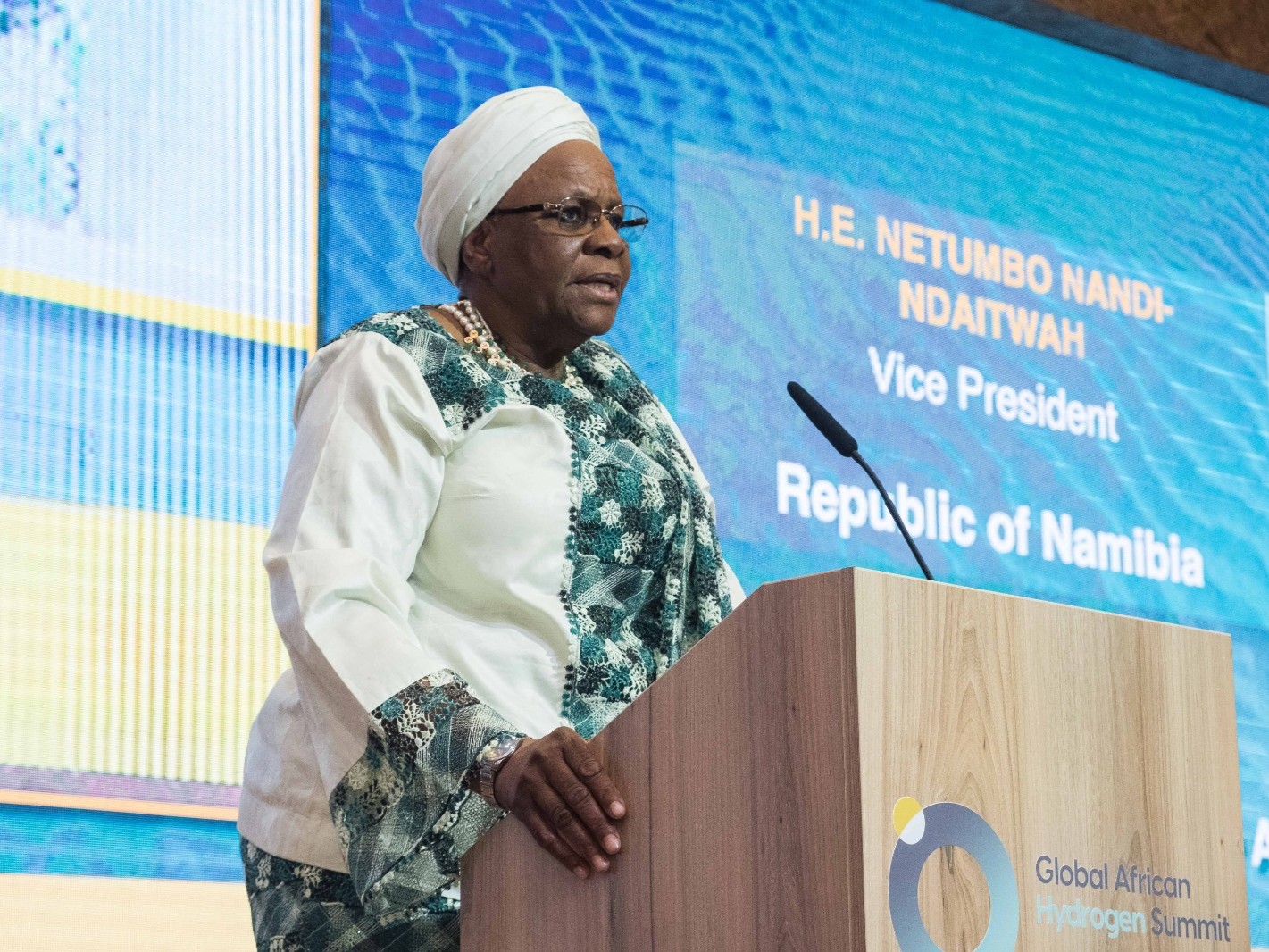
For the first time since independence in 1990, the ruling party is fielding a 72-year-old female presidential candidate.
Netumbo Nandi-Ndaitwah has served as Namibia’s vice president since February 2024.
Previously she served as the deputy prime minister of Namibia from 2015 to 2024.
Nandi-Ndaitwah is currently the SWAPO vice president.
In an election where the youth vote is expected to be decisive, the ruling SWAPO is predicted to score a narrow victory, aided by a fragmented opposition landscape in the country.
In the special voting conducted on Wednesday, 13 November 2024, about 16 352 Namibians in the security cluster, seafarers, and those living abroad voted.
SWAPO secured 60% of the preliminary votes for the National Assembly.
SHIFT OF SUPPORT
Political analyst Ndumba Kamwanyah says the support shown for the opposition Independent Patriots for Change (IPC) and the Affirmative Repositioning (AR) party signals a continued shift of support from the ruling party.
“SWAPO still leads, but the closeness of the margins suggests that more voters are willing to consider alternatives, indicating growing competition and perhaps dissatisfaction with traditional politics,” Kamwanyah says.
The younger urban votes battling unemployment have grown impatient with the ruling party and are seeking alternatives.
Namibians born after independence in 1990 make up more than half of the country’s three million people, with an average age of 21.
These are widely seen to be the decisive factor in this election.
Political analyst Henning Melber, an extraordinary professor at the University of Pretoria and the University of the Free State, believes that SWAPO, which has been in firm political control of Namibia since independence, is about to lose that grip on power.
The 2019 elections marked a turning point when SWAPO lost its two-thirds majority in Parliament.
President Hage Geingob was re-elected with only 56% of the votes cast, compared to the 87% he got in 2014.
Geingob passed away earlier this year on 4 February 2024 aged 82.
Melber believes the waning support reflects disappointment over unfulfilled promises the ruling party was making.
“I have followed and analysed policy in Namibia since independence,” Melber says.
“In my view the upcoming Presidential and National Assembly elections signify a new political scenario.
“For the first time, a clear victory for SWAPO seems less certain.”
FRAGMENTED OPPOSITION
Nandi-Ndaitwah would be the first female Namibian head of state if elected.
However, she faces strong competition from the IPC’s candidate Panduleni Itula.
There are also other presidential candidates nominated by parties with notable followings raising the possibility that, for the first time, no candidate may achieve an absolute majority in the first round.
However, the fragmentation of the opposition in Namibia is seen as giving the ruling SWAPO party a lifeline.
Rui Tyitende, a political scientist at the University of Namibia, decries what he describes as opposition parties being marred by political promiscuity, factionalism, internal conflicts, and a perennial struggle for power.
Tyitende believes that a united opposition can easily unseat a dysfunctional SWAPO party.
His sentiments are echoed by 22-year-old Joseph Angula, an unemployed youth graduate still searching for a credible opposition party to vote for.
“At the moment voting for any of the opposition parties is like throwing away your vote,” says Angula.
“You know that their chances of defeating SWAPO on their own are very slim, but a united front presents the best chance to unseat SWAPO.”
‘THIS IS NOT BOTSWANA’
A few weeks ago, an opposition coalition in Botswana, the Umbrella for Democratic Change, secured a landslide victory in a general election which ended the ruling Botswana Democratic Party’s 58-year reign.
But, Nandi-Ndaitwah says this will not happen in Namibia.
“The opposition in Botswana built a coalition aligned with the former President Ian Khama. The fight was between Masisi and Khama. None of that will happen in Namibia,’’ she says.
Nandi-Ndaitwah describes opposition political parties in Namibia as “fragmented as the wind of Alaska.”
Though SWAPO may revel in the division within the opposition, the real question remains – is Namibia’s deeply rooted patriarchal society ready for a female President?
Political analyst Rakkel Andreas says traditionally, women’s involvement in active politics is often overshadowed by the perception that they lack the understanding and will to navigate the political arena compared to men.
“Matter of fact, when a woman steps up to contest, her credibility is questioned and it is a question of merit that is being pushed, while when it is male candidates, nobody questions whether they are qualified or not,” Andreas says.
Women are frequently at a disadvantage, as they are predominantly viewed as caretakers, rather than leaders.
Will Nandi-Ndaitwah rise above the patriarchy in Namibia’s politics?
November 27 will provide the answer.
*Tabby Moyo is a veteran Namibia-based journalist and former editor who has worked for several newspapers in Namibia. The views expressed by Tabby Moyo are not necessarily those of The Bulrushes