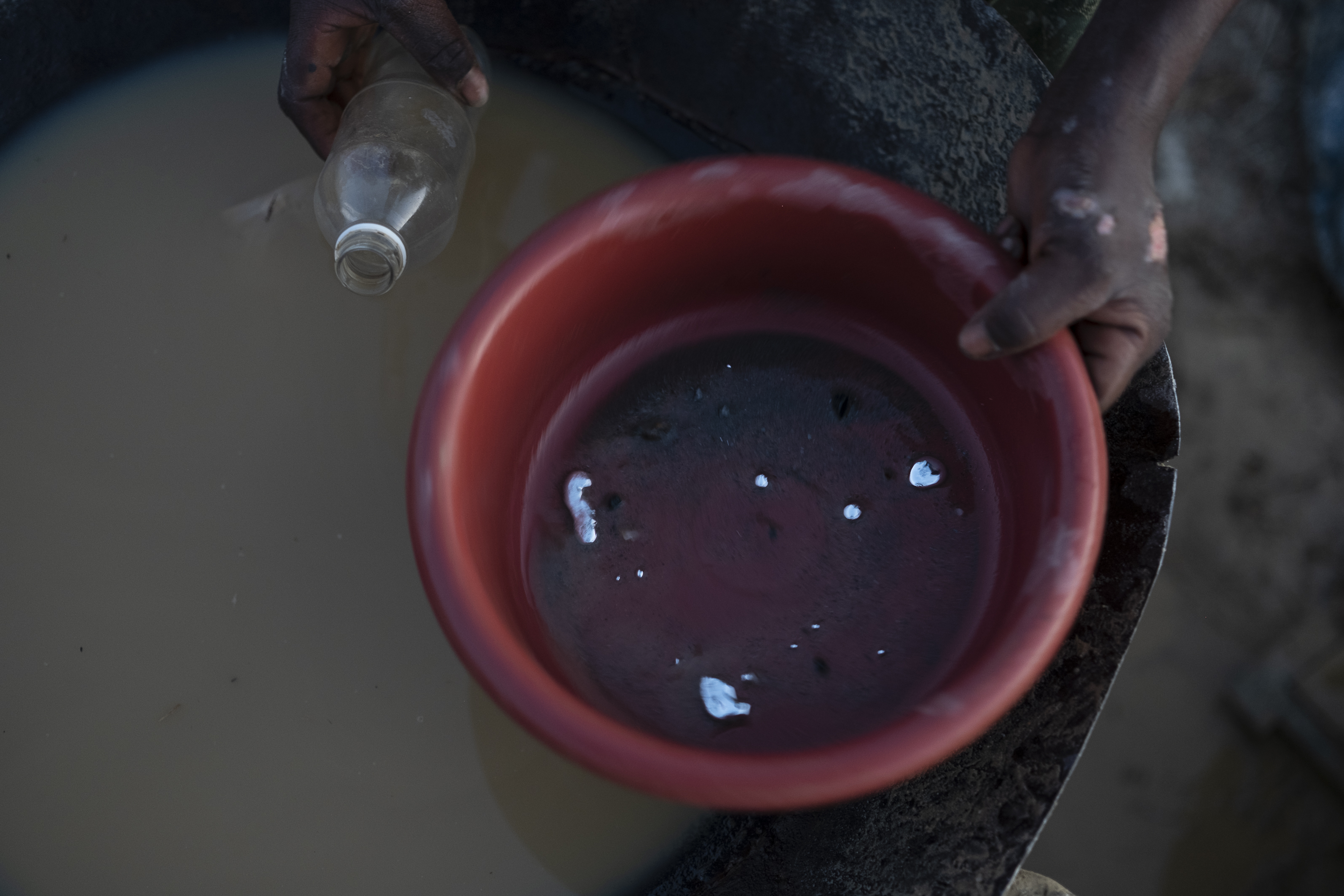
Harare – Zimbabwe’s government says it has launched a $23.7 million USD project to reduce mercury across mine sites in the country.
Mercury is a toxic chemical used by the artisanal gold mining sector to extract gold from ore.
Mercury damages the lungs, skin, and eyes.
The chemical can travel far from where it is released, polluting the air, water, and soil.
Furthermore, it bioaccumulates up the food chain.
In Zimbabwe, over 300 000 people work in artisanal gold mining, with the sector contributing to more than 40 percent of the country’s mineral exports.
Across the country, 96 percent of artisanal gold mine sites use mercury, with miners often forgoing protective equipment and risking exposure to toxic fumes.
Zimbabwe’s artisanal gold mining activities result in more than 24 tonnes of mercury being released annually.
The five-year planetGOLD Zimbabwe project is financially supported by the Global Environment Facility (GEF) and implemented by the United Nations Environment Programme (UNEP).
The project is executed by the international non-profit organization, IMPACT, in close coordination with the government of Zimbabwe.
The project will work together with local communities to reduce the use of mercury in artisanal and small-scale gold mining – the world’s largest source of anthropogenic emissions of mercury pollution – while improving the health and lives of local mining communities.

The Zimbabwe project is part of a global programme implemented in 25 countries.
The planetGOLD Zimbabwe project plans to support 7 500 men and women at 11 districts in Zimbabwe, reducing mercury use by 4.85 tonnes.
In addition to mercury reduction, the project aims to support formalisation of the artisanal gold mining sector and increasing miner’s access to finance.
This will lead to the adoption of mercury-free technologies and promote more responsible and traceable gold supply chains.
The project officially launched on November 14 in Harare, with an Inception Workshop that brought together stakeholders to discuss how planetGOLD Zimbabwe will support a more responsible artisanal gold sector.
In a keynote speech, Edward Samuriwo, Acting Permanent Secretary of the Ministry of Environment, Climate, and Wildlife, outlined the project’s significance in addressing the challenges of mercury use in Zimbabwe’s gold mining sector.
Samuriwo reaffirmed Zimbabwe’s commitment to the Minamata Convention on Mercury and emphasised the pivotal role the planetGOLD project will play in supporting the country’s efforts to eliminate mercury use in artisanal gold mining through the implementation of Zimbabwe’s National Action Plan.
Zimbabwe ratified the Minamata Convention on Mercury in 2021. In its National Action Plan, the country committed to strong cooperation among all stakeholders including government agencies and supply chain actors to improve the health and safety of communities involved in artisanal gold mining.
“Through the launch of the planetGOLD project, Zimbabwe moves towards more responsible artisanal gold mining,” said Yann Lebrat, IMPACT’s Deputy Executive Director.
“We look forward to working with all stakeholders to create a sustainable change in the sector.”
For information about planetGOLD Zimbabwe, please visit: http://apo-opa.co/4gEiUY8