Europe stands on the threshold – some would say brink – of a make-or-break quarter-century.
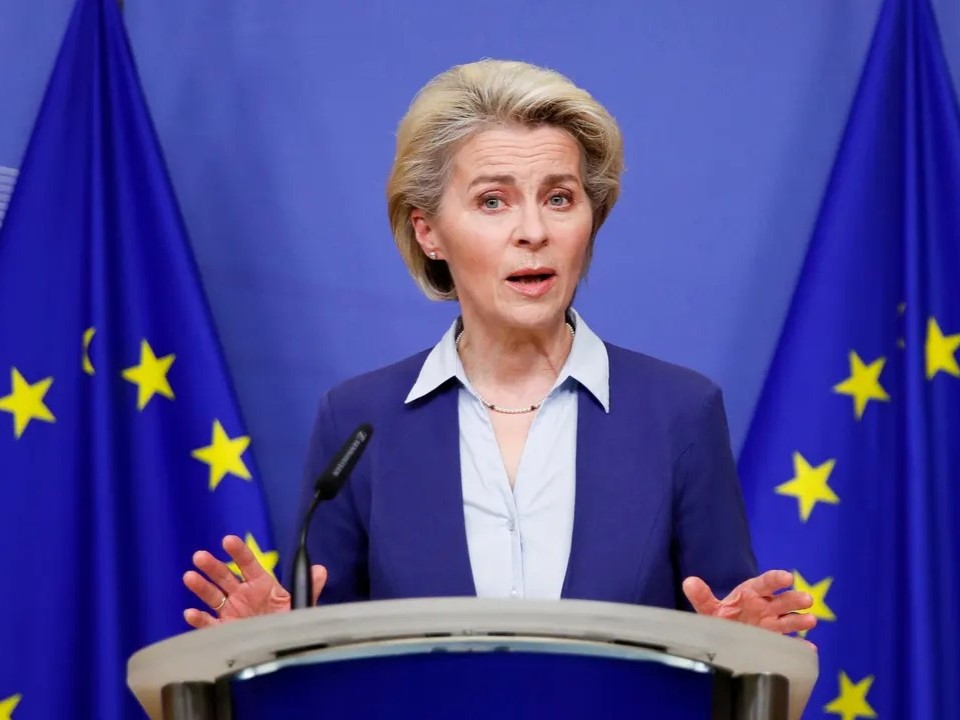
In Brussels, optimists speak of the continuity around Ursula von der Leyen’s second term as Commission President and point towards a return to the EU’s golden uplands.
Others fear the European project now teeters on the edge of irremediable decline.
The EU’s first quarter of this century has been mixed, at best.
Public approval is waning when it’s not evaporating.
The last 25 years have contrasted with the élan, self-confidence and gritty political determination of an EU that delivered Schengen’s borderless travel, most elements of the single market, the euro and its own massive enlargement after the Soviet “empire” collapsed.
Between 1975 and 2000, the European Union became the wonder of the world.
The picture of today’s Europe is very different. It features a drab economic background relieved by vivid splashes representing external geopolitical threats.
These loom ominously yet indistinctly, personified by Trump, the irrational maverick, obsessively deranged Putin and Xi Jinping, whose aim is whole-scale change of the global order Europe depends on.
Frenzied debate in the closing months of 2024 centred on how Europe should respond. Yet policymakers have their eye on the wrong ball.
Europe’s chief difficulties are not external; pressures from beyond Europe exacerbate its structural weaknesses, but did not cause them.
The last 25 years have seen drift and delay as member governments postponed the radical reforms and closer political and economic ties they were pledged to.
Short-term expediency won out.
Weathering the worldwide financial meltdown of 2008-11 and handling the Covid-19 pandemic showed admirable cooperation, but not progress towards a stronger Europe.
Hindsight is derided as a wonderful thing, but it’s also a valuable asset.
A 25-year overview can identify the degrees of industrial and social slippage, and when turned around to apply demographic and technological factors can help map out a strategy to release Europe from its doldrums.
It would be absurd to see Europe’s 21st century reverses so far as an irreversible doom loop.
Complacent Europeans nevertheless need to acknowledge how much ground has been lost if they are to devise different policies.
Catching up with Asia and America will be important, but the first priority must be to address the EU’s own feet of clay.
It needs to go back to basics, and this should be the leitmotif of the five-year mandate that’s now beginning.
“Back to basics” lacks the sexy ring that politicians value, but the basics in question are fundamental to Europe’s future.
They are also crucial to recovering the political stability the EU project depends on.
Basics, therefore, means housing, healthcare, social care for the elderly, pensions and the training and education of a fast-shrinking workforce that will be hard-put to pay for these costs.
None of these are EU competences, but without some sort of European ‘master plan’ they won’t be tackled and the EU will slowly disintegrate.
The scale of these shortcomings is truly alarming, which makes it all the more worrying that they are largely unremarked.
Post-Second World War reconstruction saw Europe’s towns and cities rise from the ashes, yet that frantic housing boom stopped abruptly in the early 1960s just as the European population began exploding.
It grew by a quarter, or 120 million people, to peak in 2015 at almost half a billion. Home building during those years lagged far behind.
More than a quarter of Europe’s citizens are over-burdened by soaring housing costs, with younger couples saying these absorb two-thirds of their wages.
Along with sky-high childcare expenses and inadequately small pay packets, it’s little wonder that fertility has sunk to 1.5 children per couple.
The EU has made some small efforts to address such problems, along with the overall menace of a fast-ageing population.
But these have come in dribs and drabs, adorned with eye-watering financial promises but little evidence that, for instance, its claimed 35mn “affordable” homes will be created by 2030.
The European Investment Bank says €57bn more is needed yearly for social housing, while Bruegel think tankers reckon that figure should be €150bn a year, which would be about three-quarters of the whole EU budget.
When mainstream politicians ask why eurosceptic populists have become so popular, they should look to housing and other key aspects of Europe’s ‘caring society’.
That these are not core EU responsibilities is beside the point. EU officials bemoan the lack of “narrative” that would connect with voters, and being seen to mend these rents in Europe’s social fabric could do just that.
It’s hard to tell whether Ursula von der Leyen would defy national governments with a call for a “Euro-housing” campaign.
But an array of special borrowing mechanisms and national tax breaks could kick-start a building boom, and thus the European economy, while giving the EU the profile and raison d’être it has lost in the minds of many.
There will be detailed objections, but the key point is that the EU remains a 20th-century construct, and must, at the very least, acquire a 21st-century façade.
*The views expressed in this Frankly Speaking op-ed reflect those of the author and not of Friends of Europe.
*This article first appeared on the Friends of Europe website and is reproduced with kind permission.
*The views expressed by the author of this article, Giles Merritt, are not necessarily those of The Bulrushes