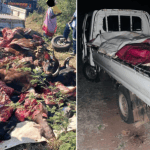
Cape Town – Agriculture Minister John Steenhuisen has moved to curb the spread of foot-and-mouth disease in KwaZulu-Natal.
“This lack of sufficient action is jeopardising farmers’ livelihoods, the agricultural industry, and the economy. This needs to stop. Immediately,” Minister Steenhuisen said Wednesday, (16 April 2025).
During a recent visit to KwaZulu-Natal, many farmers and community leaders sought clarification from Minister Steenhuisen on the current situation and expressed concerns that the department was not effectively addressing it.
He revealed that he has requested the Department of Agriculture to urgently give attention to the needed action plans and steps to ensure inroads are made to effectively curb the spread of foot-and-mouth disease in Kwazulu-Natal.
KwaZulu-Natal has been grappling with 147 active foot-and-mouth outbreaks and despite ongoing efforts by the Department of Agriculture, new infections emerged outside designated Disease Management Areas that were declared in 2021 when outbreaks of the SAT2 foot-and-mouth strain first emerged in the province.
Last month the minister extended the boundaries of the Disease Management Areas to curb further spread of the virus.
“The reports we continue to receive from KwaZulu-Natal regarding the persistent and, in some cases, expanding foot-and-mouth disease outbreaks are of great concern,” Minister Steenhuisen said.
“This, with the slow progress in strengthening our national biosecurity and acquiring vital vaccines, presents significant risks that this government views with serious concern.
“I have directed the department to identify and lift every single impediment standing in the way of vaccines being delivered in a timely manner.”
Minister Steenhuise said he instructed the department to in the immediate term see that:
- The South African Police Service and the Road Traffic Management Corporation is contacted to prioritise and assist with roadblocks and management of animals’ movement;
- Prioritisation of alternative sites for the sale of livestock as well as the identification of an abattoir/s within the Disease Management Areas to provide an alternative for farmers within the Disease Management Areas;
- Procurement and provision of enough vaccines to meet demand for a comprehensive vaccine roll-out;
- Explore mechanisms to declare a state of disaster within the province; and
- Monitor the implementation of the permit system.
Furthermore, the minister stressed the imperative for immediate and significant enhancements to national biosecurity.
“The current control measures, while necessary, are clearly insufficient to contain these outbreaks effectively,” the minister said.
The legislative requirement under the Animal Diseases Act, 1984 (Act No. 35 of 1984) for owners to stop the spread of the disease must be supported by effective government leadership and enforcement.
This includes intensified surveillance, firm enforcement, and providing farmers with the support and know-how they need to implement effective biosecurity.
Update: Eastern Cape
The department reports continued progress in the containment of foot-and-mouth disease in the Eastern Cape.
Encouragingly, no new clinical cases have been observed on farms since the end of July 2024, and farms previously confirmed as positive have remained clinically free of the disease since September 2024.
However, the lifting of the Disease Management Areas restrictions has been delayed due to recent suspect results on two properties.
Of these, one test result has returned negative, and the department awaits the outcome of the second to inform further action.
National Biosecurity and Movement Controls
Control measures introduced in October 2022 remain in effect:
- Movement of cloven-hoofed livestock across South Africa requires a health declaration from the owner.
- Newly introduced cattle, sheep, or goats must be isolated from resident herds for at least 28 days.
Farmers are strongly advised to limit animal movements and exercise caution when procuring animals.
Section 11 of the Animal Diseases Act imposes a legal duty on any owner or manager of animals to take all reasonable steps to prevent their animals from becoming infected with any disease and to prevent the spread of any disease from their animals or land to other animals or other properties.
Essential biosecurity measures include limiting and/or postponing the introduction of new animals if possible and, if necessary, only introducing animals from known clean farms with a health declaration, preventing nose-to-nose contact of farm animals with animals outside the farm, maintaining secure farm boundaries, and restricting access for people and vehicles as much as possible.
Report Suspicious Symptoms
Foot-and-mouth is a controlled animal disease in terms of the Animal Diseases Act.
Any suspicious clinical symptoms (salivation, blisters in the mouth, limping or hoof lesions) must be reported to the local State Veterinarian immediately and such animals must not be moved under any circumstances.
The Act prescribes certain control measures, like isolation and movement control that are being enforced by Veterinary Services.