Johannesburg – This year, 2025, South Africa commemorates the 60th anniversary of SAFARI-1, the country’s pioneering research reactor and the cornerstone of its nuclear expertise.
It was launched in 1965 and has remained in operation for six decades – an extraordinary lifespan by global standards.
Beyond longevity, the reactor has played a defining role in shaping South Africa’s global identity in nuclear science, contributing to medical isotope production, training engineers, and enabling participation in international projects such as the Barakah nuclear power plant in the UAE.
Coincidentally, 2025 also marks 80 years since the launch of the Russian nuclear programme – a moment that highlights not just history, but the long arc of global nuclear collaboration.
Since 1945, Russia’s nuclear sector has evolved into one of the most experienced and wide-ranging in the world, with achievements that include the development of one of the world’s largest reactor fleets, a robust scientific infrastructure, and expertise in fuel technology, radioisotopes, and reactor exports.
And yet, it is not these milestones alone that bind Russia and South Africa, but the fact that the two countries have quietly built a portfolio of practical, high-impact nuclear cooperation over the past decades – in education, medicine, conservation, and capacity development.
South Africa’s nuclear legacy, once centered around SAFARI-1, has grown into a regional knowledge base and gateway to the continent’s nuclear future.
The country remains the only one in Africa operating a commercial nuclear power plant – Koeberg – and it has become a reference point for African nations exploring the role of nuclear in their energy transitions.
Gaspard Liyoko Mboyo, the Chairperson of the African Commission on Nuclear Energy (AFCONE), highlights the importance of this perspective: “When nuclear technologies are developed with African priorities and talent in mind, they become more than just a tool of progress – they contribute to strengthening the dignity, resilience, and long-term sovereignty of our continent.
“This enables us to respond to Africa’s unique challenges using our own approaches, while making a meaningful contribution to global progress.
“This is not only about energy – it is about shaping a future that reflects African values, needs, and aspirations.”
South Africa also plays a unique role within BRICS, not just as its only African member, but as a bridge between emerging nuclear players and traditional nuclear powers.
The country’s involvement in both frontier research and operational deployment has turned it into a contributor of substance in global nuclear dialogues.
Among the most striking examples of South Africa’s international reach is the Rhisotope Project – an innovative collaboration launched by the University of the Witwatersrand and South African company RadChem, with key scientific contributions from Russian experts during its formative stages.
The project uses radioisotopes to mark rhino horns, making them easier to trace and less valuable to traffickers.
This South African-led initiative has captured global attention, demonstrating how nuclear science can be applied to wildlife protection.
Russia’s early involvement was instrumental in shaping the scientific and technical framework of the project, paving the way for broader cross-border applications of nuclear technology beyond the energy sector.
Workforce development is another area where the partnership has yielded meaningful results.
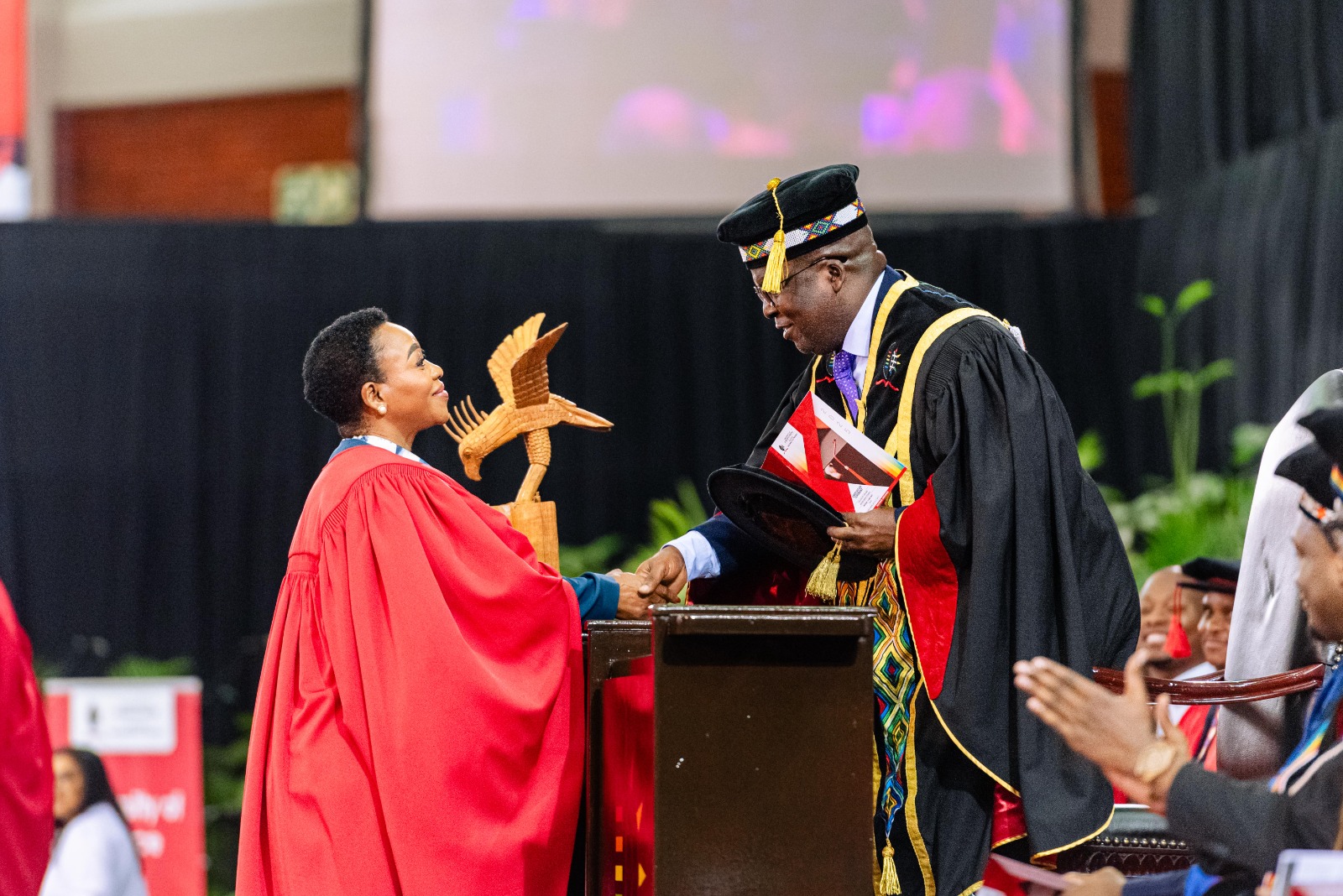
Since 2013, Rosatom has been providing scholarships for African students pursuing nuclear engineering degrees in Russia.
In 2021, the Russian state nuclear corporation formalised cooperation with the University of Zululand, and in 2024 signed a roadmap with South Africa’s Eskom Holdings to expand educational collaboration through 2026.
The roadmap includes training, youth programmes, and efforts to boost women’s participation in nuclear professions.
It is part of a wider strategy to localise expertise and build sustainable knowledge transfer between the two nations.
The collaboration extends into industrial applications as well. At the African Energy Week in November 2024, Rosatom’s fuel division, TVEL, signed a memorandum of cooperation with South African firm AllWeld Nuclear and Industrial.
The partnership aims to address complex tasks such as decommissioning, waste management, and component production – signalling a shift towards long-term collaboration in maintenance and lifecycle support.
This increasingly structured cooperation has found additional momentum within BRICS.
In October 2023, at the BRICS Energy Ministers Meeting in Johannesburg, nuclear energy was named a strategic priority.
The ministers committed to deeper cooperation in developing small modular reactors (SMRs), localising supply chains, and fostering environments conducive to nuclear investment.
Rosatom CEO Alexey Likhachev emphasised the importance of technological sovereignty and mutual empowerment among Global South nations.
South Africa, hosting the summit, positioned itself not just as a participant but as a facilitator of dialogue between advanced and emerging nuclear economies.
South Africa and Russia share more than anniversaries – they share challenges and ambitions.
Both must modernise ageing infrastructure, such as the SAFARI-1 reactor, and both are working to develop the next generation of nuclear professionals.
South Africa, through its institutions like NECSA, NTP Radioisotopes, and iThemba LABS, continues to supply radioisotopes to over 50 countries and provides key diagnostic isotopes such as molybdenum-99, lutetium-177, and samarium-153.
Russia, for its part, offers deep operational expertise and proven models of technology transfer – not through empty memoranda, but through active educational, humanitarian, and industrial projects already in motion.
As SAFARI-1 nears the end of its operational life, South Africa is preparing to build a new multipurpose research reactor to ensure continuity in isotope production and research capabilities.
Meanwhile, Koeberg’s extended licence to operate until 2044 ensures continued use of nuclear power.
But the broader question is not just about South Africa’s national capacity – it is about its role as a regional leader and global collaborator in a time of urgent energy and climate challenges.
The anniversaries being marked in 2025 are more than symbolic.
They are a reminder that nuclear progress is not built in years or even decades – it is built in generations.
South Africa’s legacy, born in the 1960s and sustained through strategic choices, now meets Russia’s experience in a shared space of action.
Together, they show that nuclear science thrives not only in laboratories and power stations, but in classrooms, conservation efforts, and joint visions for a cleaner, more resilient world.