Kampala – It was a local election, and, for most of the day, it was peaceful, says Huzaifa Mugerwa, a young journalist covering voting for the first time.
But as the day of voting wrapped up, Mugerwa says, a masked man kicked a ballot box.
The police watched as people started shouting, then men in military uniforms took the masked man away.
People began to throw stones at the military.
Then, he says, soldiers began to beat people. Two more military vehicles showed up, with more soldiers.
Mugerwa live-streamed the event until he was approached by some masked men who asked who he worked for.
“He took my recorder, stand, and camera, lifted me by the pants so only my toes could touch the ground, and dragged me to a van,” Mugerwa says.
Inside, he says, were two other journalists. Mugerwa says he was blindfolded, interrogated, and beaten.
“They asked if I was working for Bobi Wine,” Mugerwa says, referring to the controversial activist, singer, and politician.
This continued for six or seven hours, he says, until he was tossed from the vehicle.
Violence against journalists, long a threat and often a reality, has worsened as Uganda heads toward general elections in January 2026.
Mugerwa and others worry that the violence and intimidation by security forces will deter adequate and true coverage of the elections, and threaten public access to vital information.
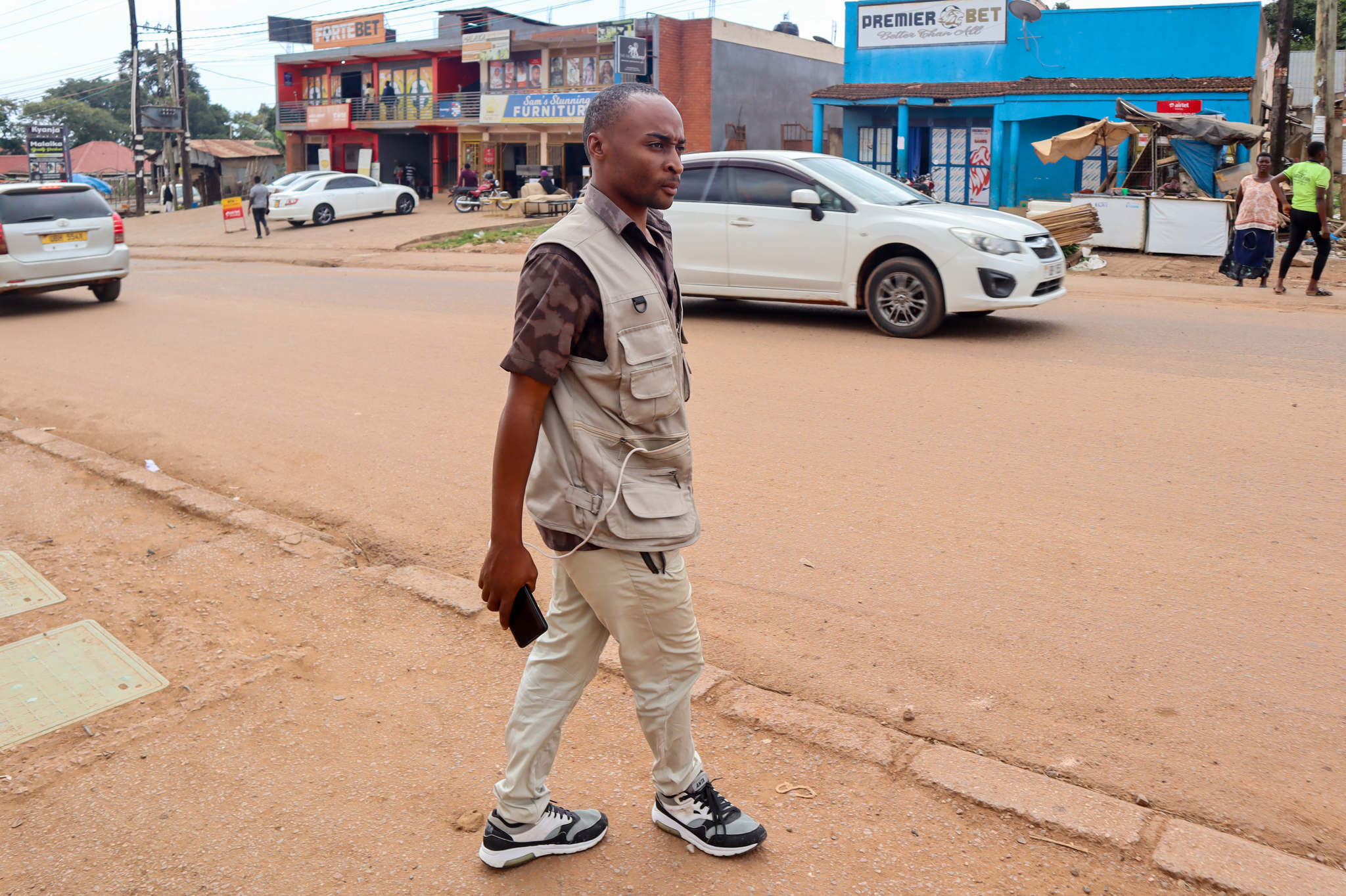
Journalist Huzaifa Mugerwa reports in Kyanja, a suburb of Kampala.
Mugerwa says he was assaulted by masked men and detained for hours because he’d live-streamed violence during a local election in March.
He says military forces beat him and questioned whether he worked for opposition leader Bobi Wine.
Emmanuel Kirunda, secretary general of the Uganda Journalists Association, says that 33 journalists were attacked by armed forces during two days in March, while they covered the same election that Huzaifa covered.
“This forced many media organisations to suspend covering the election, calling [in] their reporters because it wasn’t safe anymore,” he says.
Daniel Kalinaki, general manager of editorial at Nation Media Group in Uganda, a leading private media group, posted on X that the organization’s journalists would be pulled from coverage of that same election because they were targeted and attacked by armed soldiers.
Chris Magezi, acting spokesperson of Uganda People’s Defence Forces – Uganda’s army – says violence against journalists during that election was a result of ineffective coordination between the military and the media.
Better coordination is needed, he says, to avoid violence in the future.
Magezi says militant politicians with the National Unity Platform, the leading opposition party led by Bobi Wine, whose legal name is Robert Kyagulanyi Ssentamu, are responsible for the violence.
“The radical NUP, they have been assaulting other people who they think don’t support their boss,” he says, adding that such conduct forces the police to call the military for backup.
General Muhoozi Kainerugaba, chief of the Defence Forces – and President Yoweri Museveni’s son – in 2022 promised in a post on X that journalists “will feel us soon. We will crush you.”
Julius Mucunguzi, spokesperson for the Uganda Electoral Commission, says the media plays a critical role in ensuring free and fair elections, but the commission can’t guarantee the safety of journalists.
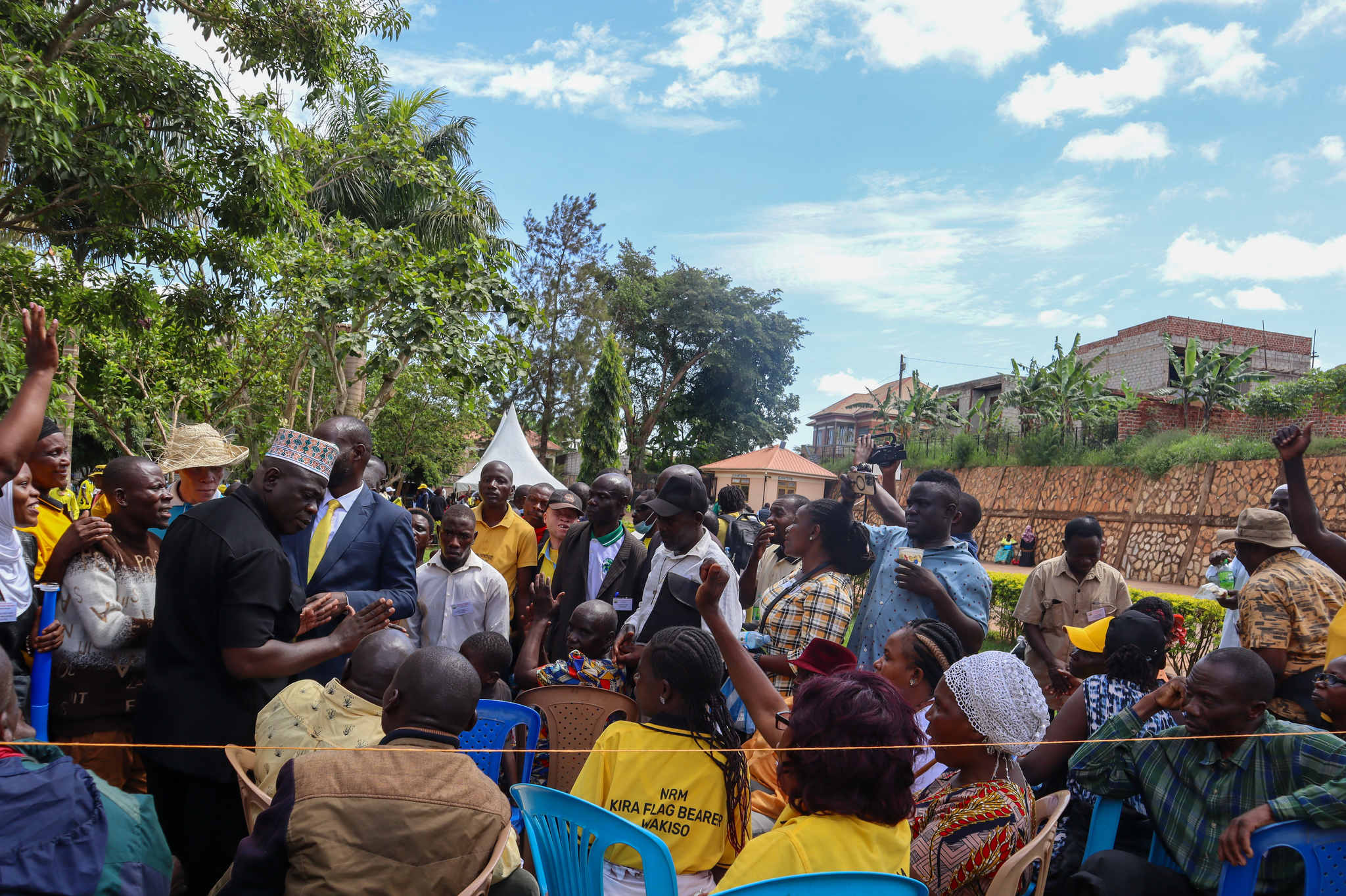
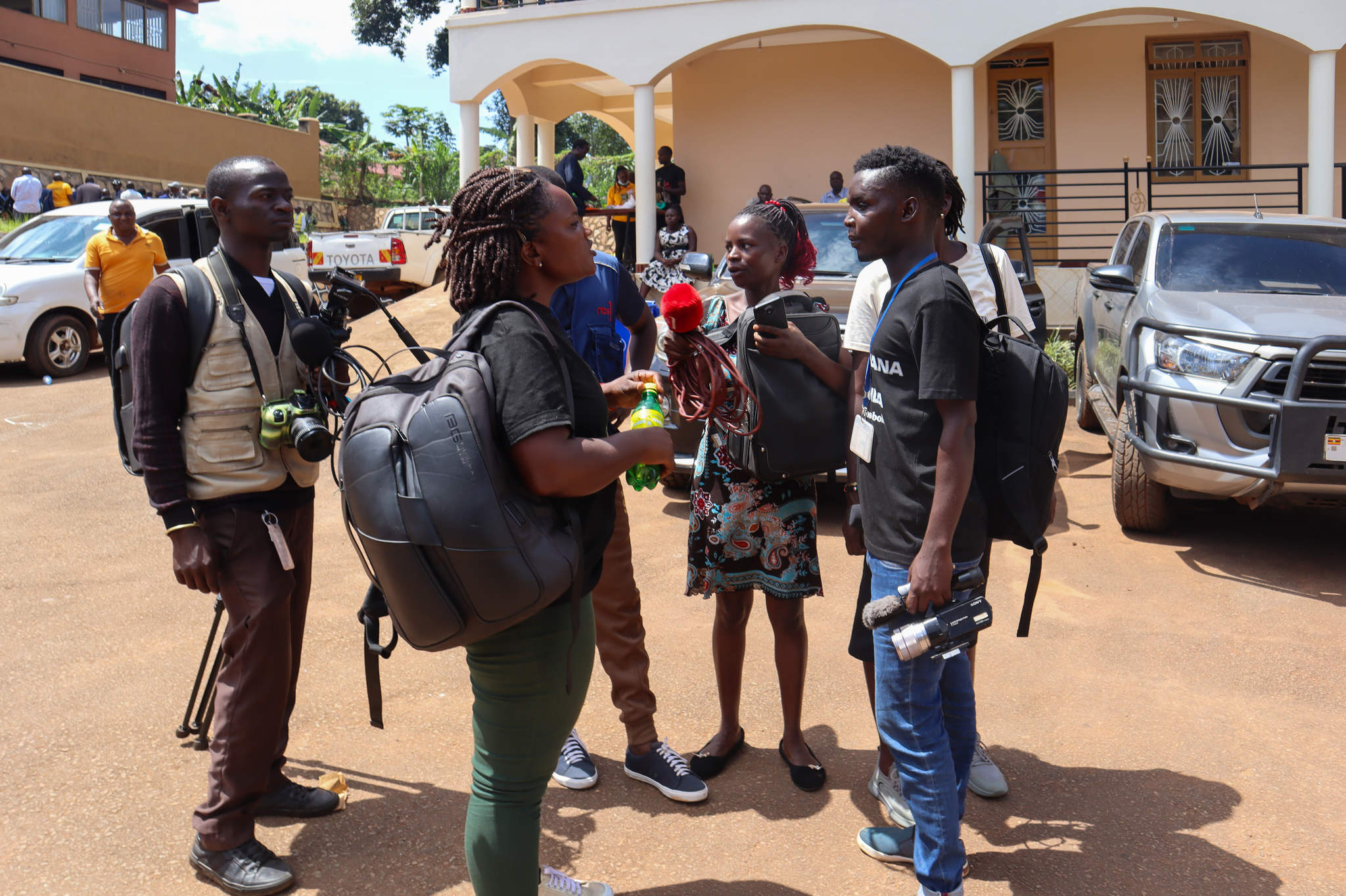
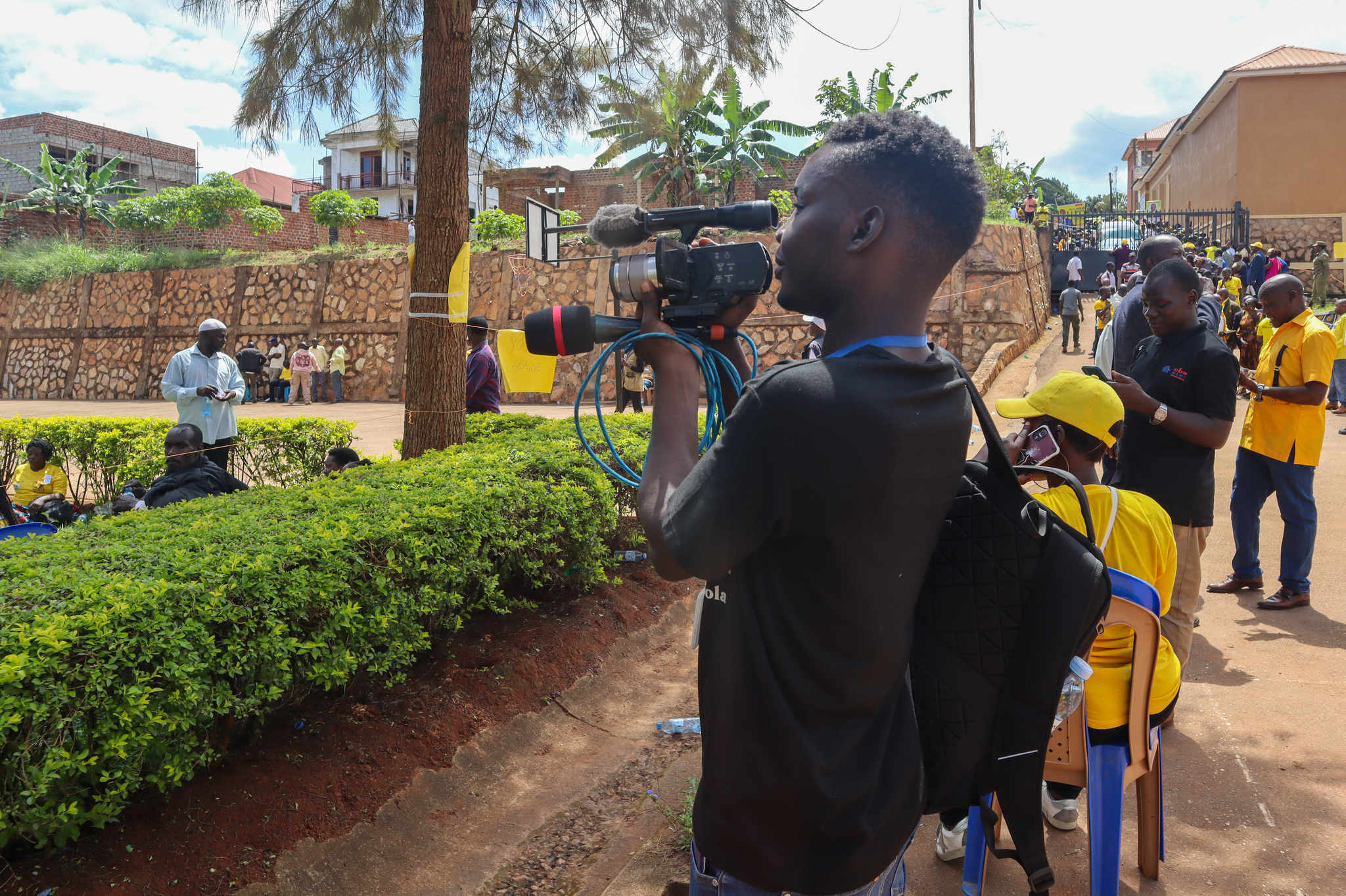
Journalist Miracle Ibrahim, right, works alongside fellow reporters in Wakiso District while covering the National Resistance Movement’s primary election for district chairman.
Ibrahim says he was severely injured by security forces earlier this year while reporting on another election.
The best thing, he says, is for journalists to work as a collective. “The electoral commission alone can’t stop brutality,” he says.
Violence against journalists in Uganda dates back many decades. In 1944, Daudi Mukubira, founder of Buganda Nyaffe, a publication that accused the British colonial regime of enslaving black Africans through unjust policies, was arrested and tried.
The attack on press freedom and journalists continued even in post-independence governments with the closure of media organisations and murders of journalists during the Milton Obote and Idi Amin regimes of the 1960s, 1970s and early 1980s.
There’s no indication that control of and violence toward media will end now, even in light of a 2024 High Court ruling that attacks on journalists are unconstitutional, says Kirunda, of the Uganda Journalists Association.
There is “little or no will from armed forces to protect journalists,” he says.
Miracle Ibrahim, a reporter with Top TV, says he nearly lost his eye while reporting on an election in February.
Members of the Joint Anti-Terrorism Task Force approached him and someone hit him hard in the face, he says.
Nakisanze Segawa, GPJ Uganda
Miracle Ibrahim covers the National Resistance Movement’s primary election for the Wakiso District chairman seat in Wakiso District.
In February, Ibrahim was struck in the face by a member of the Joint Anti-Terrorism Task Force, nearly losing his eye.
He says he continues working as a journalist because of his love for the profession.
“I do remember touching where I had been hit and feeling a hole instead of my eye,” he says, adding that he was soaked in blood.
He was taken to a local hospital and underwent surgery.
To his surprise, he says, doctors told him he would keep his eye and recover his sight. He says he still, at times, feels terrible pain.
He says he will continue working as a journalist because he loves his job.
“We don’t have any issues with the military,” he says.
“We are not armed.”
Mugerwa also says he’ll remain in journalism, but only because there are few jobs in other fields.
“If I can find another job that pays me well, I will definitely leave journalism,” he says.
“The risk, the pain, the inhuman treatment by authorities [who are] supposed to protect me when I am doing my job, isn’t worth it.”
*Nakisanze Segawa is a Global Press Journal Reporter-in-Residence based in Kampala, Uganda.
*This story was originally published by Global Press Journal, which delivers bold, investigative, and in-depth explanatory reporting on the world’s most urgent issues