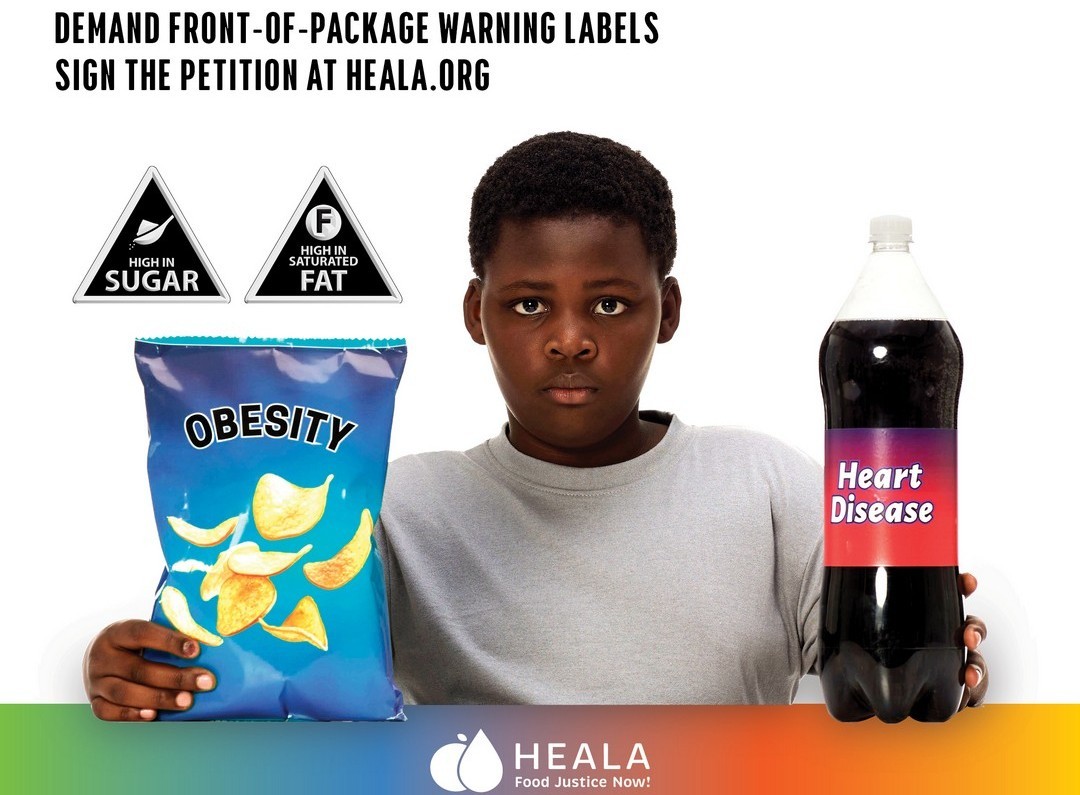
Johannesburg – The Healthy Living Alliance (HEALA) says it wants the government to crack down on a growing threat to children’s health – unhealthy packaged foods.
The call to action by HEALA comes during National Child Protection Week, observed from 29 May to 5 June 2025.
In the aisles of our supermarkets, children are bombarded with food and beverages high in sugar and saturated fat contained in colourful packaging, often with cartoon characters and misleading health claims.
These are the very foods driving the rapid rise in childhood obesity, a public health crisis that is quietly escalating.
In just 10 years, obesity rates among children in South Africa have climbed from one in 20 to one in eight.
If nothing changes, by 2031, more than 4 million children aged 5 to 19 could be affected, placing South Africa among the top 10 countries in the world for childhood obesity.
This significantly increases their risk of developing chronic illnesses later in life, such as diabetes, hypertension, and heart disease.
“This is a matter of child protection,” says Zukiswa Zimela, Communications Manager at HEALA.
“Children are highly vulnerable to packaged food that is often harmful to their health.
“Parents are trying to make good choices, but without clear, visible warnings, they’re set up to fail. We can’t afford to continue this way.”
HEALA is calling on the Department of Health to urgently implement mandatory front-of-package warning labels (FoPWL) with simple, clear icons that flag when a product is high in salt, sugar, or saturated fat and contains artificial sweeteners.
These labels are already making a difference in countries like Chile, Mexico, and Argentina.
The labels have helped reduce the intake and changed the perceived healthfulness of unhealthy food.
In Chile, studies have shown that warning labels contributed to a sharp drop in sugary drink consumption, reduced exposure to unhealthy food advertising aimed at children, and pushed companies to change their recipes.
“It works. And it’s time we did the same here in South Africa,” says Nzama Mbalati, CEO of HEALA.
“The World Health Organization recommends front-of-package labels as a best-buy public health intervention,” says Mbalati.
“These labels are most effective when they are mandatory, interpretive, and easy to understand, especially for people with lower literacy levels, like children.
“The science is clear. We have the evidence. What we don’t have is the political will to act.”
South Africa’s draft regulations (R3337), which include mandatory front-of-package warning labels for foods high in sugar, salt, and saturated fat and that contain artificial sweeteners, were published in April 2023 but remain unfinalised.
Despite strong public support and growing health risks, the National Department of Health has yet to act. By February 2024 – six months after the public comment period closed – submissions still hadn’t been reviewed.
A former department official admitted the regulations were “shot down internally for reasons that remain obscure.”
Thousands of public comments called for implementation by the end of 2023, but food industry pressure is widely believed to be behind the government’s hesitation.
“Meanwhile, children are getting sicker,” says Mbalati.
“They’re being set up for a lifetime of health complications like diabetes, high blood pressure, and heart disease because there is no protection in place to limit the daily exposure to harmful food.”
Yolanda Tarisayi Radu, Senior Researcher, Law and Policy at PRICELESS, says: “Research shows that front-of-package warning labels are not only a proven way to reduce the consumption of unhealthy foods but are also fundamental to protecting the constitutional right to health for every child in South Africa.
“Clear and visible labels empower families to make healthier choices and hold food manufacturers accountable.
“Implementing mandatory front-of-package labelling is an urgent step towards fulfilling our obligation to safeguard the health of every child.”
HEALA warns that voluntary, non-interpretive labelling schemes have failed to make any real impact.
They are often confusing, inconsistent, and easy for manufacturers to bypass.
“That’s why we need mandatory warning labels. We cannot allow food companies to keep putting profits before people’s health,” says Zimela.
A South African study compared three front-of-package labels – GDA, traffic lights, and a warning triangle.
GDA (Guideline Daily Amounts) labels, with numbers and percentages, left many consumers confused.
Traffic lights performed slightly better but gave mixed messages when a product had both green and red ratings.
The warning triangle outperformed both, helping more people identify unhealthy foods and lowering their intention to buy them.
In some cases, it was nearly twice as effective as the GDA. The results make it clear: simple, bold warnings work best, especially in a country where many people rely on quick, visual cues to make informed choices.
This Child Protection Week, HEALA is calling on civil society, parents, teachers, healthcare professionals, and concerned citizens to join the movement for stronger food policy and to demand accountability from policymakers.
“Protecting children means giving them a fair chance at a healthy life,” said Mbalati.
“It means standing up to corporate power and putting health before profits.
“It means acting now before more children are harmed.”
To learn more and get involved, visit: https://heala.org
Instagram: @betterlabels_za
Facebook: @betterlabelsza