Harare – Not long ago, grass and flowers grew on the wetland in Borrowdale.
Flocks of birds – including red and yellow bishops – were common here, and butterflies too.
“Everything from anthills, fig trees, and flowers. People took walks there to enjoy the tranquility of the place,” says Brian Foster Mawer, a resident of Dandaro Retirement Village, which abuts the wetland.
The 79-year-old has lived here for more than two decades and has watched much of the wetland disappear.
Over time, people have dug up swathes of the land to cultivate maize, slowly degrading this natural flood buffer and vital water reservoir.
But the remaining wetland may not survive much longer.
Vifot Investments, a real estate investment company, aims to plant concrete in the heart of the wetland.
Heavy vehicles have already started pouring construction materials into this neighborhood west of Harare, as the company primes the land to construct 130 homes and 20 office blocks.
This project, still in its early stages, is just one example of a broader trend where authorities approve large-scale construction projects on wetlands despite clear environmental warnings, says Reuben Akili, director of the Combined Harare Residents Association.
All this is happening as Zimbabwe prepares to host the Ramsar Convention on Wetlands in July.
This global summit is dedicated to protecting the world’s remaining wetlands, but conservationists say the country is losing its own at an alarming rate, and in many cases through questionable land deals and by ignoring environmental regulations.
- Linda Mujuru, GPJ Zimbabwe
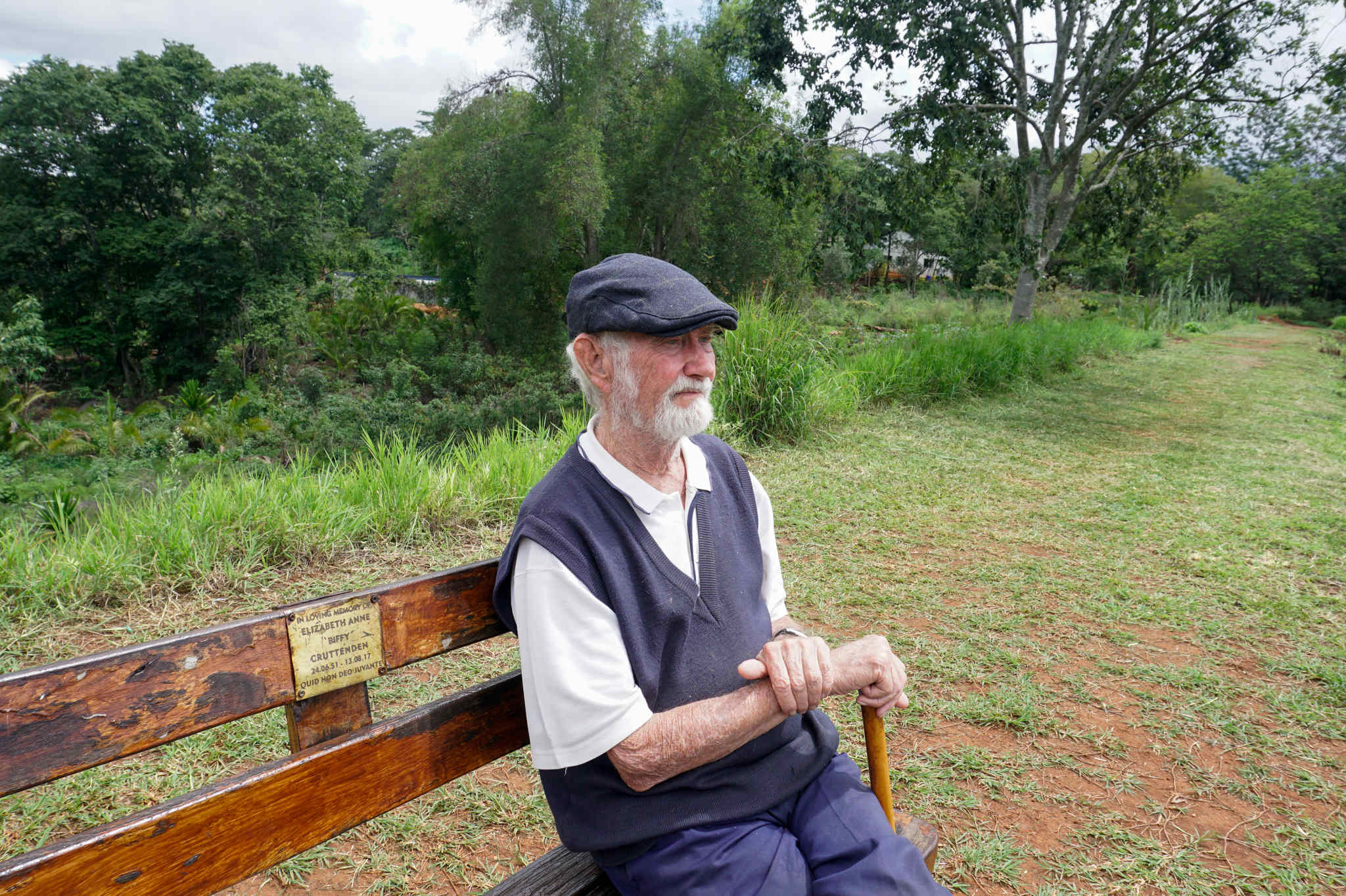
Roger Fairlie sits on a bench overlooking a wetland he helps preserve with other residents in Harare.
Fairlie, founder of the Greystone Nature Reserve, has been vocal about the urgent need to protect wetlands from unchecked development.
“The city of Harare has been irresponsible in terms of allocating pieces of land. They have been allocating land anywhere,” says Robert Mutyasira, chairperson of the Borrowdale Residents and Ratepayers Association.
But the concern runs deeper than just one neighborhood and one construction project.
In 2013, the Longcheng Plaza mall opened atop a vital wetland along the Harare-Bulawayo Highway.
An analysis by Harare Wetlands Trust, using field surveys and Google Earth imagery, found that wetlands across Harare declined by 50% between 2007 and 2019.
The study focused on 10 key headwater wetlands, including Borrowdale.
The organisation attributes the loss to cultivation, housing developments, and illegal settlement.
Wetlands act as natural sponges for rain.
Because so many have been destroyed, heavy flooding has become the norm in the Harare suburbs of Budiriro and Mabvuku.
Borrowdale and Highland Wetlands
Harare, Zimbabwe, between 2011 and 2025
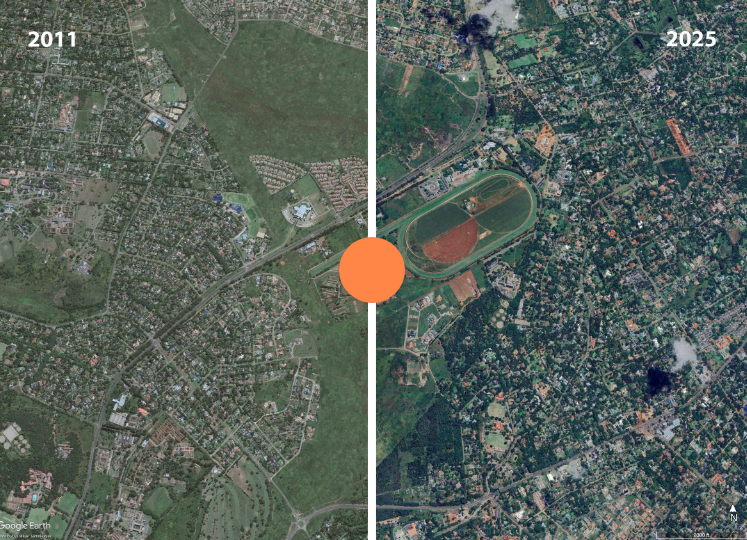
The concern for wetlands preservation stretches beyond Zimbabwe. Jakarta, Indonesia’s capital, is sinking due to decades of wetland destruction.
The crisis there is so bad that the government is relocating the national capital.
In Brazil, massive developments are eating into the Pantanal, the world’s largest wetland.
And in Argentina, the Paraná Delta luxury projects are taking over this vital ecosystem.
In fact, around 35% of the world’s wetlands have disappeared since 1970.
In many of these cases, governments are scrambling to contain the damage, if a little too late.
But in Zimbabwe, the government is aiding destruction that, if continued unchecked, could lead to more severe flooding and worse water shortages, environmentalists say.
On paper, the country has strong environmental laws.
Development on or near a wetland requires consultation with the Environmental Management Agency, and construction should only happen after an environmental impact assessment is approved by the agency.
But enforcement is lax.
In the Vifot Investments case, environmentalists from the Harare Wetlands Trust in a 2021 report accuse authorities of approving an environmental impact assessment while ignoring the serious irregularities it contained.
They allege that Vifot included wrong information about the exact location of the site in the assessment they submitted, in order to bypass regulations.
Although the project site is on a wetland, they say the assessment inaccurately categorizes it as within a light industrial zone in Tynwald, a different location.
The case has been in the national spotlight for some time now. Several city officials have been arrested or charged over the land deal, including Aaron Chigona, director of the Environmental Management Agency.
He was arrested in January 2024 and spent over a year on remand for his alleged role in the controversial land deal.
This March, the court freed him without prosecution, and he retained his role at the agency.
Linda Mujuru, GPJ Zimbabwe
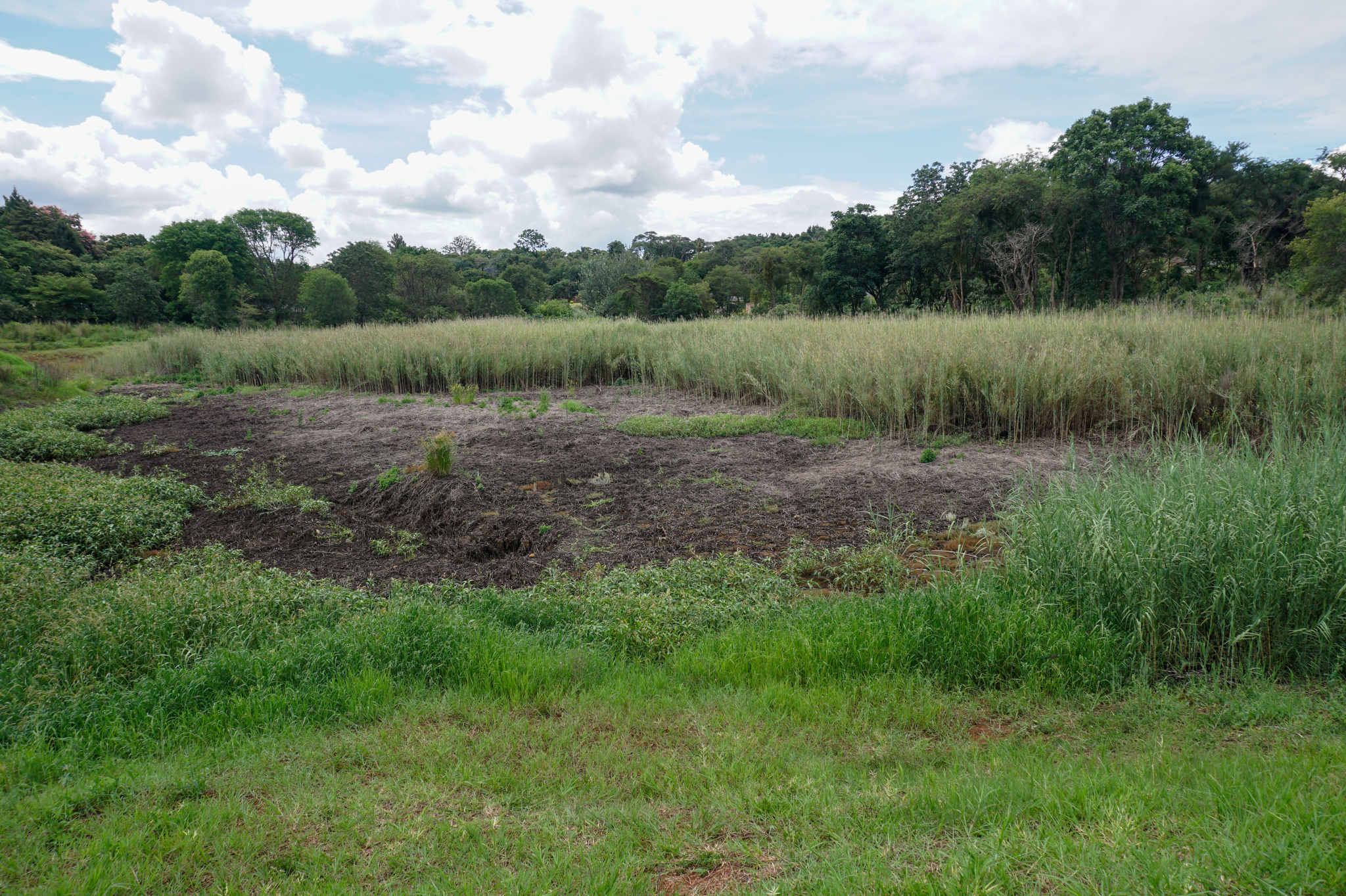
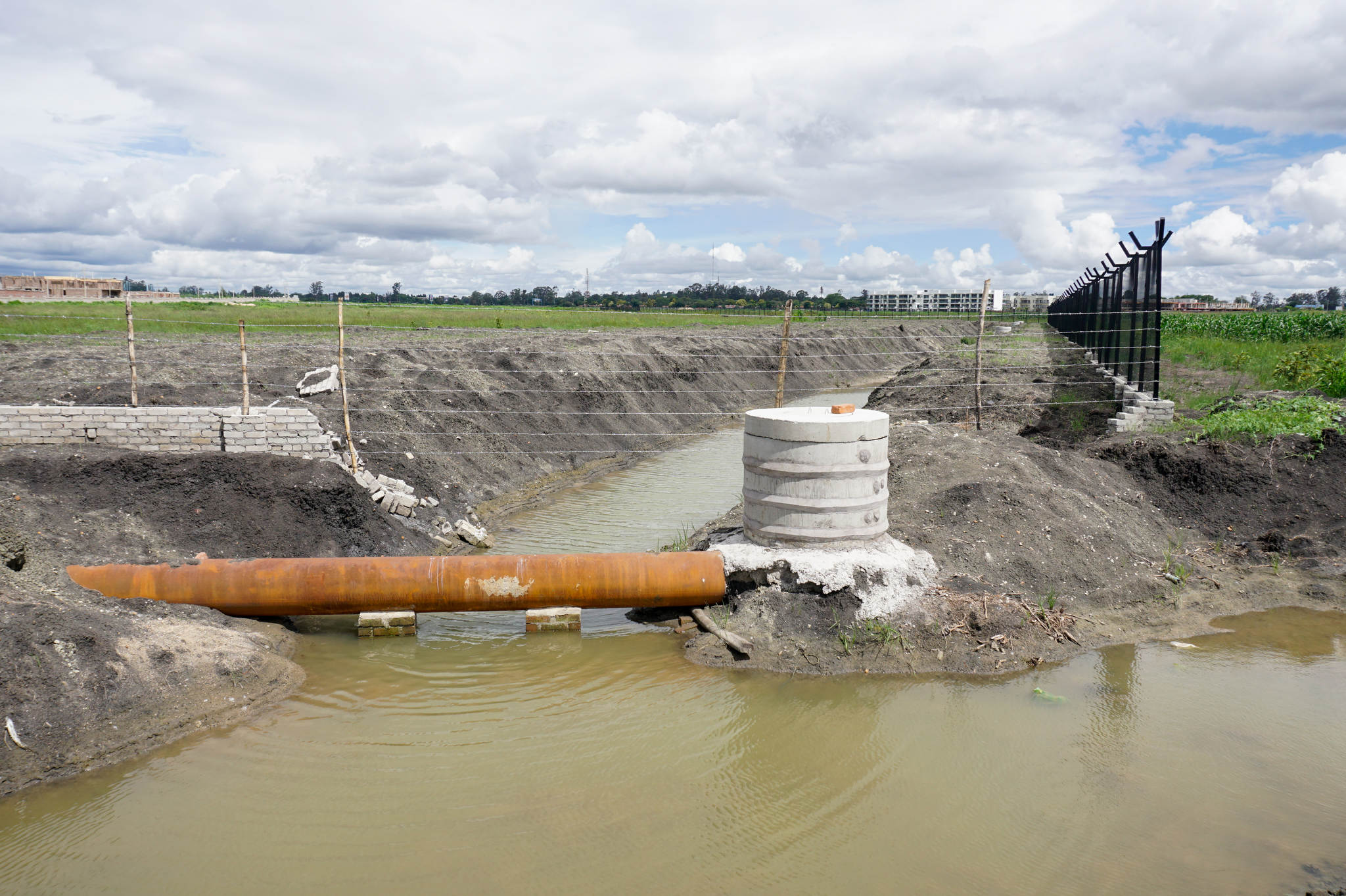
The Borrowdale Vlei wetland in Harare.
A real estate investment company plans to build 130 cluster homes and 20 office blocks on the wetland, raising concerns among environmentalists and residents about water access and ecosystem degradation.
The agency was satisfied with the Vifot environmental impact assessment, says Amkela Sidange, education and publicity manager.
The project will have minimal impact on the wetland, she says.
“[It] includes a nature park within the wetland area, enhancing rather than harming it. The cluster homes will occupy just 5 hectares of non-wetland land,” she says.
When Global Press Journal first reached out to Vifot Managing Director Liangming Jin, he offered the reporter US$200 for “lunch,” which she declined.
What he later told Global Press Journal contradicts information from authorities.
First, Jin says the company plans to construct residential houses on 14 hectares of the land, contrary to the 5 hectares mentioned by Sidange. The company will then construct office blocks on the rest of it.
“I will know the finer details of the office plans in six months, as my architects are still designing,” he says.
Vifot will implement several measures to minimize impact on the environment, such as water canals, he says.
Jin says he bought the land from the city of Harare.
Mayor Jacob Mafume tells Global Press Journal he isn’t aware of Vifot’s particular project, but says he is aware that wetlands are being sold illegally in the country.
Linda Mujuru, GPJ Zimbabwe
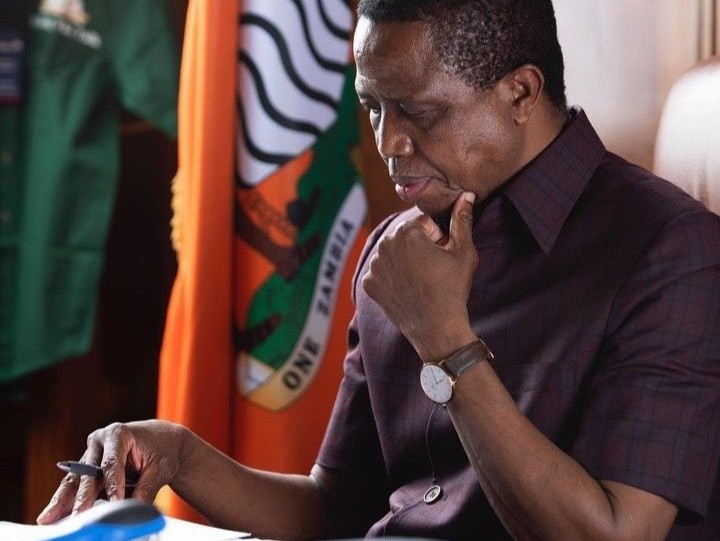
Liangming Jin, managing director of Vifot Investments, at his office in Harare. His company’s plans to develop housing and office blocks on a protected wetland have drawn criticism over misleading environmental assessments and the impact on Harare’s already strained water system.
“Sometimes it’s not brought to our attention,” Mafume says.
When problems are brought to their attention, he says his office “will attend to the reversal if need be or attend to the rectification of whatever problems have emanated from the permission that has been granted.”
The judicial system has failed to protect the country’s wetlands, says Mutyasira, from the Borrowdale Residents Association.
“We have not seen success in the courts.” When wetlands are private property, the issue becomes even more difficult to contest, he adds. But heftier penalties might help.
“Even if wetlands are privately owned, that ownership should be taken away,” he adds.
One solution could be getting the community involved, says Roger Fairlie, founder of the Greystone Nature Reserve, a wetland he maintains with other local residents.
“You can’t do it on your own,” he says. The real power, he adds, lies in helping people understand just how important wetlands are.
Signage, from the Environmental Management Agency, says companies with approved projects should not see approval as a green light to degrade the environment.
It’s a commitment for them to protect it. If not, authorities could easily cancel or nullify certification for construction, she says.
Meanwhile, as the world prepares to gather in Harare and discuss the protection of wetlands, the ground beneath this city is disappearing.
The city doesn’t supply water to many areas of Harare, while in many others, the water that arrives is contaminated. People like Mawer rely on boreholes.
But even the boreholes are drying up, and a large construction project could choke what groundwater remains.
*Linda Mujuru is a Global Press Journal Reporter-in-Residence based in Harare, Zimbabwe.
*This story was originally published by Global Press Journal, which delivers bold, investigative, and in-depth explanatory reporting on the world’s most urgent issues