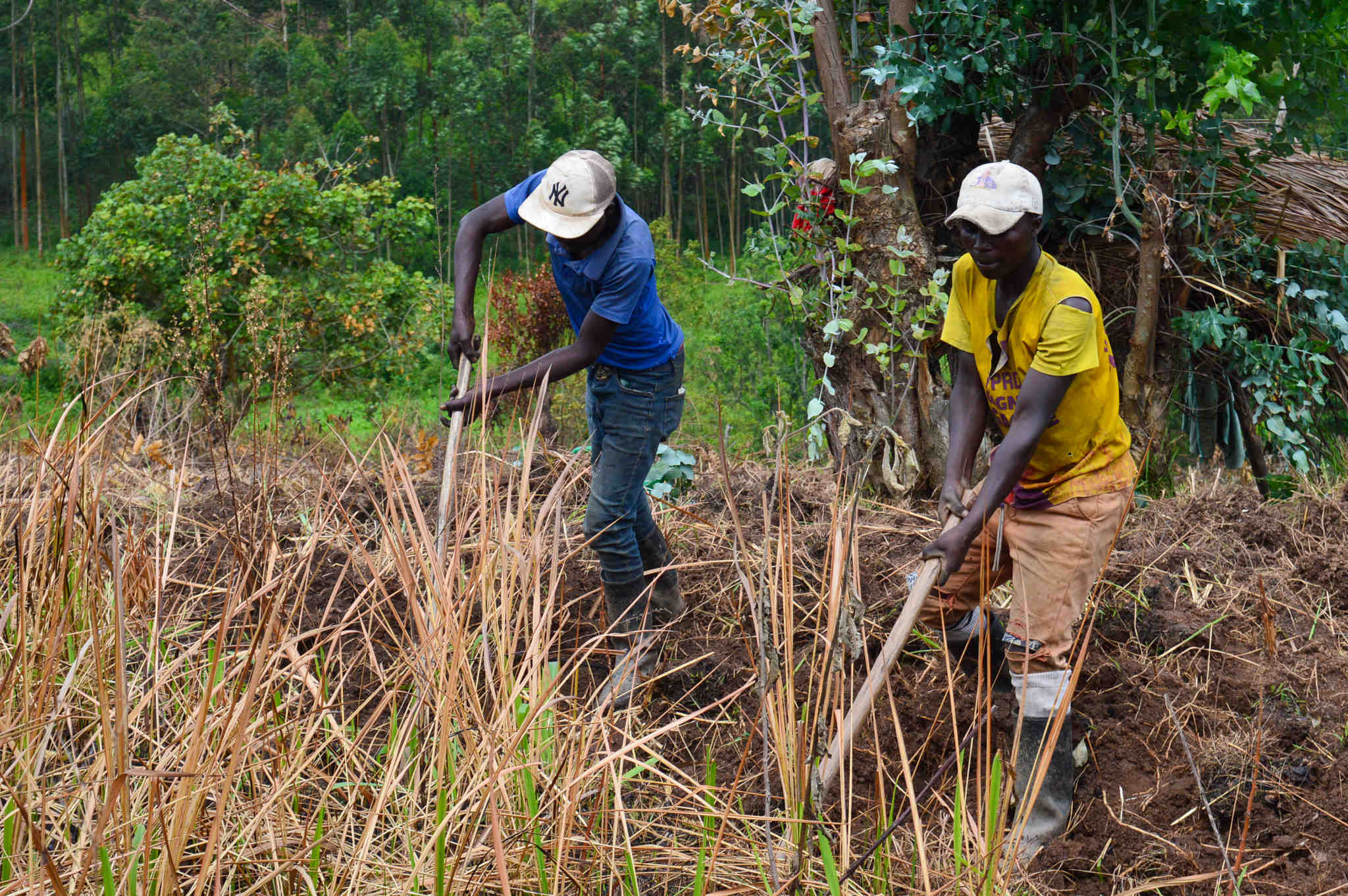
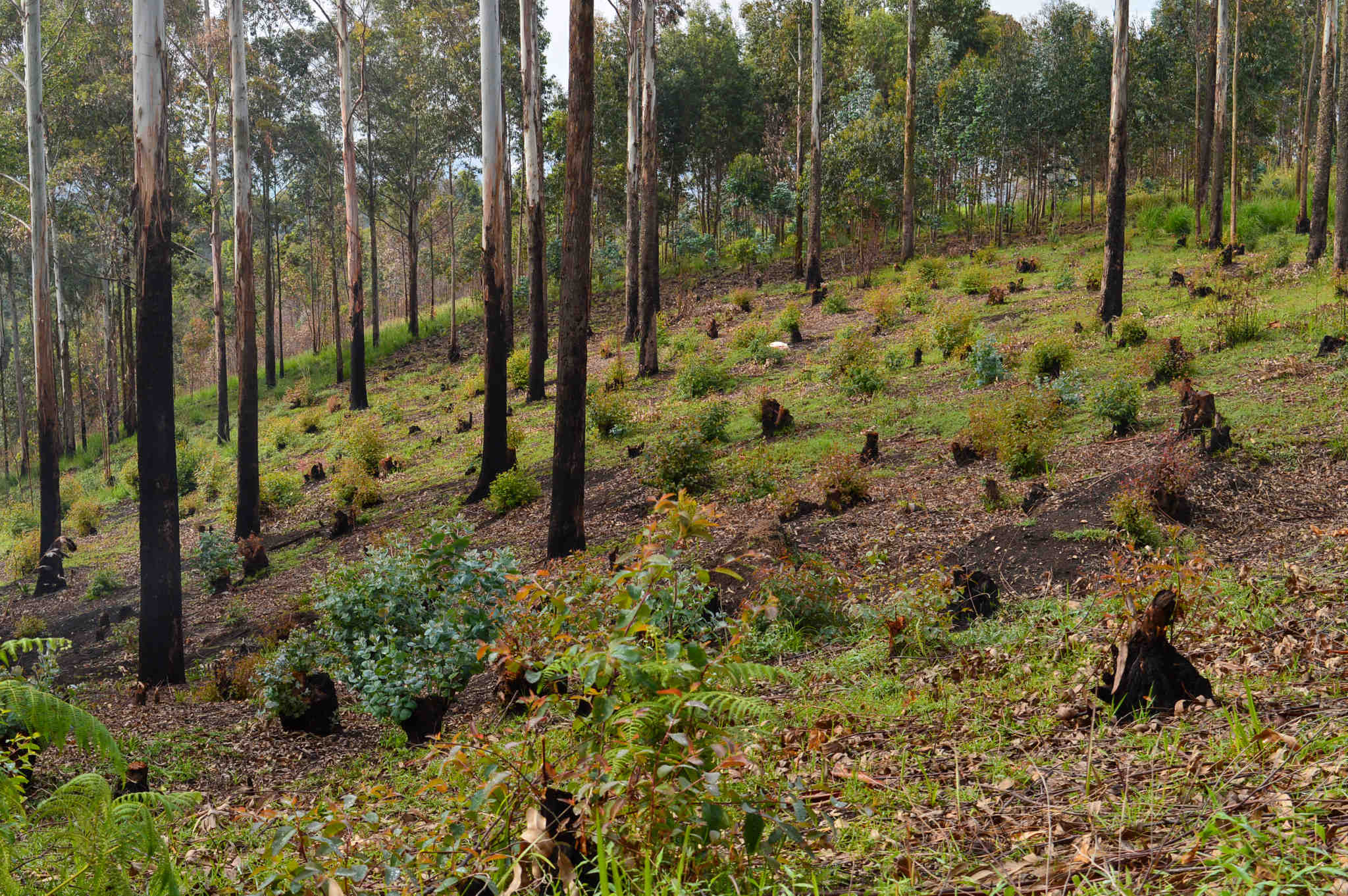
Lubero – In February, Stino Muhindo Sivyaghendera lit a match and held it to the grass in the field of eucalyptus trees he’d planted three years earlier.
In the months before, the army had set up a position there and left deadly ordnance behind.
He’d heard about two young men who were killed by an explosion in the area, and he didn’t want anyone to come to harm in his field.
“I destroyed my treasure from which I was making a profit,” says 45-year-old Sivyaghendera, who planned to use the trees from his half-hectare plot (1.2 acres) to make charcoal to pay for his children’s school fees.
In Lubero territory, large swaths of farmland have been reduced to ashes in the wake of clashes between government troops and M23, a Rwanda-backed armed group.
A peace deal signed last week between the DRC and Rwanda aims to end the fighting, but behind the destruction lies a dilemma farmers face when the conflict stops: how to deal with the terror of unexploded roadside bombs and other remnants of war lurking in their fields.
Without effective demining programs in this region, many have resorted to burning their own land in hopes of detonating hidden ordnance and regaining a semblance of control.
But this “solution” carries disastrous environmental consequences.
It accelerates erosion and water loss by destroying ground cover, impoverishes nourishing topsoils, hurts biodiversity, and pollutes the air.
Maîtrise Matungulu, an environmentalist and lecturer at Institut Supérieur de Développement Rural in Kanyabayonga, says attempting to clear mines with fire only replaces one problem with another.
“Fires make the situation even worse,” he says.
“The soil loses its qualities. Nature is polluted too. Fauna, flora, and all biodiversity are affected.
“To burn crops is to plunge the area further into a serious economic and food crisis.”
A choice driven by fear
Fighting displaced tens of thousands of people in the region last year.
Unable to plant crops while war raged nearby, many returned to pillaged larders and neglected fields, scrounging meals from cassava tubers and leaves alone, with beans, corn, peanuts, and sweet potatoes largely unavailable in local markets.
“I think now we’re a little safer,” says 23-year-old Anselme Hamundwate, who burned his family’s field in Kirumba before he began plowing again in May.
Oripa Katungu Makembe burned a field of cassava plants close to harvest.
She and her neighbors faced a similar choice in 2008, when members of the Congrès National pour la Défense du Peuple, an armed group then fighting with the DRC’s military, took over their homes.
“They left military equipment in our houses,” Makembe says.
After the armed groups left, the community burned piles of boots, uniforms, and backpacks.
Now, 17 years later, “we set fire to the fields where the clashes took place.”
After the ashes settled, she dug up what was left of her crop.
But fire gets out of hand.
Paluku Kingaha paid the price in March.
“People burning their fields caused larger fires than expected,” he says.
“My field of trees was burned by strangers.
“I had 42 beehives there that produced honey for me, and I would make a lot of money selling the trees.”
A dangerous and inefficient practice
“The practice of setting fires in a dangerous or high-risk area is strictly forbidden in anti-mine work,” says Bahati Zaria Jean.
Zaria Jean, head of operations at Synergie de Lutte Antimines, an organisation in Goma with branches in Ituri, Tanganyika, Kasai and South Kivu, says the practice risks causing dangerous explosions of small-caliber devices like grenades, while leaving other explosives intact.
“The mere temperature of bushfire cannot detonate a large-caliber device such as mortars, rockets, bombs, shells, artillery bombs,” says Zaria Jean.
In Rutshuru, in August of last year, after a car was set on fire, four children discovered an IED among the ashes.
They picked it up as they played and were killed when it exploded.
By removing visible evidence of explosives without successfully detonating them, Zaria Jean says, the fires could complicate any future demining operations.
Protocol V on Explosive Remnants of War, adopted in November 2003 by states party to the 1980 Convention on Certain Conventional Weapons, represented a major step forward in efforts to end the suffering caused by unexploded and abandoned ordnance.
The agreement obliges each party to an armed conflict to clear explosive remnants of war from territories under its control when the fighting stops.
They must also provide technical, material, and financial assistance to clear explosives from their own military operations but which are located in territory not under their control.
But the Democratic Republic of Congo never ratified the convention or the later protocol on explosive remnants, which came into force in 2006.
Neither agreement binds non-state actors like M23.
Witnesses say the war’s death toll continues to mount in areas of North Kivu where clashes have taken place.
A few months ago, two young boys died in Kahande, just north of Kirumba, after one hit a grenade with a hoe while working in a field.
Another in Alimbongo was killed the same way. In Kanyabayonga, a man lost his leg.
A United Nations Security Council report documented unexploded ordnance left inside a rural church as well as near schools and hospitals.
Meanwhile, in South Kivu, UN partners recently came together to clear 22 schools of discarded explosives.
Zaria Jean, of the anti-mine group, calls on people to stop burning land and stay away from unexploded ordnance.
“If someone sees an explosive device, don’t touch it – inform the people around you, the local authorities, and, if possible, put up a sign that there is a danger,” he says.
“These devices should not be thrown into latrines or rivers, or buried.”
At the same time, Zaria Jean acknowledges, “There is insufficient funding for anti-mine activities and perhaps even less information on the case of Lubero”.
No demining organisations have a presence there, and he says any organised effort would face financial, security, and logistical challenges.
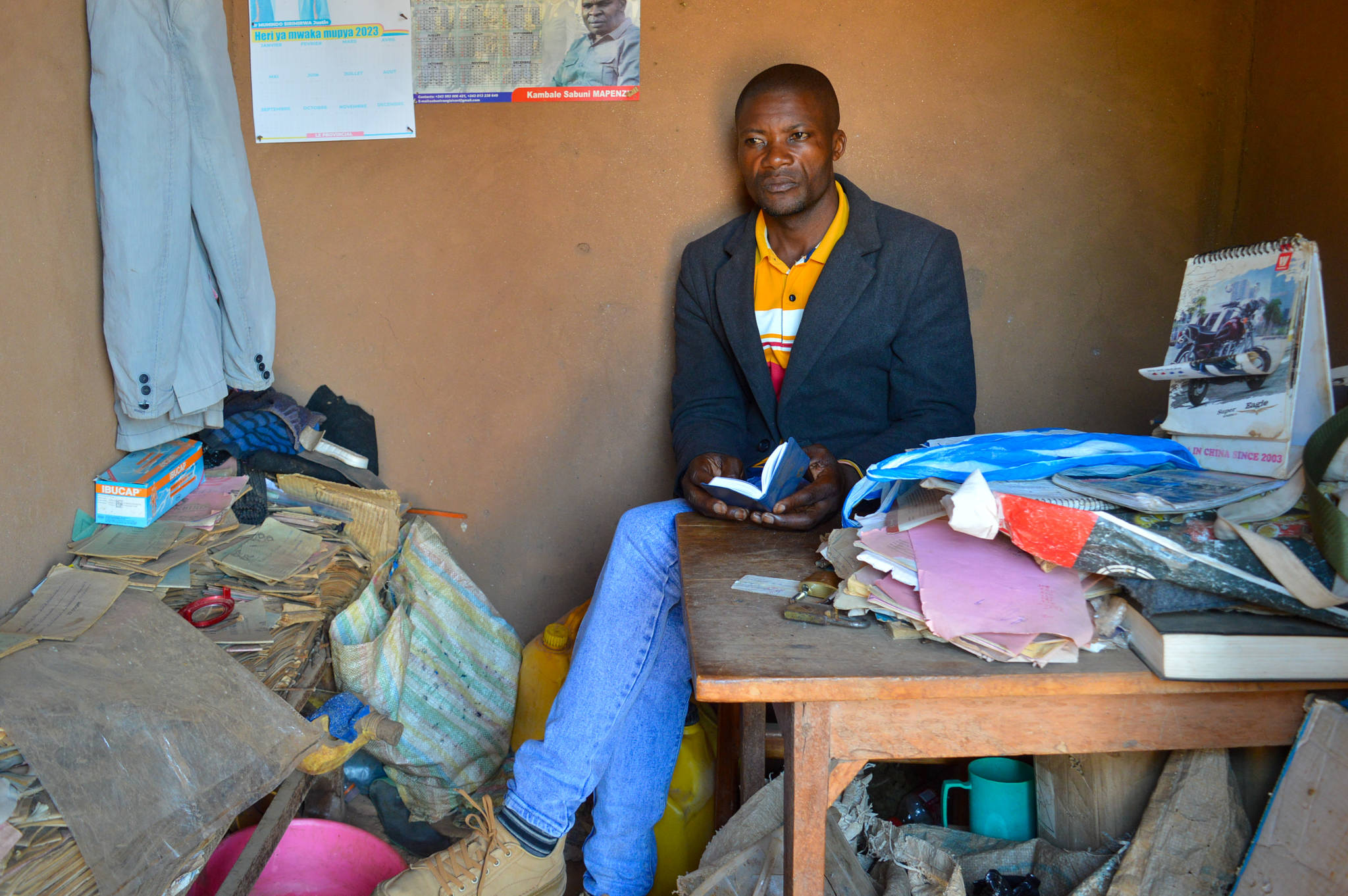
“There’s no one who can remove the explosives left in our fields,” says 57-year-old farmer Kasereka Lukogho.
“How long are we going to wait? Hunger is its own war.”
*Merveille Kavira Luneghe is a member of the Global Press Reporting Network and is based in Kirumba, the Democratic Republic of Congo. Merveille specialises in migration and human rights reporting. Her 2019 coverage of the ongoing refugee crisis in the DRC.
*This story was originally published by Global Press Journal, which delivers bold, investigative, and in-depth explanatory reporting on the world’s most urgent issues