Pretoria – Judgement has been reserved in AfriForum’s legal battle against the Tshwane Metropolitan Municipality regarding the implementation of the metro’s controversial city cleansing levy.
The Tshwane Metropolitan Municipality proposed the “City Cleansing Levy” in its recently tabled draft budget for the 2025/2026 financial year.
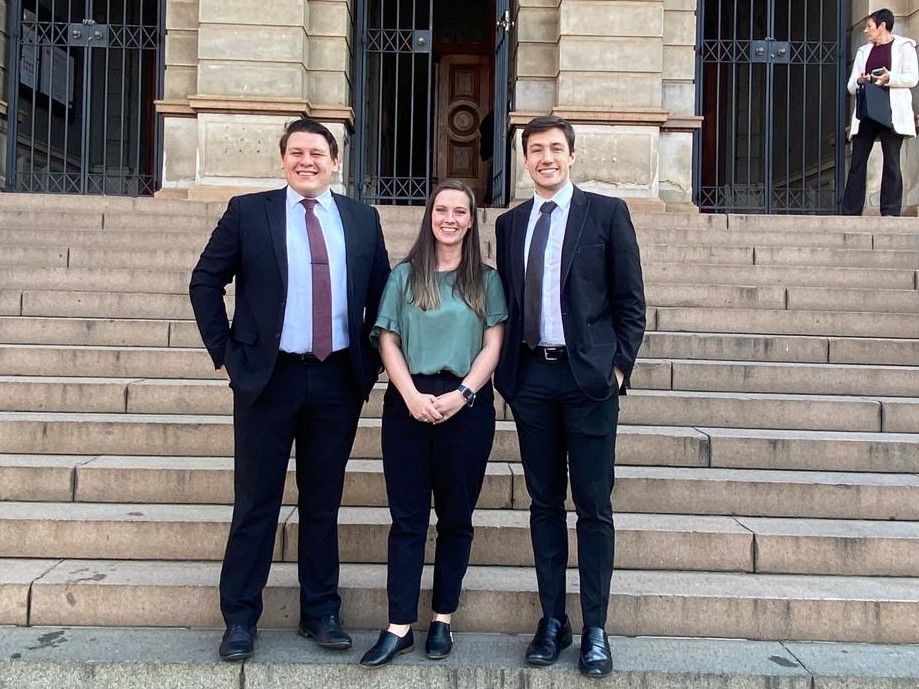
The case opposing the levy was heard on Thursday and Friday last week at the High Court in Pretoria.
AfriForum says it approached the court to overturn the City of Tshwane’s decision to impose a new mandatory monthly levy of R194,37 (excluding VAT) on nearly 260 000 households and businesses in the metro.
The City of Tshwane’s new levy targets properties worth over R250 000 that do not have a waste account with the municipality and pay for private waste collectors.
Additionally, the City proposed levy would be imposed on all vacant properties larger than 150 000 m2.
The City of Tshwane says there are about 194 400 residential properties and more than 62 000 business premises that do not use the municipality’s refuse collection service.
AfriForum says: “The levy amounts to unfair double taxation, particularly in cases where residents do not benefit from the metro’s refuse removal services and are forced to make use of private service providers”.
AfriForum says it denounced the metro’s actions after the levy was added to residents’ latest municipal bills, despite strong opposition and a pending court case.
“Meanwhile, the metro has tried to defend the implementation of the levy and now argues that the levy has its origins in the metro’s 2016 tariff policy,” says Afriforum.
“However, this policy was not filed with the metro’s court documents as they, themselves, were unable to locate the document, which the metro described as a ‘critical document’ for the case.
“The metro ultimately closed its case without using the policy in its arguments.”
AfriForum’s legal team criticised the metro for this administrative blunder and maintains that insufficient access to important municipal documents, such as bylaws and policies, highlights the metro’s lack of transparency.
During the past two days of court proceedings, AfriForum also questioned the metro’s argument that it has the necessary equipment and personnel to provide adequate refuse removal throughout Tshwane.
AfriForum says this claim stands in direct contradiction to residents’ day-to-day experiences in this regard.
“The metro’s argument regarding its ability to deliver the service also contradicts an official report that the Tshwane Metro released just last week and was approved by the council,” explains AfriForum.
Although AfriForum says it did not use the report as part of its case in court, it paints a bleak picture of the metro’s waste management failures.
It states, among other things, that the metro “currently [has] a very weak organisational capacity for the waste management function”.
“According to the report, it was estimated last year that in the previous five years, the metro’s landfill sites had suffered a total loss of R148 million in income,” said Arno Roodt, AfriForum’s Regional Coordinator for Greater Pretoria South.
“The report makes several recommendations to address the problems, including the repair of weighbridges and the improvement of security at landfill sites.
“These interventions are not only overdue but also highlight the chronic mismanagement and neglect that plague the metro’s waste management services.”
AfriForum says that the metro seriously lacks a coherent institutional mechanism for the effective delivery of solid waste management services.
It also does not have a well-structured and guided strategy as required by Section 78 of the Municipal Systems Act.
AfriForum says this legislation prescribes critical processes to ensure that municipalities determine the most appropriate means for the effective and sustainable delivery of services.
“The metro claims in its court documents that it is fully capable of delivering the services in question, yet the facts reveal a completely different reality,” says Deidré Steffens, AfriForum’s Advisor for Local Government Affairs.
“We’re dealing here with a metro that has not only allowed landfill operations to bleed millions of rand but has also failed to establish a basic service delivery framework as required by law.
“Now the metro seeks to penalise residents by imposing an arbitrary levy on services that are either non-existent or in disrepair.”
Roodt emphasises that the “so-called city cleansing levy is not based on service usage, as is required by law.
“This levy is a fundraising tool aimed at covering up years of poor planning and financial mismanagement.”