Cape Town – Environment Minister Dr. Dion George has honoured South Africa’s rangers and called for stronger support to help them protect the country’s rich biodiversity.
Speaking at a World Ranger Day event at Table Mountain National Park on Thursday, 31 July 2025, Minister George described rangers as “more than just conservation officers”.
“They have a calling,” the minister said.
“They are on the frontline of climate resilience, economic survival, and environmental security.”
South Africa is one of the most biodiverse countries in the world and is home to unique plants, animals, and ecosystems.
Yet the people who protect these treasures often face overwhelming odds.
They are outnumbered, outgunned, and too often overlooked.
“This is not a patrol. It is a battlefield,” the minister said.
“Our rangers fight organised criminal syndicates that smuggle abalone, traffic wildlife, strip protected plants and steal from future generations.”
The threat is real and growing.
Between January and June 2025, there were 14 lion poaching incidents, several pangolins were seized across provinces, and hundreds of vultures died from poisoning in Kruger National Park.
Elephant tusks and rhino horns continue to be stolen.
So far this year, 40 suspects have been arrested for crimes against priority species.
Minister George stressed that environmental crime is more than a conservation issue — it is an economic and national security threat.
It steals from oceans, destroys jobs, and puts rangers’ lives at risk.
To fight these crimes, the minister announced a series of steps to bolster ranger capacity, which include:
- SANParks has increased conservation staff by 43 percent over two years, now employing 111 rangers at Table Mountain National Park alone.
- The Sea Air and Mountain Special Operations Ranger Unit has grown from 18 to 40 members since 2021.
- In the past year, this unit conducted 670 strategic patrols on land, 58 joint patrols with city police and community groups, and 71 rapid responses to incidents.
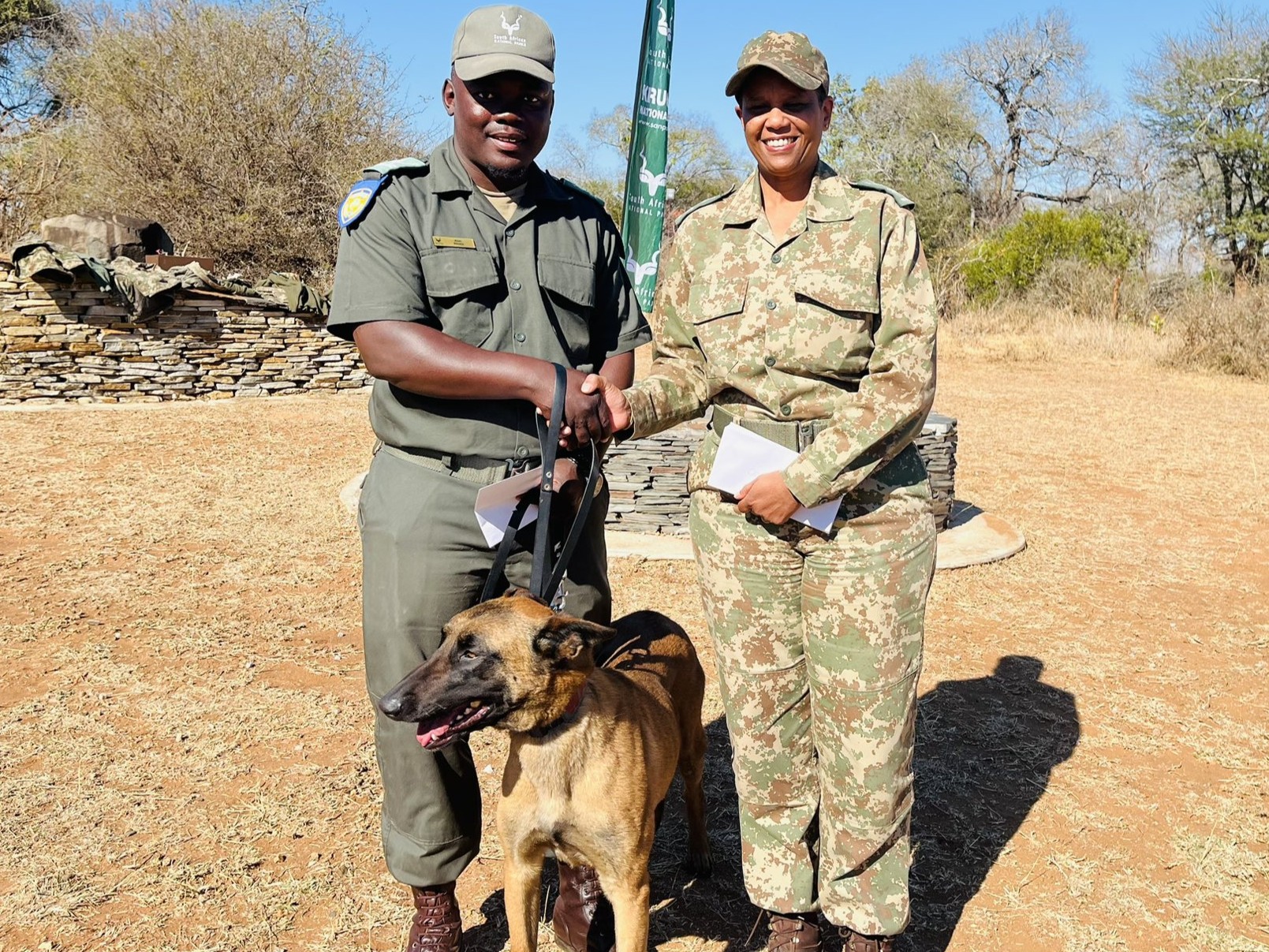
- Minister George said the Department will provide rangers with better tools including drones, canine units, digital mapping technology, forensic labs, and faster legal support to tackle organised syndicates.
- He also connected the rangers’ work to South Africa’s global commitments, such as the 30 by 30 target to protect 30% of the planet’s land and sea by 2030.
The event was hosted by SANParks and attended by Chairperson Pam Yako, CEO Hapiloe Sello, SANParks Honorary Rangers, the South African Police Service, and City of Cape Town Law Enforcement.
These officials also paid tribute to rangers who have been injured or lost their lives in the line of duty.
The programme included a ranger drill and a live demonstration by the Sea Air and Mountain Special Operations Ranger Unit canine team.
The display highlighted the skill, discipline, and courage rangers must have in facing modern environmental crime.
Meanwhile, the WWF said apart from bush gear, boots, GPS devices, binoculars, and food rations, rangers also need refresher and advancement training as well as wellness support.
Under a WWF-led ranger wellness project, last year, over 230 rangers in rhino reserves across the province of KwaZulu-Natal received crucial legal support training to help them understand the laws applicable to their workplace and jobs.
Themes included legal rights and ensuring that any arrests made or the securing of crime scenes (such as when coming across a poached rhino) follow the letter of the law to increase the chances of an arrest leading to a conviction.
Leadership courses aimed at improving core operational competencies and developing a strong value-based management ethos were also offered.
Separately, 45 rangers were trained in advanced field ranger techniques.
This focuses on improving rangers’ skills such as tracking, night operations, and encountering dangerous game.
When in the bush, rangers don’t just have to worry about poachers, but will tell you that coming across elephants while on foot patrol, particularly at night, is the most dangerous situation, because one cannot outrun them, nor climb a tree for safety!
It is with advanced training courses that instructors can pass on important knowledge and techniques, to ensure ranger safety and improve their confidence in handling whatever surprises they may come across in the bush.
Another significant focus of the project has been the upgrading of ranger accommodation and field outposts, along with the provision of equipment, uniforms, and technical and aerial support.
Accommodation upgrades include solar power for electricity and hot water, as well as recreational facilities.
The focus area of this ranger wellness work is in the Hluhluwe Imfolozi Park (HiP) along with 11 other private and communally owned reserves in KZN, which are home to white rhinos and black rhinos through the WWF Black Rhino Range Expansion Project.
The ranger wellness project enjoys the financial support of WWF Germany, the German Federal Ministry for the Environment, Nature Conservation, Nuclear Safety and Consumer Protection, and other benefactors.
Jeff Cooke, Rhino Conservation Manager with WWF South Africa, comments: “We are very grateful to our funders for this support.
“It is critical that we look after the men and women who find themselves on the conservation frontline.
“The WWF ranger wellness project aims to professionalise ranger work, boost morale and prevent corruption.”
Minister George closed with a firm promise: “We see you. We honour you. We must do better by you. Rangers are not a footnote. You are the frontline. We stand with you.”