Johannesburg – The rising number of food-borne illnesses in South Africa, particularly among children, has led to hospitalisations and tragic fatalities, leaving families devastated and communities concerned.
These cases have made headlines across the country, with investigations pointing to possible food contamination and periodically reigniting national conversations about food safety.
It’s a stark reminder of how high the stakes are when hygiene fails.
Jeffrey Madkins, Marketing Manager for Unilever Professional, explains, “In many businesses, visual cleanliness is prioritised, and hygiene protocols often rely on surface-level inspections and routine tasks – if it looks clean, it must be clean. But,” he cautions, “hygiene goes far beyond what the eye can see.”
For South Africa’s food industry, this carries particular weight.
Cross-contamination, poor storage practices, and undetected temperature changes are often invisible risks that surface only when it’s too late.
Beyond the ethical responsibility, there’s also a legal duty of care – and it doesn’t lie with inspectors or cleaners; it rests squarely with the employer.
Under the Occupational Health and Safety Act (Act 85 of 1993) and the Foodstuffs, Cosmetics and Disinfectants Act (Act 54 of 1972):
- Food must be handled and stored in safe, hygienic conditions.
- Businesses must ensure their premises are clean and free from risk.
- Staff must be properly trained in hygiene practices, and supervision must be in place.
People and profit typically dominate business discussions. Hygiene rarely makes it onto the agenda. “But it should,” Madkins notes. “Because one lapse can quickly turn into a major crisis that affects both.”
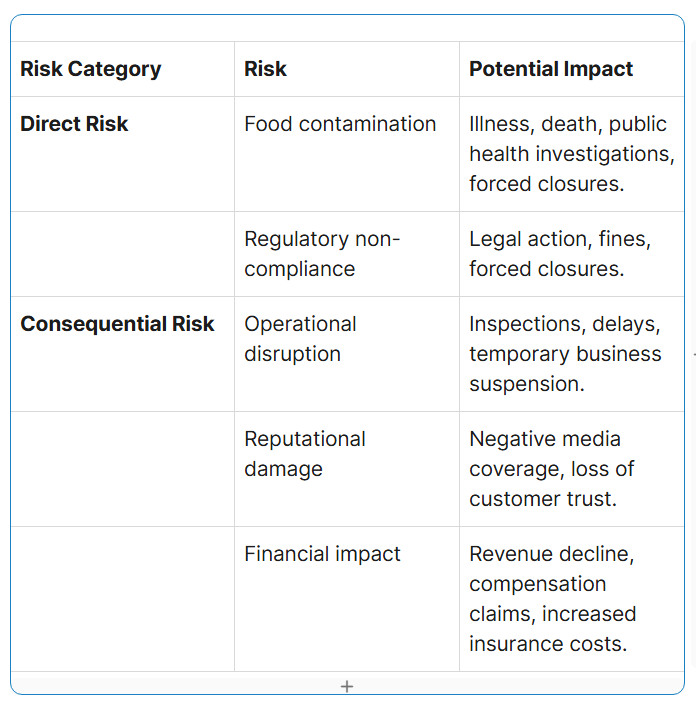
He points to some high-stakes vulnerabilities that, if left unchecked, can escalate into serious business consequences. But the greatest cost is one no business wants to carry – the loss of life or public trust.
What Businesses Can Do
The good news is that many of the most serious risks can be prevented with the right systems in place.
Madkins recommends some practical steps to help food industry businesses mitigate hygiene risks:
- Audit, Act, Repeat
Don’t wait for an inspection – make hygiene audits routine, not reactive. Spot gaps early and address them promptly. - Train, Train and Train some more
Ensure every person who handles food is trained on and understands safe storage, cross-contamination risks, and personal and environmental hygiene protocols. Consistent refresher training will help to reinforce safe practices, prevent complacency, and ensure hygiene remains a daily priority. - Store smartly
Food should be stored away from cleaning products, cold chains must be maintained, and raw and cooked items handled separately. - Records matter
If it’s not documented, it didn’t happen. Cleaning schedules, temperature logs, and staff training records show due diligence, provide proof of compliance, and help protect your business. - Stay current
Food safety laws change. Make sure your practices – and your staff training – keep pace.
- Safety Starts with the Right Products
Not all cleaning products are created equal. Choose cleaning solutions that are right for the job.
Products such as Unilever Professional’s Handy Andy Professional range of food-safe certified cleaners are formulated to help maintain a hygienic, hazard-free environment, supporting safe and contamination-free food preparation.
For families who have been impacted by these types of incidents, no policy or checklist will ever undo the lasting impact on their lives.
But for the thousands of businesses across South Africa that handle food, from production to plate, their story is a powerful and sobering reminder.

“Cleanliness isn’t just about sparkle. It’s about systems. It’s about safety. And ultimately, it’s about the people we serve,” Madkins concludes.
For more information on Unilever Professional products and how they can support your cleaning needs, visit https://www.unileverprofessional.co.za/.