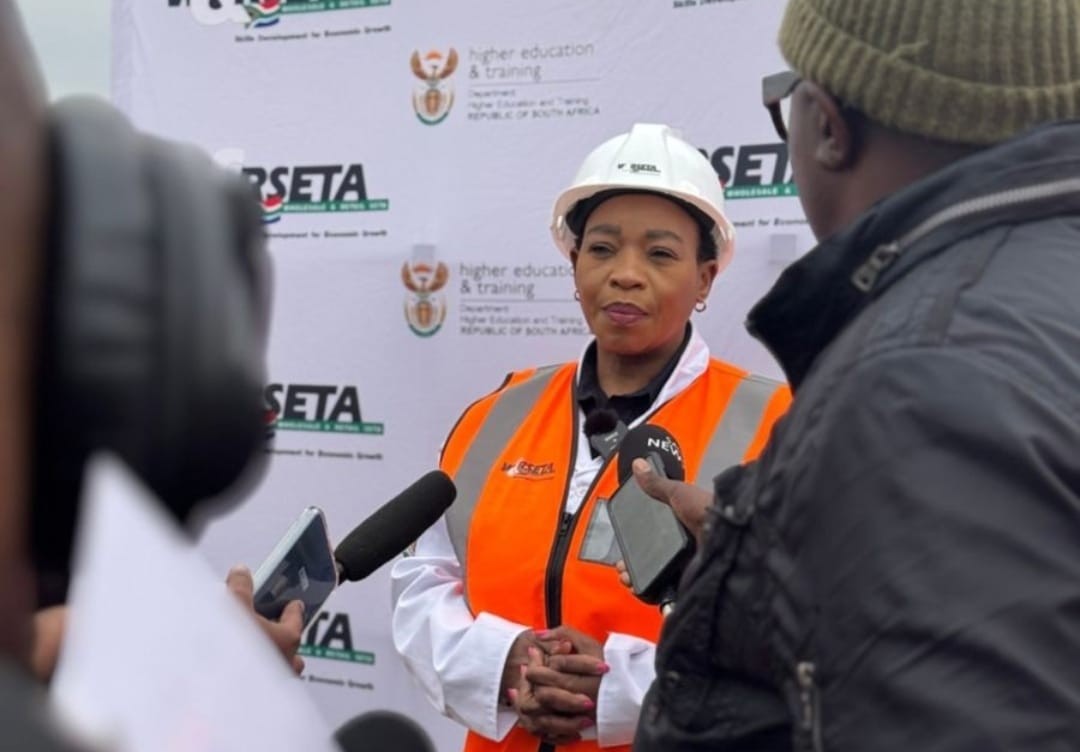
Mount Frere – Higher Education and Training Deputy Minister Nomusa Dube-Ncube recently participated in a sod-turning ceremony for the new R80 million Agricultural Retail Hub at Ingwe TVET College in the Eastern Cape.
The hub, fully funded by the Wholesale & Retail Sector Education and Training Agency (W&RSETA), will support agricultural retail and cannabis, also known as dagga, production industries.
The hub will also provide an Information and Communication Technology laboratory to equip TVET (Technical, Vocational and Education Training) learners with digital skills.
Speaking at the event on Friday, 5 September 2025, Deputy Minister Dube-Ncube said cannabis can be used for recreational, medicinal, and industrial purposes.
“Our country has decriminalised the use of cannabis, and there are laws that govern its use,” the deputy minister said.
“There are benefits in the use of cannabis, such as the alleviation of certain medical conditions like chronic pain, nausea, and anxiety.
“For industrial use, hemp – a variety of cannabis – is used to produce textiles, paper, and other products.”
Before the sod-turning event, Dube-Ncube and Tom Mkhwanazi, W&RSETA chief executive officer, briefed a delegation comprising Ntabankulu Mayor Tsileng Sobuthongo, Alfred Nzo District Mayor Vukile Mhlelembana, local chiefs, and the TVET management led by Siphelele Gavu.
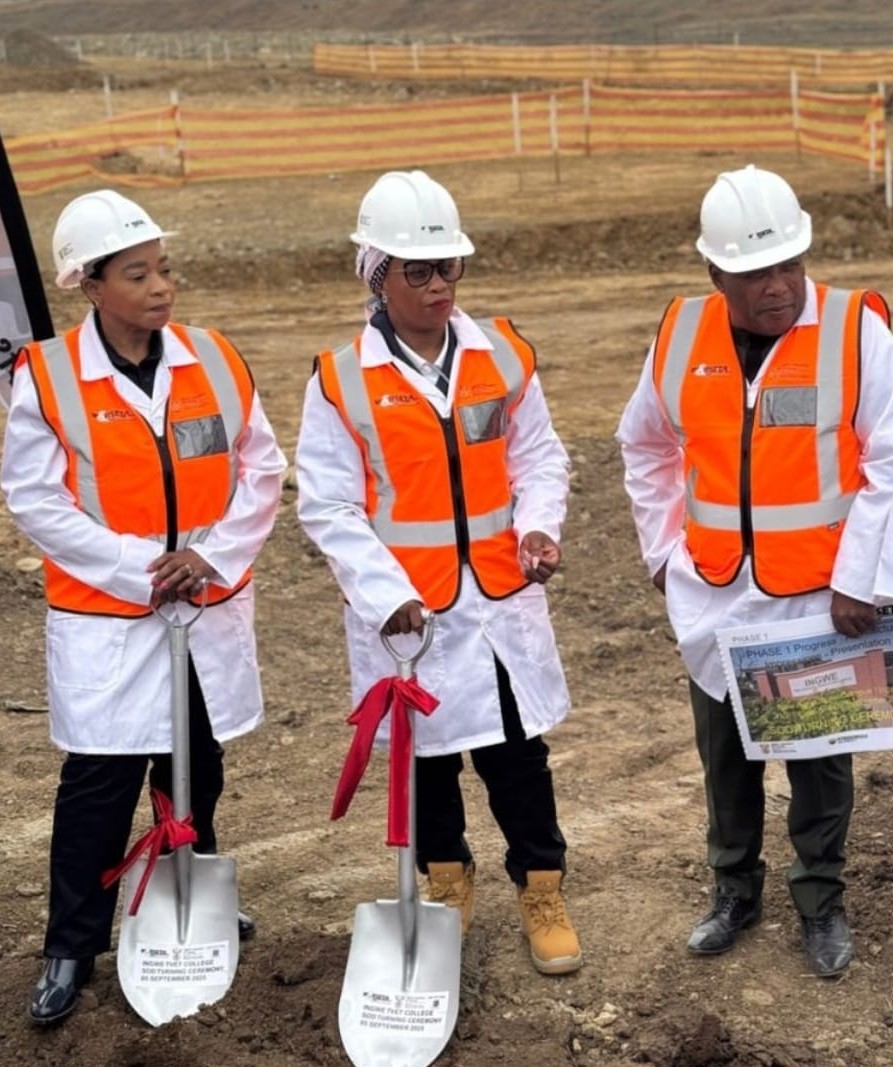
Mkhwanazi used the occasion to highlight the work W&RSETA has done, saying: “We have since partially dedicated the year 2025 to showcase our skills development projects.
“We are proud to have executed programmes that have changed the lives of South Africans, particularly black Africans and women, for the better.”
Mkhwanazi revealed that for the past five financial years, W&RSETA has spent more than R70 million on the construction and improvement of ICT facilities within institutions of higher learning throughout the country.
“We have over 51 ICT computer labs established across 9 CET (community education and training) colleges in the country,” he said.
Mkhwanazi also added that during the peak of energy loadshedding, an investment of R 71 million for solar energy equipment was made available to 11 TVET Colleges.
He said the move by the agency ensured that learning and teaching were not interrupted when electricity was not supplied.
“Each institution was allocated R 6.5 million,” Mkhwanazi said.
He said the most notable infrastructure investment at TVET colleges done by the W&RSETA has been the construction of the R146 million skills-development-centre at the Sekhukhune TVET College, which was officially opened last year.
Mkhwanazi said W&RSETA has spent nearly R600 million in support of both TVET and CET colleges.