Cape Town – South Africa has high recycling rates, largely owing to thousands of waste reclaimers who collect up to 80% of the country’s recycled packaging.
However, the waste reclaimers operate under dangerous, unregulated conditions, sorting waste by hand – often without protective gloves as they move through city streets and through landfill sites.
In a move to improve the conditions under which waste reclaimers operate, Regenize is offering a solution named “REACT”.
The REACT solution digitalises and formalises reclaimers’ work, eradicating generations of exploitation with fair pay, Personal Protective Equipment (PPE), and giving dignity to their role.
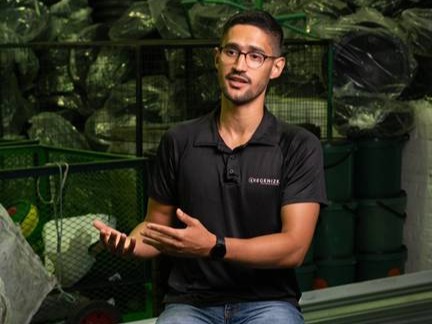
Chad Robertson, Regenize Co-founder & CEO, said that there are between 60 000 and 90 000 waste pickers in South Africa, and they collect as much as 80% of the country’s recycled paper and packaging.
“Yet they operate in dangerous, unregulated conditions, sorting waste by hand, moving through landfill sites and city streets with no guarantee of income or social protection,” said Robertson.
He said municipal or private recycling systems rarely interact meaningfully with this workforce of waste reclaimers.
“Without proper infrastructure, access to clean recyclables, transport, PPE, or formal recognition, they remain uncompensated essential workers in a broken supply chain,” said Robertson.
To alleviate these ills, Regenize is offering an alternative way of operating.
Robertson explained that each decentralised recycling hub created by REACT provides reclaimers with access to clean recyclables from at least 1 200 households, increases income by up to 300%, provides uniforms, PPE, tablets for tracking, and formal integration into the recycling process.
Robertson said Regenize’s REACT solution turns waste reclaimers into “formally employed partners”, and they can enjoy the basic labour rights “we all enjoy in South Africa”.
Explaining how the REACT solution works, Robertson said: “Households earn Remali points after each recycling collection.
“These points are credited instantly and can be converted into tangible resources either online or through our network of shops in our operational community.”
Robertson said in the next 12 months, REACT will be setting up another 31 decentralised recycling hubs, taking them to 36 in the Cape Town region.
“These hubs will provide their free recycling collection service to 43 200 households, create 180 jobs for waste reclaimers, while diverting around 5500 tonnes annually,” Robertson said.
“If South Africa wants credible recycling, it must honour – and compensate – its waste reclaimers.
“Regenize’s REACT rewrites the narrative: reclaimers are not charity cases – they are frontline agents of sustainability. And when recycling becomes fair, participation and impact follow.”