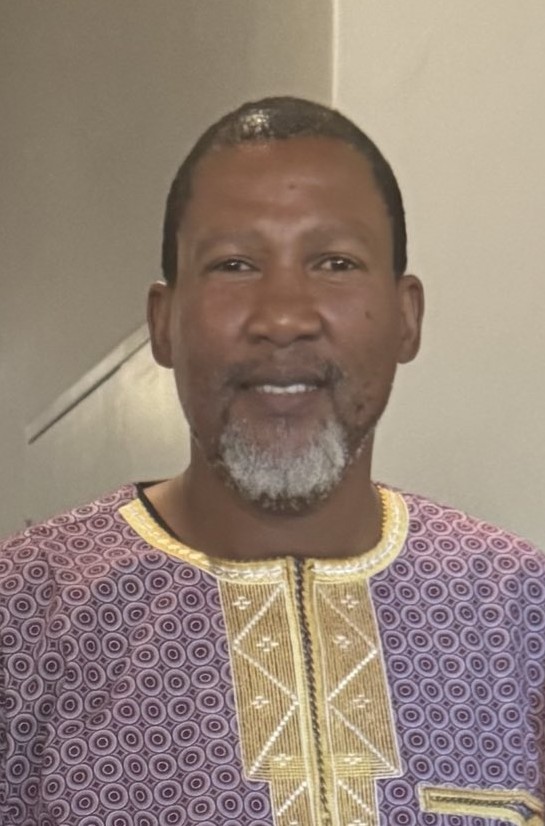
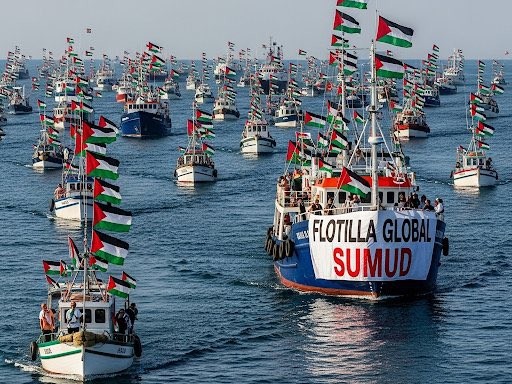
This is the full address by Nkosi ZMD Mandela to the African National Congress (ANC) branch Ward 5 Greater Tshwane (Montana) Political Education discussion on “Global Sumud Flotilla (GSF) movement and the Palestinian struggle against Apartheid Israel
Delivered on Thursday, 23 October 2025, at 19:00.
Comrades and Friends, it is indeed a great honour to be in your midst and participate in this important political education discussion on the “Global Sumud Flotilla (GSF) movement and the Palestinian struggle against Apartheid Israel.”
But it is important to understand what this means to us, or what this should mean to us as the revolutionary African National Congress of South Africa.
We gather this evening, comrades, as generations in our movement have done before, we gather to educate, to create awareness, and to sharpen our ideological, intellectual, and organisational capacity.
We meet in the spirit of Vuk’unzenzele to “wake up and do”.
We gather because our revolutionary spirit is alive. Amandla!! Awethu!!
As a nation, particularly us as the ANC, we were blessed with leaders who understood what it meant to serve.
Leaders who were chosen because of their selflessness and their willingness to serve the people of South Africa.
They led with one purpose: to build a South Africa that belonged to all who live in it. But somewhere along the way, we have begun to drift.
We have allowed corruption, endless policies, endless debates, and endless promises to replace action.
And while we talk, our people suffer.
While we discuss, our youth lose hope.
While we plan, our nation bleeds.
We must therefore return to our roots.
And understand the ideologies that we, as the ANC, stood for.
My comrades, it is time to revive, to renew, and to reset ourselves and our nation.
We must be the beacon of light not only for ourselves but for all the suffering nations and people across the globe.
Let us once again be the nation that inspires the world.
Comrades, our struggle did not start in 1912, 1948, or 1961; it began the moment our ancestors first met the invader.
We trace that origin to the Battle of Salt River in 1510, when the Portuguese conquistador Francisco de Almeida, the same man who had left a trail of blood across Africa and India, was defeated and slain by the Goringhaiqua Khoi defending their land.
This was far from a minor skirmish.
In 1999, while honouring the retirement of the founding father of our democracy and global icon, Nelson Rolihlahla Mandela, Cde. President Thabo Mbeki declared that the encounter was “the first moment of black anti-colonial struggle.”
He described it as a flash of light that pierced the darkness of history, proving that resistance runs in our very DNA.
Almeida, a towering figure of European conquest, met his end at the Cape at the hands of indigenous Africans who refused to surrender their territory.
The 1510 victory is more than a footnote in our history; it is from this that every subsequent anti-colonial movement grew.
It must inspire our continued fight against modern colonialism and neocolonialism wherever they arise.
Let there be no doubt that South Africa’s legacy is one of active, relentless resistance, not passive victimhood.
Because our struggle is rooted in a tradition of defiance, we stand in solidarity with every liberation movement across the continent and, by extension, with the Palestinian resistance, a contemporary embodiment of the same fight for land, dignity, and self-determination that began at Salt River.
At the Berlin Conference, European powers divided Africa among themselves without ever consulting the peoples whose lands they were carving up.
From the very beginning, we Africans protested and resisted that theft.
Our own liberation struggles against colonial domination and brutal regimes were born from that rejection of foreign entitlement.
That same arrogance reappears today in the Palestinian struggle.
A colonial power once again claimed the right to hand over land that was never theirs to give, this time codified in Britain’s 1917 Balfour Declaration.
Because we have experienced the pain of having our continent parcelled out without consent, it must therefore be our duty and responsibility to stand with the Palestinian struggle.
Supporting the Palestinian cause is therefore not a choice; it is a continuation of the solidarity that sustained our own fight for freedom.
Having won our independence, we cannot turn our backs on any people still seeking justice.
From the outset, our leaders recognised that the struggle for freedom could not be confined to the SADC region alone; it had to resonate worldwide.
From inception, our leaders understood the importance of mobilising the global community in support of our struggle, hence HM King Dalindyebo was accompanied by Dr. Walter Benson Rubusana to attended the coronation of King Edward VII in England in August 1902.
That historic gathering sparked the formation of the South African Native Congress in 1906.
When the South African Act was promulgated in Westminster in September 1909, a delegation led by Dr. Rubusana, as President of the South African Native Congress, and Dr. A. Abdurahman, as President of the African Political Organisation, travelled to London to voice their objection on behalf of all indigenous people of South Africa.
That act of protest mirrors our stance against the Balfour Declaration, which transferred Indigenous Palestinian land to Zionist settlers.
Just as we rejected the Union Government of South Africa’s white minority being granted 87 % of our own territory, we now stand unequivocally with the Palestinian people in their struggle against occupation.
Our history of resisting imposed borders and foreign domination compels us to extend that same resistance in solidarity with Palestine.
Comrades and friends, let us pause to reaffirm our commitment to mass mobilisation, one of the Four Pillars that has sustained our struggle from the earliest days of resistance to the present fight for justice in Palestine.
For decades, we submitted peaceful petitions, only to meet escalating state brutality that culminated in the formalisation of apartheid in 1948.
In response, our movement reshaped itself, adopting the Four Pillars of Struggle: mass mobilisation, popular education, alliance-building, and armed resistance.
Mass mobilisation has always been the engine of change.
In April 1944, youth activists abandoned passive resistance and organised strikes, marches, and acts of civil disobedience that shattered apartheid’s legal facade.
Today, social media-driven protests echo those tactics, spreading from townships to global cities.
The same spirit that defied unjust apartheid laws now compels us to confront the structures that enable genocide and ethnic cleansing in Palestine. Women have been indispensable.
In August 1956, 20 000 women marched on Pretoria, with Chief Albert Luthuli responding that the participation of women signalled an end to apartheid, and South Africa would surely recognise its freedom within a lifetime.
Palestinian women mirror that bravery, defending their families and communities under siege. International solidarity movements must stand shoulder to shoulder with these women, amplifying their voices to ensure that their rights are being protected.
The Sharpeville massacre was meant to silence the ANC and PAC, just as Palestinian representation is repeatedly marginalised in peace negotiations.
Just as our youth led the Soweto uprisings, today’s youth lead the Palestinian struggle, bearing the brunt of a conflict that has already claimed tens of thousands of lives, most of them women and children.
Our answer to attaining freedom in Palestine is much like ours; the United Democratic Front once gathered all oppressed South Africans under one banner to confront the apartheid regime.
Using that same example, we must now rally all Palestinian entities, South Africans, Human Rights organisations, and the global community to defend sovereignty, reject settlement expansion, and dismantle settler-colonial structures.
International law affirms the Palestinian right to self-determination, and we, as South Africa, must continue to champion it.
Leaders such as Madiba, with his comrades Oliver Tambo and Robert Resha, travelled across 15 African nations mobilising support for our struggle, securing the military and financial backing that proved decisive at battles like Cuito Cuanavale in Angola, where the Cuban contribution saw 3 500 of their own soldiers sacrificing their lives for our struggle.
This was not charity but shared blood; it helped break the SADF’s back and accelerated our own liberation. Frontline states like Zambia, Tanzania, Mozambique, and Angola understood that our defeat would become their defeat.
Their contribution to our struggle came at enormous human and economic cost; they endured bombings, invasions, and destabilisation by the South African Defence Force.
Their sacrifice taught us that solidarity among neighbours fortifies collective resolve.
This same principle of collective defence must now be offered as a model to the neighbouring countries of Palestine and to the Arab League of Nations, so that the rights of the Palestinian people are protected and the cycle of bloodshed and deceit perpetrated by a genocidal regime is finally broken.
Israel, and the impunity with which it acts, is a threat to the whole world.
These experiences underline a timeless African maxim: “Umuntu ngumuntu ngabantu”, I am because we are.
Our freedom remains incomplete without the freedom of others. President Mandela reminded us in 1997 that “it behoves all South Africans, beneficiaries of generous international support, to stand up and be counted.”
That debt compels us to mobilise globally for the Palestinian cause.
Just as civil society activism sustained the anti-apartheid movement when governments faltered, whether under the Margaret Thatcher regime in the UK or Ronald Reagan administrations in the USA, we again, as civil society, must pressure the growing number of states recognising Palestinian statehood to translate rhetoric into concrete protection of sovereignty.
Let us harness our own legacy as South Africans and as the ANC, turning our historic victory toward the urgent fight for Palestinian freedom.
As South Africans, we possess a rare moral clarity that allows us to recognise apartheid when we see it.
Our own icons, who lived the struggle, have spoken plainly about the parallel. Archbishop Desmond Tutu, after visiting the Occupied Palestinian Territory, said: “I have seen racially segregated roads, housing and the humiliation of Palestinian men, women and children… it is far worse than apartheid.”
Nelson Mandela declared: “Our freedom is incomplete without the freedom of the Palestinians.”
The parallels are stark: Apartheid’s pass laws = Israel’s permit system.
Bantustans = Gaza “open-air prison.”
The Group Areas Act = the Israeli systematic land confiscation and illegal settlements on Palestinian land.
Recognising these similarities makes the Palestinian cause a moral imperative for us, not a foreign policy issue.
Our constitutional commitment to human rights demands that we speak out against injustice wherever it occurs; silence would be the highest form of hypocrisy.
Moreover, global impunity threatens our own security. When international law is flouted in Gaza, the same mechanisms that protect us erode, leaving us vulnerable.
Therefore, our support for Palestine reinforces and does not distract us from our own domestic struggles.
Just as:
1. Our constitution rests on human rights, dignity, and justice. We cannot claim to be a beacon of rights at home while remaining silent.
Madiba called this “muffled” when those same rights are being crushed abroad. Silence would be the ultimate hypocrisy and would cheapen our own hard-won freedom.
2. When international law, such as the Geneva Conventions, International Court of Justice (ICJ) rulings, and UN resolutions, are flouted with impunity by “apartheid Israel” and its powerful backers, the entire architecture of global governance erodes.
If these institutions fail Palestine, they will inevitably fail us all.
3. We cannot call for boycotts overseas while tolerating complicity at home.
The German arms firm Rheinmetall, a major supplier to Israel, operates on South African soil in Macassar, Cape Town; protests there are a direct expression of our international solidarity.
Our domestic struggle must ensure that our economy, banks, and land are disentangled from the machinery of occupation and apartheid. We are witnessing a genocide in real time.
We have a ruling from the ICJ recognising the plausible case of genocide.
We have interim measures ordering a halt.
And yet, the bombs continue to fall.
The starvation continues to be enforced as a weapon of war.
The so-called “Peace Plan” seems to be a façade.
The institutions of global governance have utterly failed.
The UN Security Council is paralysed by vetoes.
Governments have failed to stop the genocide.
Comrades and friends, this places the onus squarely on us, on civilians, on civil society, on movements like ours.
We have a responsibility to disrupt the normalisation of genocide.
This is the context in which we must place the Global Sumud Flotilla (GSF) and other such interventions.
The Global Sumud Flotilla (GSF) is Steadfast and Perseverance in Action.
These are the core values of the ANC.
Sumud, which means “steadfast and perseverance,” is the same resolve shown by Mary Manning at Dunnes store picket lines, by the San Francisco Bay dockworkers, and by Rivonia Trialists on Robben Island.
The GSF embodies a people-driven civil response, a declaration to the Zionist entity and its collaborators that we will not be silent, we will not be complicit, we will act.
When governments failed, we sailed.
The Global Summud Flotilla rose from the Freedom Flotilla, the Global March to Gaza, and the Sumud Convoy.
In April 2024, the Turkish port authorities prevented us from sailing, and attempts to breach the Rafah border crossing were blocked by Egypt.
Undeterred, we launched a humanitarian, non-violent mission to break Gaza’s 18-year illegal siege. Over 30,000 activists signed up; we secured roughly 70 boats, of which 21 set sail from Barcelona on 31 August.
In Tunisia, we faced severe logistical challenges as some boats could not sail as well as two primary vessels, the Family Boat and the Alma Boat, were struck by drone attacks, an intimidation tactic meant to crush our morale and instil fear amongst our participants.
Instead, it galvanised us.
Our South African delegation flew from the continent’s southern tip to join other participants in Tunisia, tracing the footsteps of the founding father of our democracy, who on the 27th of February 1962 had embarked on this journey to go to Tunisia.
This was the embodiment of an African journey from south to north.
Welcomed warmly by Tunisians in the spirit of Ubuntu, we joined forces with delegations from Somalia, Senegal, Nigeria, Morocco, Algeria, and Tunisia.
This was us, as Africa, standing together for Palestine.
Historically, Tunisia has supported Palestinians, notably sheltering refugees in 1982 after the Lebanese siege.
It was President Ben Ali in Tunisia who came to support Palestinian refugees and gave them homes in Tunis.
We set sail from the shores of Tunisia, knowing very well the challenges laying ahead, many of us from the moment we left our homes had to prepare ourselves and our families that this may be a one-way ticket, one of possibly no return.
The mission was fraught with danger.
Drone attacks targeted eight of our sailing boats near Greece, reducing our fleet to 48 vessels.
Despite these threats, we persisted, aided by naval support from Spain, Italy, and Turkey.
I must state that we only carried food, hygiene supplies, and some medical supplies. We posed no threat to anyone nor breached any law.
By contrast, we were only acting upon an ICJ ruling. When we entered the “yellow zone,” all foreign assistance withdrew, leaving us to fend for ourselves.
On international waters, the Alma Boat carrying fuel, fresh water, and supplies for all 48 vessels was intercepted 75 nautical miles from Gaza.
This seizure violated international and maritime law, including our human rights.
Israeli forces kidnapped and abducted us to Ashdod, subjecting us to inhumane treatment.
We were bound with cable ties, stripped of personal belongings, denied legal counsel, and forced to sign documents acknowledging illegal entry into Israel, a document we all refused to sign.
In detention, we endured degrading conditions; our clothes and toiletries were discarded.
We had to strip naked in front of IDF soldiers.
We were fed minimal to no rations, and we were housed in overcrowded cells where we were subjected to drinking water from toilets.
Yet, even in these circumstances, we shouted “Free, free Palestine!”; a testament to our unbreakable spirit and in solidarity with the unbreakable spirit of the Palestinian people.
Our detention and harsh treatment by Israeli forces offer the world a glimpse of the daily reality endured by roughly 10 000 Palestinian prisoners, 400 of them being children.
Yet, as every participant stressed, the mission was never about us; it was about Gaza, it was about the rights of Palestinians, it was about breaking an illegal, immoral siege.
Millions worldwide took to the streets demanding an end to the genocide and the free flow of humanitarian aid, a validation of our effort.
The experience reinforced our conviction that the Global Summud Flotilla’s purpose is not merely to deliver aid but to expose Israel’s apartheid policies, pressure the regime, and galvanise international opinion so it may enable peace for all in Palestine.
Comrades and friends, the struggle is far from over. We must now intensify our efforts on all fronts.
We must give greater expression to Sumud by strengthening our Boycott, Divestment, and Sanctions (BDS) campaigns.
Supporting the electronic intifada that counters the propaganda.
Campaigning relentlessly for the release of all political prisoners, many of whom have not been tried, especially the minors.
We must affirm the non-negotiable Right of Return for all Palestinian refugees.
And we must support every single site of resistance in order for Palestine to attain its freedom.
During our illegal detention, numerous nations, including the United Kingdom and Australia, have formally recognised Palestinian statehood.
The Hague Group of countries, including our very own South African President Cyril Ramaphosa and other world leaders, have called for our immediate release, underscoring a growing international consensus.
Comrades, our heritage demands solidarity. Our struggle may have begun at the Battle of Salt River and has been sharpened by decades of resistance.
That legacy obliges us to side with every oppressed people.
The Palestinian cause is the present-day embodiment of the universal fight for freedom, justice, and self-determination.
By uniting youth, women, and frontline states, by mobilising across continents and confronting oppression wherever it appears, we honour our ancestors and fulfil our duty to “pay it forward.”
President Nelson Rolihlahla Mandela recognised the seductive pull of comfort after liberation.
He warned us against the temptation to become “pragmatic” at the expense of principle when he said: “The temptation in our situation is to speak in muffled tones about the right of the Palestinian people to a state of their own.
“We can be seduced into equating reconciliation with a false parity between justice and injustice.
“Having won our own freedom, we may fall into the trap of washing our hands of the difficulties that others still endure.”
He closed with an uncompromising truth: “Yet we would be less than human if we did so.”
Therefore, comrades and friends, let us lead by example through service, humility, and courage.
Greatness is not inherited; it is earned through sacrifice, compassion, and an unbreakable commitment to our people.
South Africa, the time is now.
Amandla I thank you.
*This was a speech by Nkosi Zwelivelile Royal House of Mandela Mvezo Komkhulu P.O. Box 126 Viedgesville 5102 Eastern Cape Province.
*The views expressed are not necessarily those of TheBulrushes