Johannesburg – Justice Minister Mmamoloko Kubayi has moved to prevent a possible diplomatic fallout sparked by a South African sheriff who attempted to deliver U.S. federal lawsuit papers to UN Special Rapporteur Francesca Albanese.
Based in Switzerland, Italian citizen Albanese has been a staunch ally of South Africa’s International Court of Justice (ICJ) case since its filing in December 2023, publicly endorsing its genocide allegations against Israel in Gaza and drawing parallels to South Africa’s apartheid history.
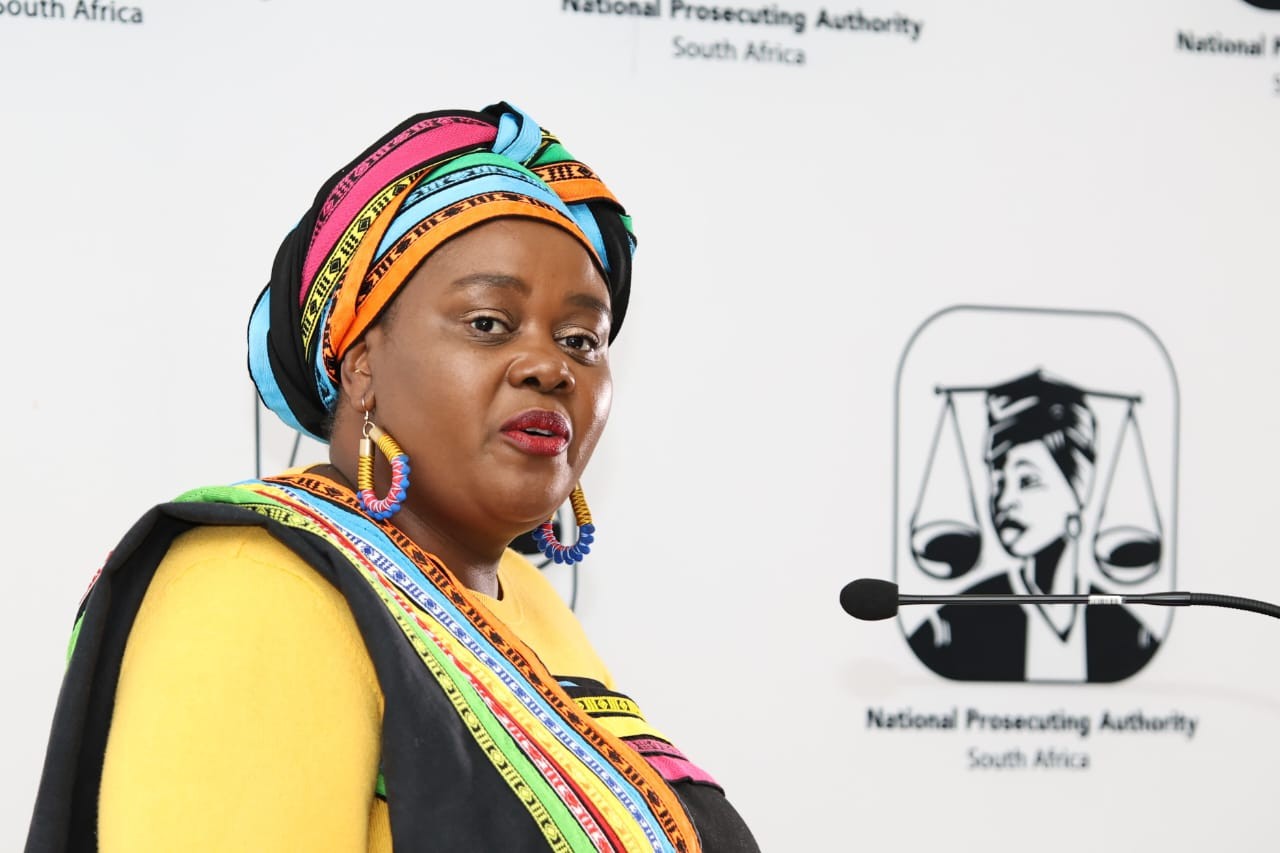
Responding to the embarrassing diplomatic misstep, Minister Kubayi said in a statement on Sunday, 26 October 2025, that she “notes with regret” the unauthorised letter issued by an official in her ministry that led to a South African sheriff approaching Albanese to serve her with court papers.
The unauthorised letter by an unnamed justice ministry official facilitated the involvement of a South African sheriff in attempting to deliver the U.S. federal lawsuit papers to Albanese on Saturday, 25 October 2025.
This incident was linked to the U.S. lawsuit against UN Special Rapporteur Albanese by pro-Israel groups (Christian Friends of Israeli Communities and Christians for Israel USA), as it represents South Africa’s unintended entanglement in related “lawfare” efforts.
A statement distancing Minister Kubayi from the matter said: “The Department has established that the service of process was effected without the knowledge or approval of either the Minister of Justice and Constitutional Development or the Director-General, who serves as the Head of the Central Authority, as is required by Section 40(2) of the Superior Courts Act, 2013 (Act 10 of 2013)”.
The statement added: “Section 40(2) requires that a request for the service of any civil process on a person in the Republic received from any state or territory is transmitted to the Registrar of a Division by the Director-General of the Department, with an intimation that the Minister considers it desirable that effect should be given to such service”.
Service of process is the formal, legal procedure of delivering court documents, such as a summons, to a person based on a request from another country.
“Neither the Director General nor the Minister gave effect to the above request for service of the process, which was a request purportedly made by the Christian Friends of Israeli Communities, Christians for Israel, USA,” the statement said.
“The attempt to serve Ms Albanese did not comply with the required prescripts.
“The Minister has instructed that this irregular service of process be withdrawn and extends an unconditional apology to Ms. Albanese, to the Nelson Mandela Foundation, and the UN.”
The UN Special Rapporteur on the Occupied Palestinian Territories, Albanese, was in South Africa to deliver the 23rd Nelson Mandela Annual Lecture, when a local sheriff tried to serve papers in a defamation matter.
Minister Kubayi has also instructed the Acting Director-General to institute an internal consequence management process.
Minister Kubayi said she will fully address this matter upon her return from Vietnam, where she is currently attending the UN Conference and Signing Ceremony on the United Nations Convention against Cybercrime.
The Minister reaffirmed her ministry’s commitment to upholding the rule of law, respecting international law, and South Africa’s diplomatic and international obligations.
In a related matter, South Africa welcomed the advisory opinion issued by the ICJ regarding Israel’s obligations.
South Africa noted the court’s reminder that Israel must not use starvation of the Palestinian civilian population as a method of warfare.
The court further emphasised Israel’s responsibility as an occupying power to ensure that the population of the Occupied Palestinian Territory has the essential supplies of daily life, including food, water, clothing, bedding, shelter, fuel, medical supplies, and services.
Al Jazeera reports that Israel has killed nearly 100 Palestinians in Gaza and wounded 230 since the fragile truce brokered by the United States came into effect on October 10.
Over a tense period of accusation and counter-accusation, Israel’s army has shot at unarmed Palestinians and bombed Gaza on more than one occasion.