Pretoria – Judgment has been reserved in AfriForum’s case against the National Energy Regulator of South Africa (Nersa)’s approval for the implementation of municipal electricity tariffs without the use of proper cost studies and public participation processes.
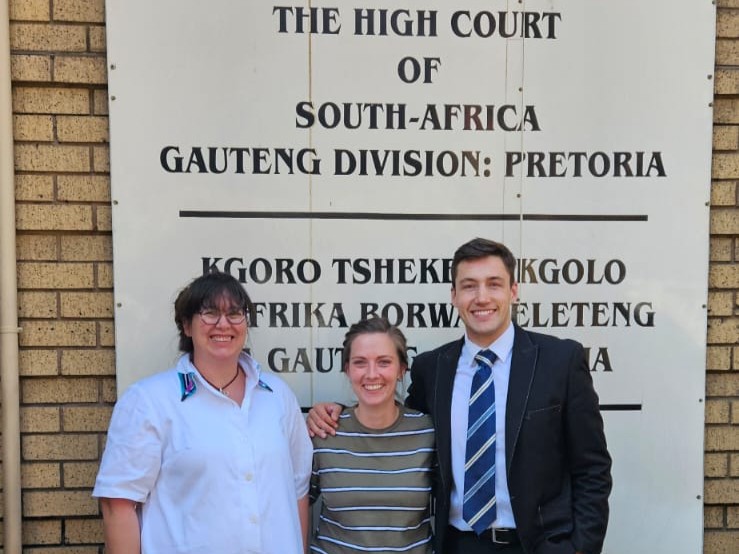
The matter was heard in the Pretoria High Court on Tuesday, 28 October 2025.
The three municipalities that opposed this case ultimately accepted AfriForum’s draft order for the adjusted timelines.
Nersa, on the other hand, maintained that the timelines in the municipal electricity increase process should not be adjusted.
Judgment is reserved, but is expected to be delivered by the end of the week.
In its application, AfriForum requests that Nersa’s public participation process, which was followed for the current financial year’s new municipal electricity tariffs, be declared invalid due to the lack of opportunities for the public to provide input, and other defects in the process.
The organisation further requests that the court issue an interdict to ensure specified timelines for future public participation processes.
If AfriForum’s application against Nersa is successful, the energy regulator will announce Eskom’s latest tariffs at which municipalities must purchase electricity by 31 January 2026.
AfriForum also requests that the final decision regarding tariff applications be submitted to Nersa by March 2026 to allow sufficient time for proper public participation.
The Johannesburg Metropolitan Municipality and Mogale City Local Municipality, which filed their opposing papers at the eleventh hour, both changed their stance during the proceedings.
The City of Cape Town Metropolitan Municipality partially opposed AfriForum’s application, but agreed with the organisation that Nersa’s current processes pose serious problems for the Metro’s budget process.
The City of Cape Town also ultimately accepted the draft order and the new timelines set out therein, as they had themselves made this recommendation.
Nersa’s final decision on each municipality’s new tariffs must be finalised by 5 May.
The organisation further requests that all applications be published with a cost study and that if a municipality does not submit a cost study with their application, this should also be mentioned to the public.
AfriForum’s legal team further argued that only 48% of municipalities submitted their applications by their first initial cut-off date, and therefore, they had to extend the timelines.
“AfriForum’s legal team argued that Nersa is now a lapdog rather than a watchdog when it comes to municipalities,” says Deidré Steffens, AfriForum’s advisor on Local Government Affairs.
“Instead of regulating the energy sector and ensuring compliance with legislation, Nersa is now taking advantage of municipalities.
“Furthermore, it appears that Nersa is putting municipalities above the consumer, as opportunities are given for municipalities to submit their applications for electricity tariff increases later than the proposed cut-off date, but the public is not given more time to submit comments.”
Steffens adds: “Mogale City Municipality itself is an example of how Nersa puts the convenience of municipalities above the needs of consumers.
“This municipality’s application for tariff increases was submitted on June 19 and approved by June 20.
“There was not sufficient time for the public to study the application and submit comments on it.”
Nersa argued that cost studies do not need to be published with applications, as they are confidential, and that their technical nature ensures that only their expertise is sufficient to interpret them.
Judge Etienne Labuschagne asked how the public could be expected to make valuable contributions to the process if they did not have the necessary information.
Nersa was unable to provide a clear answer to this question.
AfriForum’s legal team argued that a formal PAIA process for the public to obtain the cost studies would result in an administrative mess, as it could take up to 90 days to obtain information, and there would therefore not be enough time to submit comments.
“As a regulator, Nersa should ensure that municipalities act within the framework of the relevant legislation and constantly take the interests of consumers into account,” states Steffens.
“They are clearly testing the limits of the law; however, if they cross the line, AfriForum will ensure that action is taken against the regulator.”