I was struck last week by comments from Sean Phillips, director general in the Department of Water and Sanitation, about the “vicious downward spiral” facing water services in many municipalities.
He cited that the Johannesburg metro cannot even afford to transport workers to sites to fix leaks. Joburg loses about 35% of its water to leaks, compounding its financial predicament.
eThekwini is worse, losing about half its water.
This is nothing other than mismanagement.
Water is supposed to be self-sustaining in South Africa, with revenue from its sale paying for infrastructure maintenance. Instead, that revenue is being diverted elsewhere, leaving nothing for essential upkeep.
Businesses face the consequences.
Water infrastructure collapse threatens business continuity across sectors.
Manufacturing plants face production shutdowns. Hotels and restaurants struggle with inconsistent supply.
Commercial property values decline when tenants can’t rely on basic services.
Agriculture faces irrigation uncertainties.
Retail centres dependent on municipal water face operational disruption.
Beyond immediate operations, deteriorating municipal financial health signals rising rates and service charges even as service reliability worsens.
The Auditor General’s review of 2023–24 municipalities found only 41 of 257 had clean audits, noting that “local government remains in a dire state”. The problem is systemic.
Here’s what worries me most in an election year: the political logic won’t favour improved governance but rather desperate extraction while incumbents still have power.
Political scientists call this “lame duck looting” – when political incumbents facing a high risk of losing the next election maximise short-term extraction over long-term service delivery.
Maintenance delivers longer-term payoffs in improved reliability that earns votes.
But where that’s no longer politically viable, the alternative is maximising extraction before losing power.
This accelerates the downward spiral precisely when businesses need stability most.
One notable exception demonstrates what’s possible.
Cape Town has roughly the same population as Johannesburg, but had a capital budget of R12.1bn last year compared to Johannesburg’s R7.1bn.
It’s the only metro with a clean audit.
Cape Town’s water and sanitation directorate spent 94.1% of its capital budget – more than the combined spending of Johannesburg and eThekwini.
That spending delivers service levels that satisfy the public.
The contrast shows the problem stems from choice, not inevitability.
We have institutions designed to ensure clean governance.
Accounting officers can be held personally liable for irregular expenditure.
Minister of cooperative governance and traditional affairs Velenkosini Hlabisa is focused on improving local government performance and has engaged business leaders on collective action.
BLSA is actively supporting municipal capacity, particularly for infrastructure development and maintenance.
Operation Vulindlela has proactive policies to ringfence utility revenue for infrastructure maintenance.
The Special Investigating Unit can investigate suspected corruption through a presidential proclamation.
The problem is that these interventions are designed for longer-term systemic improvement or after-the-fact accountability.
Most act only after investigations conclude and charges are prosecuted.
At this moment, with election-year pressures accelerating deterioration, we need proactive vigilance that prevents damage rather than prosecuting it afterwards.
Civil servants must recognise that they carry responsibility for appropriate spending.
That risk does not change with political transitions.
We need the treasuries and auditors in provinces, the police, and investigative institutions to be particularly alert at this moment.
They carry the hopes of many to ensure clean governance, ultimately enabling the taps to work and electricity to be available.
The media plays a vital role in keeping the public informed.
I hope our investigative journalists will leave no stone unturned in exposing emerging malfeasance.
Citizens carry the ultimate responsibility to be vigilant. Their votes are the ultimate check on political power.
Business has a critical role to play in this moment.
We must support the institutions working toward improved municipal capacity and governance.
Collective action through organisations like BLSA can achieve what individual companies cannot.
Where we have significant operations, business must engage municipal leadership to ensure infrastructure maintenance is prioritised.
Our voice matters in decisions that affect service reliability.
We cannot afford to watch this crisis unfold passively.
The taps failing and lights going out don’t just affect households.
They shut down businesses, eliminate jobs, and destroy the economic foundation that funds the very services we need.
Heightened vigilance from all of us – civil servants, investigators, media, citizens, and business – is what this moment demands.
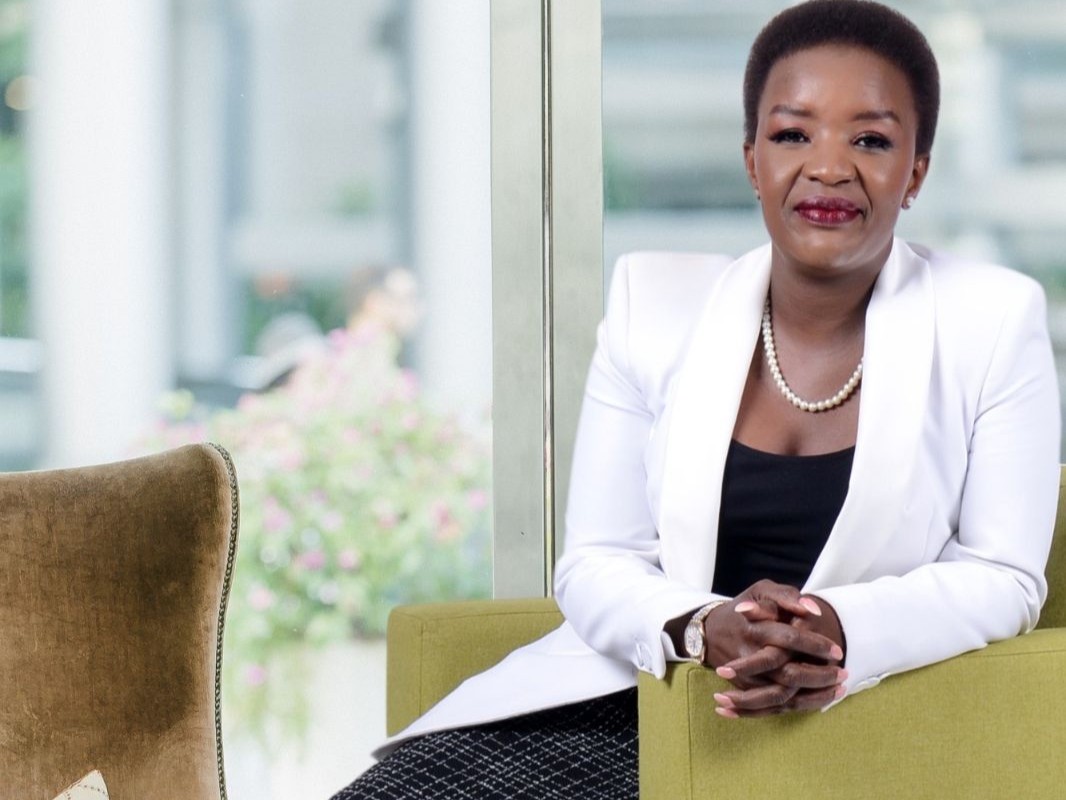
*This column was first published in the Business Leadership South Africa (BLSA) weekly newsletter. The author, Busisiwe “Busi” Mavuso, is the CEO of BLSA. The views Busi Mavuso expresses in this column are not necessarily those of The Bulrushes