Tomorrow afternoon, Thursday 19 March 2026, Parliament will debate what Mmusi Maimane, of Build One South Africa, has called an “urgent matter of national public importance”: the escalating crisis in the Middle East following the U.S. and Israeli strike on Iran, and what it means for South Africa.
The real question before Parliament should not only be what happens next in Tehran — it should be how South Africa ended up so deeply entangled with one of the world’s most repressive regimes.
The relationship defies easy explanation. Iran is not a significant trading partner: bilateral trade amounts to under R300 million annually, placing it outside South Africa’s top 30 partners.
It is not a strategic energy supplier.
It is not a source of investment.
What Iran appears to offer the ANC is something far less tangible: ideological solidarity, Cold War nostalgia, and our research suggests, financial support at moments of acute political vulnerability.
For more than a year, the Middle East Africa Research Institute has been documenting the uncomfortable truth at the heart of South Africa’s foreign policy.
Our report, Ties to Tehran: South Africa’s Democracy and its Relationship with Iran, sets out in detail how this relationship was built, what it has cost us, and why it persists — even as the evidence of Iran’s destructive role in the world has become impossible to ignore.
The MTN saga is telling.
Turkish telecoms company Turkcell alleges that MTN secured Iran’s second mobile licence in 2005 through improper “sweeteners”, including signalling that South Africa would take positions favourable to Iran at the International Atomic Energy Agency.
MTN has consistently denied wrongdoing, but the proximity of events is striking.
South Africa abstained on an IAEA resolution finding Iran in nuclear non-compliance within days of MTN ramping up its licence bid, reversing its previous voting pattern.
The Supreme Court of Appeal has found that South African courts have jurisdiction to hear the matter, and MTN has now petitioned the Constitutional Court.
The R78-billion dispute is not going away, and neither is the central question it raises: were South Africa’s diplomatic silences the product of principled foreign policy, or something more nefarious?
The contradictions are breathtaking. South Africa files genocide charges against Israel at The Hague while remaining silent as Iran massacres tens of thousands of its own citizens in the streets.
Iranian warships are welcomed into our ports for joint naval exercises alongside Russia and China.
A cabinet minister attends the commemoration of Iran’s Islamic Revolution, a regime that systematically targets women, religious minorities, and the LGBTQ+ community, while South Africa simultaneously campaigns on gender-based violence.
With the death of Ayatollah Khamenei, ordinary Iranians celebrate in the streets, and our government issued its condolences and calls for restraint.
Thursday’s debate arrives at a pivotal moment. Iran’s regional proxies have been severely degraded. Its nuclear and ballistic missile programmes have been struck.
The regime that South Africa quietly enabled and defended for three decades has been decapitated.
The question now before Parliament and before the South African public is what we do with that reality.
This provides us with an opportunity.
South Africa could align itself with the millions of Iranians now daring to imagine a freer future.
It could acknowledge that its silence on Iranian repression was a moral failure.
It could begin reorienting its foreign policy toward the constitutional values it has so persistently violated in practice.
The Middle East Africa Research Institute report notes that South Africa ranks 48 out of 52 countries on the Iran Freedom Index, which rates states on their support for democratic change in Iran.
That ranking is a measure of how far we have drifted from the values enshrined in our own constitution.
Parliament’s debate on Thursday must not be limited to the geopolitical fallout of the current distant war.
It must grapple with the domestic question our research has raised for over a year: were South Africa’s diplomatic positions on Iran the product of principled foreign policy, or were they shaped in corporate boardrooms and settled with payments we have yet to fully account for?
The people of Iran have paid an enormous price for their freedom. South Africans, of all people, should understand what that means.
The least we can do is ask, honestly, why we have spent so long supporting the wrong side.
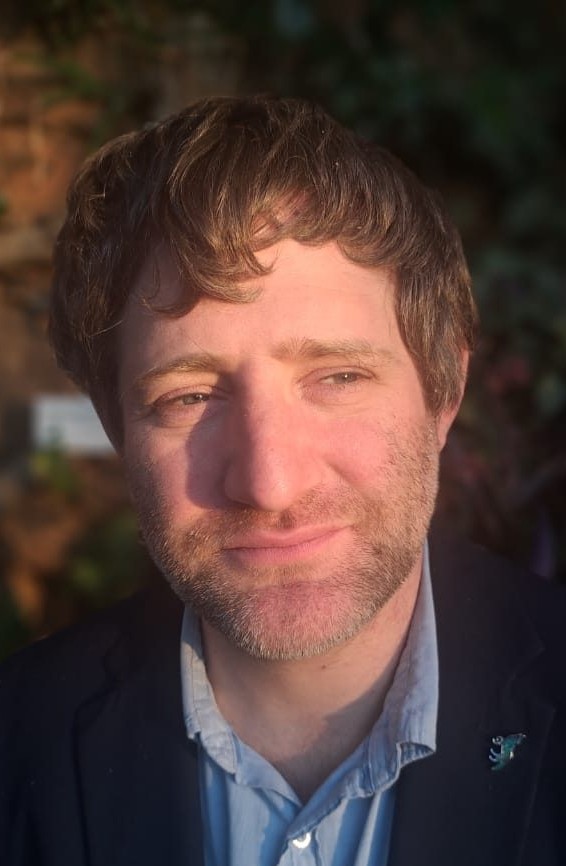
*This article was written by Benji Shulman, Executive Director, Middle East Africa Research Institute. The views expressed by Benji Shulman are not necessarily those of The Bulrushes