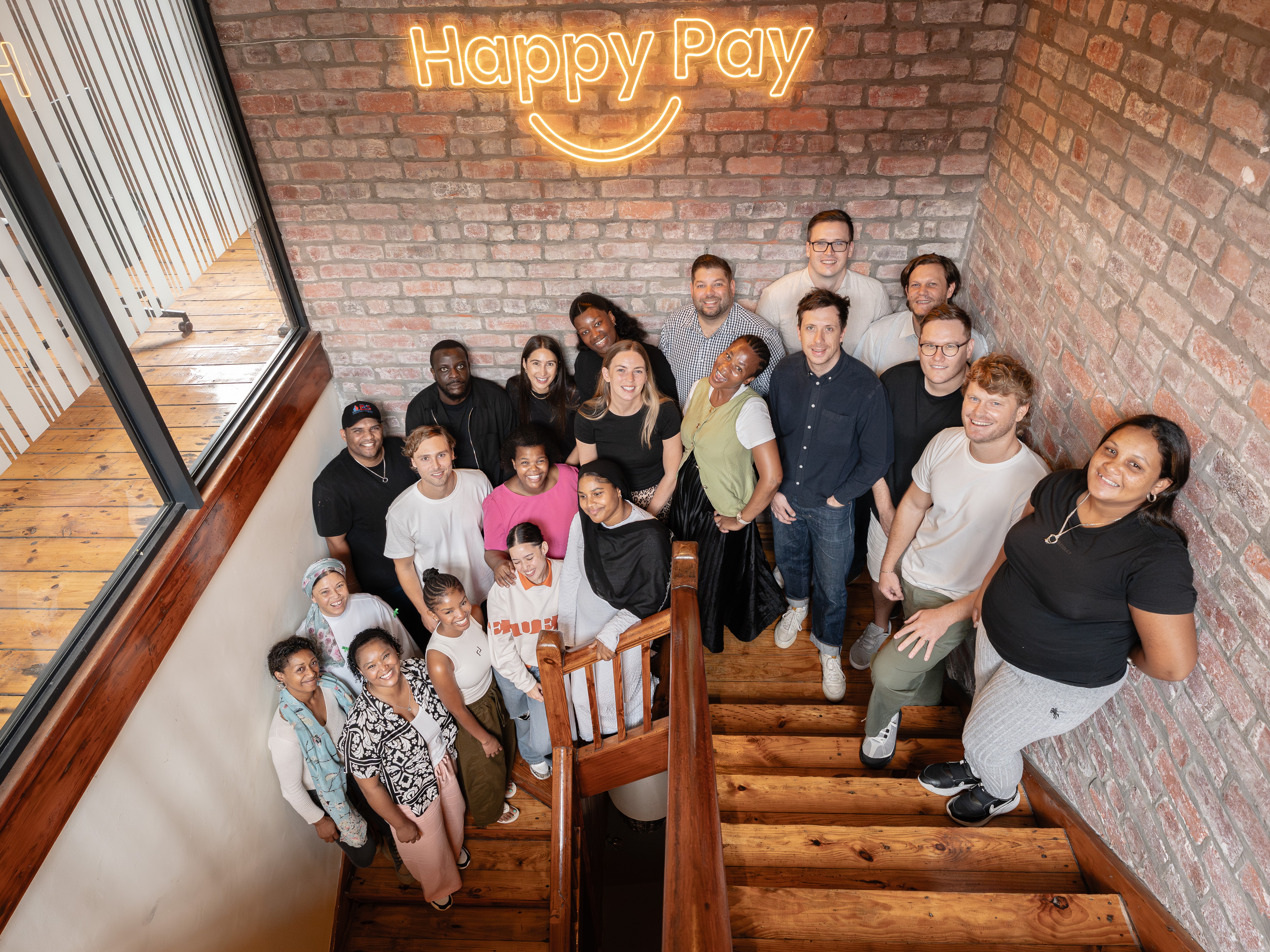
Cape Town – Happy Pay, one of Africa’s fastest-growing Buy Now, Pay Later (BNPL) platforms, says it has closed a $5 million seed round led by global technology investor Partech.
The round saw participation from Futuregrowth Asset Management, 4Di Capital, E4E Africa, Equitable Ventures, Summit Deals, the University Technology Fund and Felix Strategic Investments.
The Cape Town-based startup, with more than 600 000 registered users, is building what it calls an ad-subsidised payments network.
The Happy Pay model removes interest and fees from consumer finance entirely, shifting the cost of installments to the merchants and brands that actually benefit from the resulting sales.
“Our mission is simple: to make cash-flow management free for consumers,” Wesley Billett, Co-Founder and CEO of Happy Pay, said on Monday, 23 March 2026.
“If we can connect the right product to the right person at the right moment and remove payment friction, commerce itself can fund the flexibility.
“That allows us to deliver installment payments without charging consumers interest.”
The model is a deliberate departure from traditional lending. Where most credit providers rely on interest, fees, or revolving balances, Happy Pay earns through merchant funding.
Retailers pay because flexible payments, paired with well-timed advertising, drive real commercial outcomes: higher conversion, bigger baskets, and access to new customers they wouldn’t otherwise reach.
An AI engine that connects discovery to purchase
Central to Happy Pay’s approach is an AI-driven advertising and distribution engine that matches merchants with high-intent shoppers in real time.
The platform draws on behavioural signals, transaction data, affordability insights, and contextual cues to figure out what a user is most likely to buy, and when.
Those offers are then surfaced inside Happy Pay’s own app and pushed across partner apps, digital channels, and other touchpoints, moving consumers from discovery through to checkout with instalment payments already built in.
The key difference from standard digital advertising: Happy Pay optimises for completed purchases, not impressions or clicks.
Merchants pay only when a transaction happens.
Consumers get interest-free flexibility at the exact moment they’re ready to buy.
The company describes this as a closed-loop model, one that pushes relevant products to users and drives them into both e-commerce checkouts and physical stores, turning marketing spend into trackable revenue rather than a bet on attention.
From BNPL product to commerce infrastructure
BNPL has taken off globally, but most providers still operate as standalone payment options bolted onto checkout.
Happy Pay is going after something bigger: a commerce layer where advertising, payments, and financing work as a single, connected system.
Brands can promote specific products to targeted audiences. Merchants get incremental revenue.
Consumers get flexible payments, all within one network. It’s as much an advertising marketplace as it is a financial product, sitting at the intersection of fintech, commerce, and adtech.
Built for markets where credit is expensive
In South Africa, consumer credit typically carries high interest rates and access to affordable lending remains patchy.
Short-term instalment options have filled a gap as people look for predictable repayment structures that don’t saddle them with long-term debt.
“Our growth reflects a shift that’s been building for a while, toward financial tools that offer real flexibility without the trap of revolving balances,” said Billett.
“Traditional credit in South Africa is expensive, with the average credit-active consumer spending around 28% of their net income on debt repayments.
“We believe our model changes that equation by creating value for every participant.
“Merchants grow sales and acquire new customers, consumers gain access to cost-free cash-flow flexibility, and we build a business designed to deliver positive, long-term impact.”
“We’ve looked at most BNPL companies across Africa, Europe, and the U.S., and we’re clear that the best model for creating true value is the one Happy Pay has built,” said Matthieu Marchand, Principal at Partech.
“BNPL only makes sense when it delivers real affordability for consumers while helping merchants improve conversion, grow their client base, build loyalty, and reduce acquisition costs.”
Funding to accelerate scale
The fresh capital will go toward expanding merchant partnerships, growing distribution across digital and physical channels, and continuing to develop the AI-driven recommendations and ads engine.
A bet that the future of consumer finance isn’t interest
“Finance has previously been monetised through the consumer,” concludes Billett.
“We’re proving it can be monetised through value creation instead.
“When merchants grow, consumers shouldn’t have to go into debt to make that happen.”