
Johannesburg – Once a chubby girl shaped by cruel words at home, Sara Norcross now leads the fight to reframe obesity as a chronic disease and dismantle the stigma that still drives many towards dangerous shortcuts.
At a trendy eatery in Waterfall, Midrand, the late morning crowd on Saturday, 21 March 2026, moved easily between coffee and conversation, the soft choreography of plates and cutlery underlining a Johannesburg that never quite sits still.
I had been there for just over an hour.
Then she arrived.
Not rushed. Not flustered. Simply present.
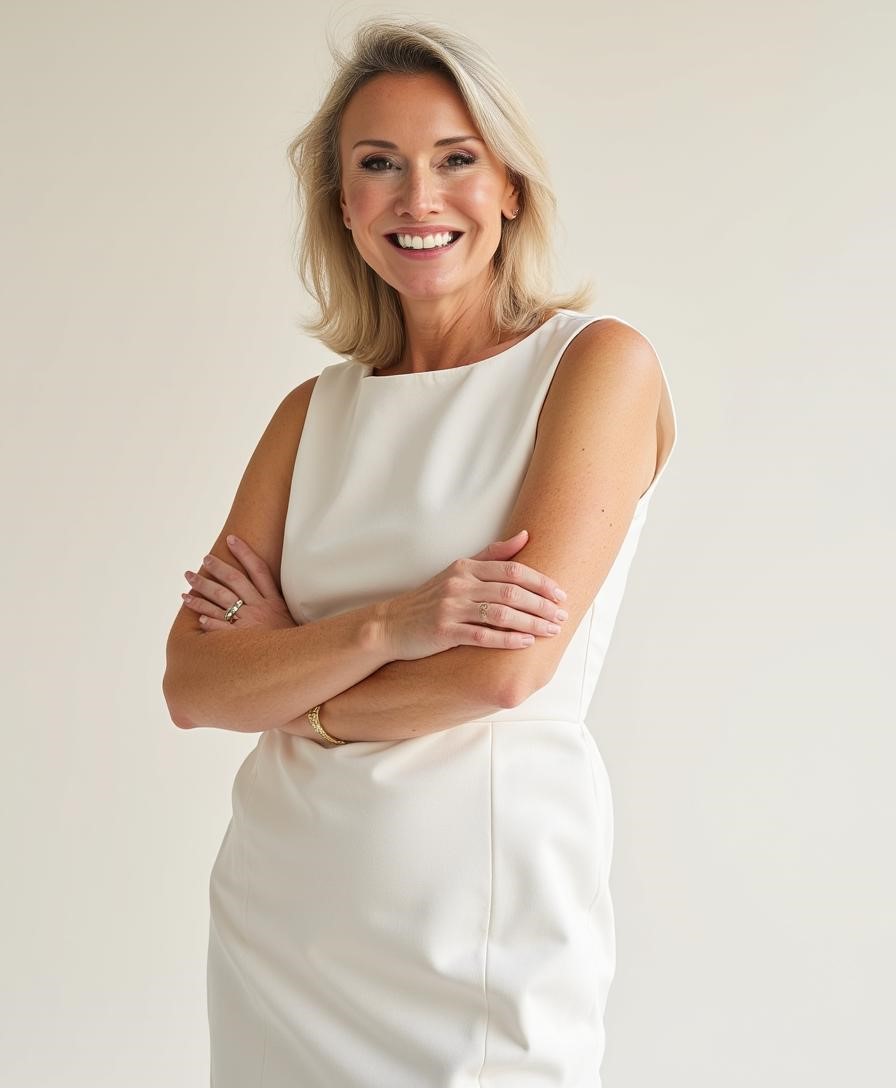
Sara Norcross, Vice President and General Manager of Novo Nordisk South Africa, a Danish multinational, carries a warmth that disarms you before you even reach for your notebook.
She laughs easily, a full, unrestrained laugh.
You would not immediately place her at the helm of a global pharmaceutical operation navigating one of South Africa’s most urgent and underreported public health crises: the rise of illicit, unregulated weight-loss drugs and the growing burden of obesity.
Her apology is sincere but brief.
“I’m really sorry,” she says, settling into her seat.
“These shows, you never know how they’re going to run.”
The “show” is her daughter’s horse-riding competition, the reason for her late arrival.
“She woke us up at five this morning,” Norcross explains, smiling.
Completely ready. You don’t even need to be there until eight. And today… she won.”
It is offered lightly, but it reframes everything.
Before the executive, before the policy debates and the boardroom decisions, there is a mother whose day began in the dark, negotiating the small urgencies of childhood.
Her three children, a boy (14), a girl (10), and the last born orbit her life with the full force of modern parenting: school schedules, sports, homework, and the quiet, constant negotiation of attention.
“You divide and conquer,” she says.
“My husband takes my [son) to soccer; I take my [daughter] to horse riding. That’s how we manage it.”
The phrase is casual, but the architecture behind it is anything but.
“You’ve got work, you’ve got home, you’ve got school WhatsApp groups, you’ve got everything,” she continues. “Life doesn’t stop between nine and five.”
She pauses, then adds, almost gently:
“Be kind to yourself. You can’t be on top of everything.”
That kindness for her includes a routine of walking and exercise.
Norcross is deliberate about movement, not as indulgence but necessity.
“I have to walk,” she says.
“It’s not optional for me, especially with my back.”
She folds it into the rhythm of her day alongside work and parenting.
For her, exercise is not about appearance. It is about staying functional, making sure she can keep going.
At the table, she is relaxed and conversational. Her PR colleague has sketched a possible introduction, neat and controlled.
Norcross listens, amused, but does not cling to it.
She prefers unpolished conversation.
At one point, I tease her: “So, you’re a drug dealer?” She laughs, loudly, freely. “My dad used to say the same thing,” she replies.
It is a throwaway moment, but it lands with weight, a line that runs from her childhood in Great Britain to a leadership role in South Africa, stitched together by humour and memory.
Norcross was born in the United Kingdom (UK), in the city of Manchester, and trained as a chemical engineer, drawn initially to problem-solving and systems thinking.
Her early career at GlaxoSmithKline exposed her to global health systems, including efforts to expand vaccine access.
She joined Novo Nordisk seven years ago, working in diabetes and obesity in the UK before relocating to South Africa three and a half years ago.
“I didn’t think South Africa was an option,” she says.
“It was an opportunity that came up.” Like many outsiders, her first encounter with the country was filtered through algorithm-driven perceptions.
“You Google it,” she says, “and what comes up isn’t always the reality.”
That perception has since shifted, decisively.
“I don’t want to leave,” she says.
Her attachment to South Africa is not abstract.
It is lived in school runs, in weekend routines, in family holidays along the scenic Garden Route, in conversations that move easily between cultures.
At home, their golden retriever, Zuva, settles easily into this rhythm too, a constant, affectionate presence in a household that rarely stands still.
“What people see from outside is not the reality of living here,” she reflects. “It’s one story, not the whole story.”
Her father, once loyal to French wine, is now, she says, “obsessed with South Africa.
“He loves the hospitality. He says, ‘Everyone is so friendly. I haven’t had a bad glass of wine.’”
These small details build a larger truth: what began as relocation has become belonging.
Yet if her personal life is grounded in warmth and routine, her professional world is defined by urgency.
South Africa faces a mounting obesity crisis.
An estimated 12 million people are living with obesity or related conditions, placing enormous strain on individuals, families, and the healthcare system.
The World Health Organization recognises obesity as a chronic disease, a complex, relapsing condition driven by biological, environmental, and social factors, not simply a matter of personal choice.
For Norcross, that distinction is critical.
“Obesity is still seen as a choice,” she says.
“But it’s biology. Two people can eat the same thing, and one gains weight and the other doesn’t.”
This misunderstanding, she explains, shapes behaviour in dangerous ways.
Layered onto the crisis is a growing shadow market: unregulated weight-loss drugs sold through WhatsApp groups and informal networks.
“It keeps me awake at night,” she says.
“People are getting sick. People are ending up in the ICU. And they’re not talking about it.”
Her tone sharpens.
“It’s hugely underreported. Because people are embarrassed.
They don’t want to say, ‘I was trying to lose weight quickly, and something went wrong.’”
In some cases, she adds, “patients are actively silenced through legal means. That’s not just unethical, it’s dangerous.”
“I was a chubby baby,” she says, almost matter-of-factly.
“And I had very slim friends. We ate the same food, but our bodies handled it very differently.”
The stigma surrounding obesity cuts both ways: discouraging people from seeking care while pushing them towards unsafe yet costly alternatives.
“People want it to be anonymous,” she says.
“They want it to be quick and easy.”
Her work, therefore, is not only about treatment but also about reframing the national conversation.
“You can’t just bring medicine,” she says.
“You have to build the system around it.”
This is where policy meets practice.
Norcross speaks of partnerships between government, the private sector and communities as essential to any response.
Access to medicine, she explains, is not simply about availability but about ensuring the right systems, training and support so that patients receive care safely and consistently, including newer treatments such as GLP-1 receptor agonists.
“It takes partnerships,” she says.
“Government, healthcare workers and communities all have a role to play if we are serious about making treatment accessible and sustainable.”
“You have to train, train, train,” she says.
“You have to support healthcare workers. You have to ensure the system can use what you’re bringing.”
One initiative she returns to repeatedly is a school-based project in Soweto, part of a global programme operating in six countries.
“It’s about changing the trajectory of children’s lives,” she explains. “Understanding food, movement, behaviour, all of it.”
Implemented in 22 schools in partnership with the Gauteng Department of Health and other stakeholders, the project seeks to identify scalable, sustainable interventions.
“You can’t just say everyone must eat organic food,” she says. “It has to be realistic. It has to work in that environment.”
The model is holistic: nutrition, physical activity, education, and community engagement.
“It’s not a one-off,” she emphasises. “It’s about what can work nationally.”
Her thinking draws on lessons from South Africa’s HIV response.
“They treated it as urgent,” she says.
“They changed the model. They used pharmacists and community workers.
They didn’t just rely on the traditional system.”
She pauses.
“We need that kind of thinking again.”
Despite the scale of the challenge, Norcross does not position herself as the centre of the solution.
“Very clever people surround me,” she says.
“My job is to remove barriers. To help them succeed.”
It is a leadership style rooted in humility and coordination rather than control.
“I can’t do head of finance, I can’t do head of people,” she adds, laughing. “These are experts.”
Back at the table, the conversation drifts from policy to parenting, from national systems to small domestic mishaps.
At one point, she lingers on a moment: her son arriving at a school assembly in full uniform on a casual day, the only one dressed for the wrong occasion.
“You just have to laugh,” she says. “You can’t be perfect.”
It is a quiet reminder that, for all the weight of her responsibilities, her days are still shaped by ordinary moments, missed messages, early mornings, shared meals, small embarrassments that become family stories.
As the restaurant begins to empty, Norcross gathers her things. Another meeting awaits.
Another set of decisions.
Another day in motion.
There is still paperwork: visas, applications, the slow mechanics of turning presence into permanence.
But in the way she speaks, in the ease with which she moves between worlds, and in the seriousness with which she engages this one, the conclusion feels settled.
South Africa, for Sara Norcross, is no longer an assignment.
It is home.
And somewhere between a five o’clock wake-up call, a child’s victory on horseback, and a conversation about saving lives in a Midrand restaurant, she has already taken her place within it not as an outsider passing through, but as someone fully, deliberately invested in its future.