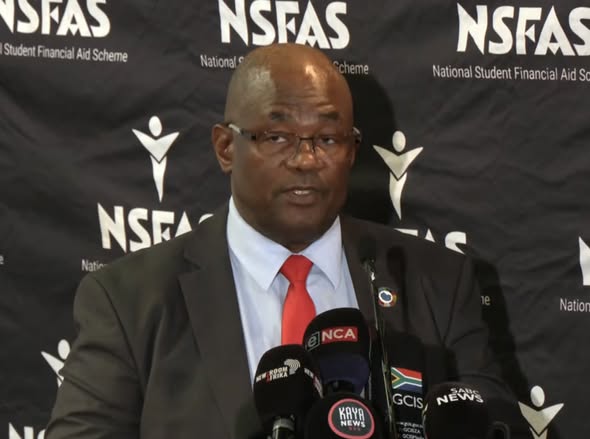
Pretoria – The Board of the National Student Financial Aid Scheme (NSFAS) has been rocked by resignations, including that of interim Chairperson Dr. Mugwena Maluleke.
Board member Karabo Mohale has also resigned. She was also chairperson of the Human Resources and Organisational Development Committee.
Only five months on the job, Dr. Maluleke stepped down from his position as Board member and interim Chairperson on Freedom Day, 27 April 2026, citing personal and academic commitments.
The cumulative effect of these and other resignations raises serious concerns regarding the Board’s ability to continue to constitute itself lawfully and to discharge its statutory and fiduciary responsibilities.
Commenting on the matter on Wednesday, 29 April 2026, the Department of Higher Education and Training said: “In light of these developments, the minister is currently assessing the legal and governance implications, including whether the Board remains capable of effectively exercising its oversight and decision-making functions in terms of the applicable legislative framework”.
The department added that as part of this process, Higher Education and Training Minister Buti Manamela has initiated a formal engagement with the remaining Board members.
“Individual correspondence has been issued affording them an opportunity to make representations within a defined timeframe on the current governance position and on any lawful and practical alternatives available to ensure institutional stability,” the department said.
“The minister has emphasised that this step is intended to ensure procedural fairness and to allow for a full and considered assessment before any further action is taken.”
The department assures students, institutions, and the public that the work of NSFAS continues without disruption.
“All operational processes, including the disbursement of student funding, remain in place and are being closely monitored to ensure continuity and stability,” the department said.
“The minister has further reiterated that NSFAS remains a critical instrument of government policy, central to expanding access to higher education and training for poor and working-class students, and that its stability is of paramount importance.”
The department said it will continue to engage all relevant stakeholders, including Parliament, National Treasury, and oversight bodies, as the process unfolds.
Further updates will be provided in due course.