Addis Ababa – Africa CDC has announced that as of 11 June 2026, as many as 708 confirmed cases of Ebola and 141 confirmed deaths have been reported.
The Africa CDC said it continues to work closely with affected Member States, WHO, regional institutions, and partners to support the response to the Bundibugyo Virus Disease outbreak affecting the Democratic Republic of the Congo and Uganda.
The Democratic Republic of the Congo has reported 689 confirmed cases and 139 deaths, while Uganda has reported 19 confirmed cases and two deaths.
In the DRC, Ituri Province remains the epicentre of the outbreak, accounting for the overwhelming majority of confirmed cases.
The most affected health zones include Bunia, Rwampara, and Mongbwalu.
North Kivu has also reported cases.
South Kivu has reported no new cases since 26 May 2026.
In Uganda, cases have been reported primarily in Kampala, with no new transmission reported in the latest update.
The outbreak spans multiple health zones in the DRC and one district in Uganda.
The situation remains serious due to cross-border movement, community concerns, pressure on local health systems, and continued needs across surveillance, laboratory testing, infection prevention and control, clinical care, risk communication, and community engagement.
Response update
National and provincial incident management systems are active in affected areas, and emergency coordination structures are operational in Uganda.
Surveillance, contact tracing, alert investigation, laboratory testing, case management, points-of-entry screening, infection prevention and control, and community engagement activities are ongoing.
On 11 June, more than 400 alerts were reported, and the majority were investigated.
Contact tracing continues in affected areas, with Uganda reporting full follow-up of listed contacts.
In the DRC, contact tracing and community-based surveillance remain priority areas for continued strengthening, particularly in high-burden health zones.
Laboratory testing continues to support case confirmation and response decisions.
Ebola Treatment Centres are operational in affected areas, with additional treatment capacity being strengthened.
Patients are currently being managed in isolation across affected provinces, including confirmed and suspected cases.
At points of entry and control, traveller screening and sensitization are ongoing.
More than 12 000 travellers were screened in Ituri, and more than 14 000 travellers were screened in Uganda during the latest reporting period.
Africa CDC and WHO continue to recommend evidence-based public health measures and advise against unnecessary restrictions on trade and travel.
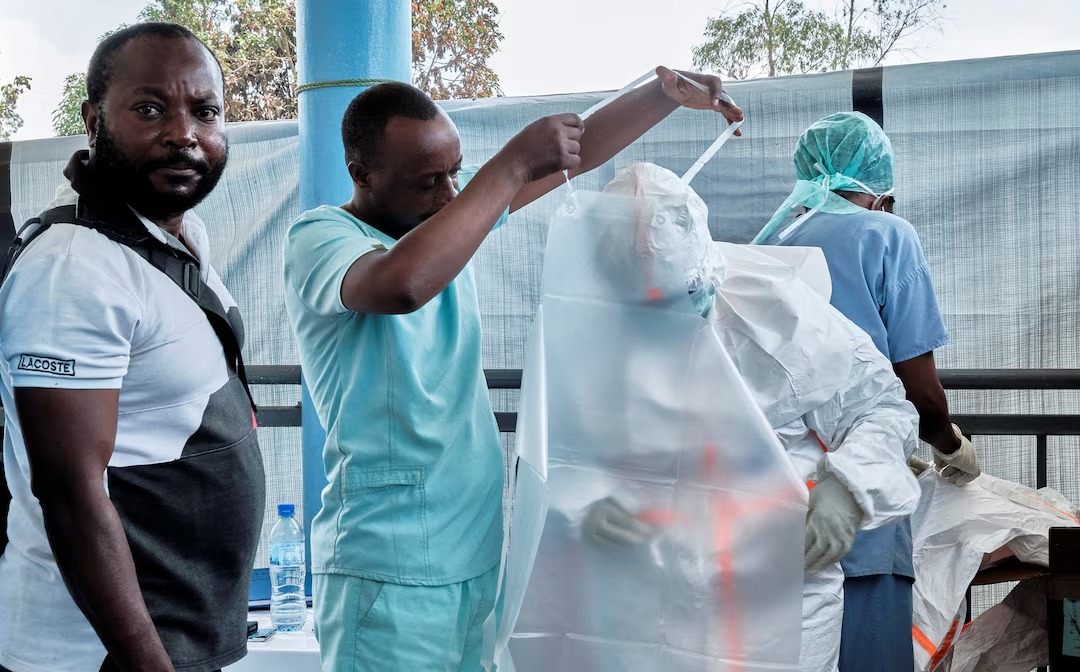
Infection prevention and control activities are also being scaled up.
Health workers in affected areas have received IPC training with support from partners, and efforts continue to strengthen safe waste management, decontamination, and protection of frontline responders.
Community engagement and public health guidance
Community trust sits at the centre of the response.
Africa CDC and partners continue to support risk communication and community engagement to address misinformation, strengthen acceptance of isolation and care, and promote safe and dignified burials.
Early reporting, safe referral, laboratory confirmation, isolation, supportive care, contact tracing, infection prevention and control, and safe and dignified burials remain essential to interrupt transmission.
Members of the public in affected and at-risk areas are encouraged to report symptoms early, avoid direct contact with bodily fluids of people who are sick or deceased, follow guidance from health authorities, cooperate with contact tracing teams, and seek care promptly through official health channels.
Priority needs
The response requires continued support for surveillance, laboratory testing, case management, infection prevention and control, risk communication, community engagement, logistics, WASH, and protection of health workers.
Priority needs include diagnostic supplies, personal protective equipment, infection prevention and control materials, WASH support, treatment and isolation capacity, safe burial materials, emergency logistics, communications support, and trained personnel for surveillance, clinical care, laboratory work, data management, risk communication and community engagement.
Africa CDC calls on partners to align support with national response plans and the joint continental response effort. Coordinated, rapid and community-centred support will help affected countries interrupt transmission and protect lives.
Africa CDC position
Africa CDC continues to support affected Member States and at-risk countries through continental coordination, technical assistance, surveillance support, risk communication, partner alignment and resource mobilization.
The current outbreak underlines the importance of strong national public health institutes, resilient surveillance and laboratory systems, community trust, regional coordination, and sustained investment in Africa’s health security.