I spend my working life thinking about how brands build a name for themselves across borders.
One of the standout lessons I’ve seen this year hasn’t come from a company, but from African teams at the World Cup.
Branding is usually seen as aesthetics: a logo, a colour palette. But the brands that perform do harder work.
They find exactly what is theirs, and they have the confidence to put it forward without borrowing or hedging.
This World Cup is full of teams doing just that.
The walk from the plane
Look at DR Congo.
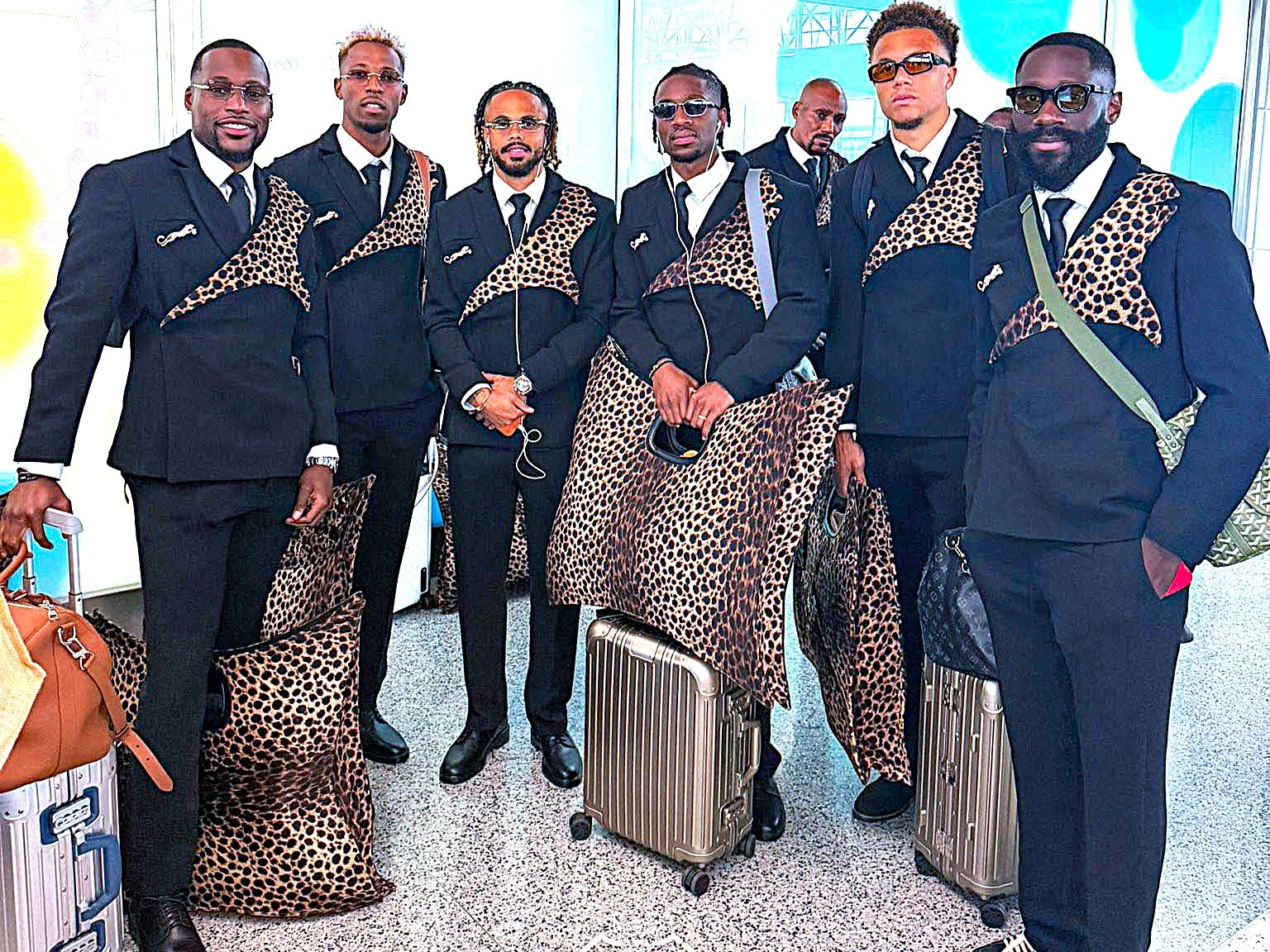
When the squad landed in Houston, the players walked through the airport in black suits with leopard-print details, leopard brooches, and matching bags, designed by Congolese designer Alvin Junior Mak, of JMAKxPARIS.
The collection is a tribute to the 1974 Léopards, the first team from sub-Saharan Africa to reach a World Cup, and to La Sape, Congo’s tradition of dress as resistance, expression, and dignity.
This is the country’s first World Cup in 52 years, and the squad arrived under strain, with some quarantined during the ongoing Ebola outbreak at home, and many supporters unable to travel.
That could have been the dominant narrative, but Congo used one of the world’s biggest stages to lead with creativity and heritage, not hardship.
Côte d’Ivoire arrived in Philadelphia in saffron tie-dye blazers by the Ivorian designer Ibrahim Fernandez, their elephant motifs framing the squad as an expression of Ivorian craft.
Sénégal came in forest-green tailoring by Xakeb, with shoes by the Dakar maker Cheikh Mbacké Thiam.
In each case, the designer came from the country represented.
Countries have used arrivals and ceremonies to project who they are for as long as global events have existed.
The tradition is old.
What’s newer is the confidence behind it, the scale it now reaches, and the global appetite that rewards it.
Stories that move markets
An enormous national branding moment came from Nigeria in 2018, when its World Cup shirt with Nike became a global phenomenon.
Drawn from the Super Eagles’ famous 1994 kit, it took three million pre-orders before it arrived in stores – a record for an African team – and sold out within minutes of launch.
It was later shortlisted for the Design Museum’s Beazley Design of the Year, alongside Gucci and Burberry.
The identity was unmistakably Nigerian.
The reach was Nike’s.
Neither side could have produced that result alone.
The story must be genuinely yours, and the right partner can help it travel.
The challenge is making sure the value comes home too.
The story is the brand
On the pitch, the most powerful story, for me, comes from Cabo Verde.
On their World Cup debut, the Blue Sharks held Spain, the reigning European champions, to a goalless draw.
Their 40-year-old goalkeeper, Vozinha, produced the performance of his life and left the field in tears.
By the next morning, millions of people who had never heard his name knew it.
His social media following had grown from tens of thousands into millions, with no campaign behind it and no ad budget.
Reputation grew because the story was true and people wanted to share it.
The best piece of brand-building in football this month was a real story, told at the right moment.
You can buy attention.
You can’t buy authenticity.
Making the moment last
These are all major moments, but growing and sustaining a reputation takes infrastructure.
I’ve seen this through APO Group’s work with the Global Africa Business Initiative (GABI) and its Unstoppable Africa platform, held each year alongside the UN General Assembly in New York.
Convened by the United Nations Global Compact, GABI brings African founders and investors, from sectors including sport and the creative economy, into the same room as global partners, so that ideas and investment can move in both directions, on African terms.
It rests on the same truth that the World Cup is showing. Africa’s business, culture, and sport shape how the continent is seen, and they do it together, which carries real commercial weight: people invest in and travel to the places they feel they understand.
The teams making the strongest impression have not been the biggest or the richest.
They have been the clearest about who they are. Some do that through design. Some move us.
Some work because they partner to scale.
The question isn’t whether African brands can command global attention.
They already do.
The opportunity is to keep building the platforms and partnerships that let those stories travel, without losing what makes them worth telling.
Know who you are, and the world becomes your audience, not your author.
*The author of this article is Libby Allen, Vice President: Brand & Creative at APO Group. Based in Cape Town, South Africa. She leads marketing and creative services for the consultancy and its clients across African markets. The views expressed by Libby Allen are not necessarily those of The Bulrushes