Paris – French health authorities confirmed the country’s first Ebola case linked to the ongoing 2026 outbreak in Central Africa.
A doctor who recently returned from a humanitarian mission in the Democratic Republic of the Congo (DRC) tested positive for the Bundibugyo strain of the Ebola virus.
(Source: x.com)
The patient, whose identity has not been publicly released for privacy reasons, is a medical professional who had been working in the Ituri Province, the epicenter of the current epidemic.
Health officials on Wednesday, 24 June 2026, said they believe the doctor likely contracted the virus through direct contact with infected patients or contaminated bodily fluids while providing care in overstretched treatment facilities.
Ebola spreads via close contact with blood, secretions, or other fluids from infected individuals, as well as through contaminated surfaces or materials.
(Source: reuters.com)
The doctor developed symptoms consistent with Ebola—fever, fatigue, muscle pain, and possibly gastrointestinal issues—shortly after returning to France.
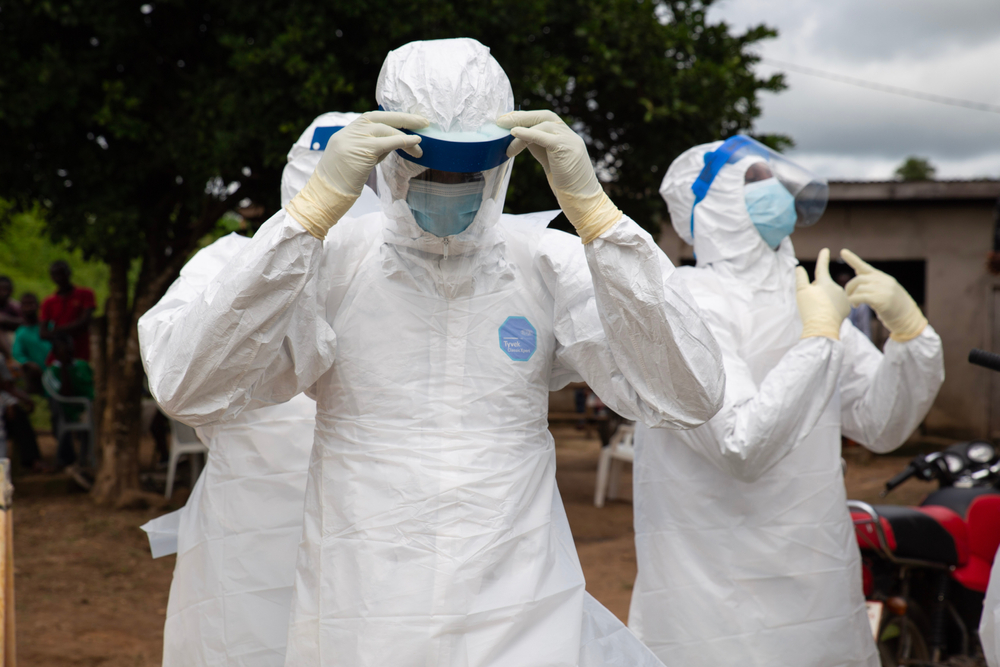
Upon suspicion of infection, the individual was promptly isolated in a specialized high-containment unit at a designated Paris-area hospital equipped for viral hemorrhagic fevers.
Contact tracing is underway, with close contacts being monitored for 21 days, the maximum incubation period for the virus.
(Source: x.com)
This imported case comes amid a rapidly evolving Ebola outbreak in the DRC and neighboring Uganda, declared a Public Health Emergency of International Concern (PHEIC) by the WHO in May 2026.
The Bundibugyo strain has caused significant concern due to its transmissibility in community settings, though it generally shows a lower case fatality rate (around 25-40%) compared to the more notorious Zaire strain.
As of mid-June, the outbreak has seen over 1 000 confirmed cases and hundreds of deaths, complicated by conflict, insecurity, and challenges in remote areas.
(Source: ecdc.europa.eu)
Threat to Europe Remains Low
European health agencies, including the ECDC, assess the risk to the general European population as very low.
Ebola is not airborne and requires direct contact with symptomatic individuals or their fluids.
Modern surveillance, rapid isolation protocols, and advanced medical care in Europe have successfully contained previous imported cases with minimal secondary transmission.
(Source: health.ec.europa.eu)
French authorities stated that rigorous protocols are in place.
“The patient is stable and receiving supportive care,” a ministry spokesperson said.
No other suspected cases have been reported in France at this time.
This incident serves as a reminder of the interconnectedness of global health.
While the immediate threat to Europe is minimal, it underscores the need for continued international support to contain the outbreak at its source in Central Africa and strengthen preparedness for potential imported cases.
Humanitarian workers and travelers returning from affected regions are advised to monitor for symptoms and seek immediate medical attention if they arise.
(Source: ecdc.europa.eu)
Disclaimer: This article was compiled using the AI tool Grok on X and may contain inaccuracies.