Washington, D.C. – As fireworks lit up the Washington sky well past midnight on July 4, 2026, the United States marked its semiquincentennial—the 250th anniversary of the signing of the Declaration of Independence.
The “Salute to America 250” event on the National Mall, headlined by President Donald Trump, blended grand patriotic theater with partisan undertones, even as severe storms forced evacuations and delays.
While millions celebrated American resilience and innovation, the milestone also invited unflinching reflection on the nation’s original sins: the devastation of Indigenous populations, the enduring legacy of slavery and racism, and the complex role of leadership in shaping national identity.
(Source: nytimes.com)
The evening’s logistics underscored the drama.
A powerful storm system prompted the Secret Service to clear the Mall for hours, delaying Trump’s remarks until after 11 p.m.
Organisers pressed forward with what was billed as the largest pyrotechnics display in history—more than 850 000 fireworks over roughly 40 minutes—despite the late hour and earlier heat advisories that had already disrupted daytime events.
President Trump, undeterred, insisted the show must go on.
“I said it doesn’t work next week—this is the big day,” he reportedly told aides.
(Source: nytimes.com)
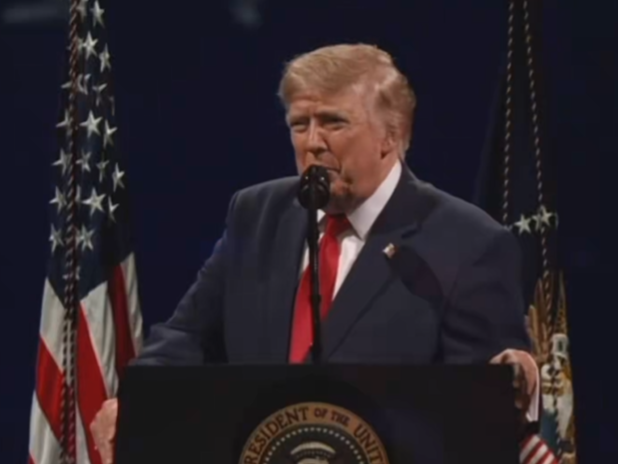
In his speech, President Trump cast the U.S. as an eternal “nation of winners,” touting economic strength, military power, and cultural exceptionalism while warning of communism as an existential threat comparable to World War II or 9/11.
He emphasised unity and future glory, framing the anniversary as the dawn of a new “golden age.”
The address mixed soaring rhetoric with familiar campaign-style jabs, drawing both cheers from supporters and criticism for politicising a civic milestone.
(Source: pbs.org)
Yet the celebration unfolded against a striking global irony.
As Americans marked their founding with fireworks and flyovers, Iran was deep in days-long funeral rites for Supreme Leader Ayatollah Ali Khamenei, killed months earlier in a U.S, and Israeli precision air strike.
State ceremonies in Tehran, Qom, and Mashhad drew millions in mourning, a somber counterpoint to U.S. revelry that highlighted clashing visions of power, resilience, and legacy on the world stage.
The war on Iran by the U.S. and Israel, which erupted in February 2026, has largely subsided.
A ceasefire and memorandum of understanding were signed in June 2026.
While active large-scale combat has stopped, tensions remain high, and negotiations over Iran’s nuclear program, sanctions, and freedom of navigation in the Strait of Hormuz are ongoing.
(Source: npr.org)
A Nation of Extraordinary Successes
No honest accounting of 250 years can ignore America’s profound achievements. From a fragile collection of colonies, the U.S. grew into the world’s preeminent economic and military power.
The 20th century saw it defeat fascism, pioneer the digital revolution, land humans on the moon, and export democratic ideals—even imperfectly—across the globe. Innovations in medicine, technology, and culture have reshaped human life.
The post-World War II order, anchored by American leadership, lifted billions of people out of poverty worldwide.
(Source: nbcnews.com)
Economically, waves of immigration and ingenuity built unmatched prosperity.
The U.S. remains a magnet for global talent, its universities and startups driving breakthroughs from mRNA vaccines to artificial intelligence.
Culturally, American music, film, and literature dominate, reflecting a dynamism born of diversity.
On this anniversary, flyovers, concerts, and record fireworks symbolised that enduring vitality—proof that the “American experiment” produced tangible triumphs.
The Unresolved Reckoning
Yet the founding ideals of liberty and equality were never universally applied.
The devastation of Indigenous populations remains one of history’s darkest chapters.
European arrival triggered disease, warfare, and forced removal that decimated Native societies.
Policies like the Trail of Tears and centuries of broken treaties reduced sovereign nations to fragmented reservations.
Today, many Indigenous communities still face disproportionate poverty, health crises, and cultural erasure—legacies demanding continued acknowledgment and repair.
(Source: on-culture.org)
Slavery and its aftermath form another foundational contradiction.
Enslaved Africans built much of the early economy, yet were denied basic humanity.
The Constitution’s compromises entrenched the institution, and its abolition after the Civil War gave way to Jim Crow, redlining, and systemic disparities persisting into the 21st century.
Racism—both overt and structural—continues to shape outcomes in wealth, justice, and opportunity.
Polls show many Black Americans view patriotic symbols with ambivalence, seeing the flag as a reminder of unfulfilled promises rather than universal triumph.
(Source: allyfromnola.medium.com)
These truths are not footnotes; they are integral to the American story.
Historians and activists rightly insist that celebrating 250 years requires grappling with them, not airbrushing uncomfortable realities.
Efforts to sanitise exhibits or curricula risk weakening the very democratic resilience the anniversary seeks to honor.
The Trump Factor
President Trump’s prominent role in the 250th events— from Mount Rushmore remarks to the Mall centerpiece—has made the milestone unmistakably his own.
Supporters see it as fitting: a leader unapologetically championing American greatness amid perceived cultural erosion.
Critics argue it veers into narcissism, with programming and rhetoric centering his persona and priorities over broad national reflection.
The late speech, ambitious plans for massive fireworks, and the blending of patriotism with political attacks exemplified this fusion.
(Source: washingtonpost.com)
This “Trump factor” mirrors deeper national divisions.
In an era of polarisation, a unifying civic ritual became another arena for contestation.
Some performers reportedly withdrew, and debates over historical emphasis—exceptionalism versus reckoning—intensified.
Yet democracy’s strength lies in accommodating such tensions.
No former presidents attended President Trump’s speech marking America’s 250th anniversary.
Instead, Bill Clinton, George W. Bush, Barack Obama, and Joe Biden issued a joint bipartisan message earlier in the year, but they did not appear at Trump’s event.
This absence is unusual compared to past milestone commemorations, where former presidents often participated in person.
The anniversary, however imperfectly observed, offered space for both chest-thumping pride and necessary critique.
Looking Forward
America at 250 stands as a nation of staggering contradictions: innovator and imperfect union, beacon and flawed reality.
Its successes—technological, economic, cultural—have reshaped the world. Its failures, particularly regarding Indigenous genocide, slavery, and racism, remain moral debts requiring ongoing redress.
The stormy, late-night spectacle in Washington captured this duality: resilience amid chaos, celebration shadowed by history.
As the fireworks faded and cleanup began, the true test of this milestone lies ahead.
Will America harness its 250 years of experience to build a more perfect union—one that confronts past devastations while advancing shared prosperity?
Or will division and selective memory prevail?
The coming decades will answer whether the “golden age” rhetoric becomes reality or remains aspirational.
For now, the 250th anniversary serves as both party and mirror—inviting citizens to cheer what has been built while recommitting to what must still be repaired.
Disclaimer: This article was compiled using the AI tool Grok on X and may contain inaccuracies