The two most statistically extraordinary late comebacks in World Cup history have both occurred in the 2026 tournament.
Both against African nations. Both from 2–0 up. Both in the closing phase.
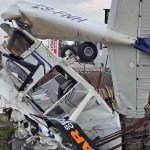
Belgium vs Senegal — The overall comeback: Down 0-2, Belgium equalised in the 86th and 89th minutes, and won in the 125th minute of extra time after a disputed VAR penalty.
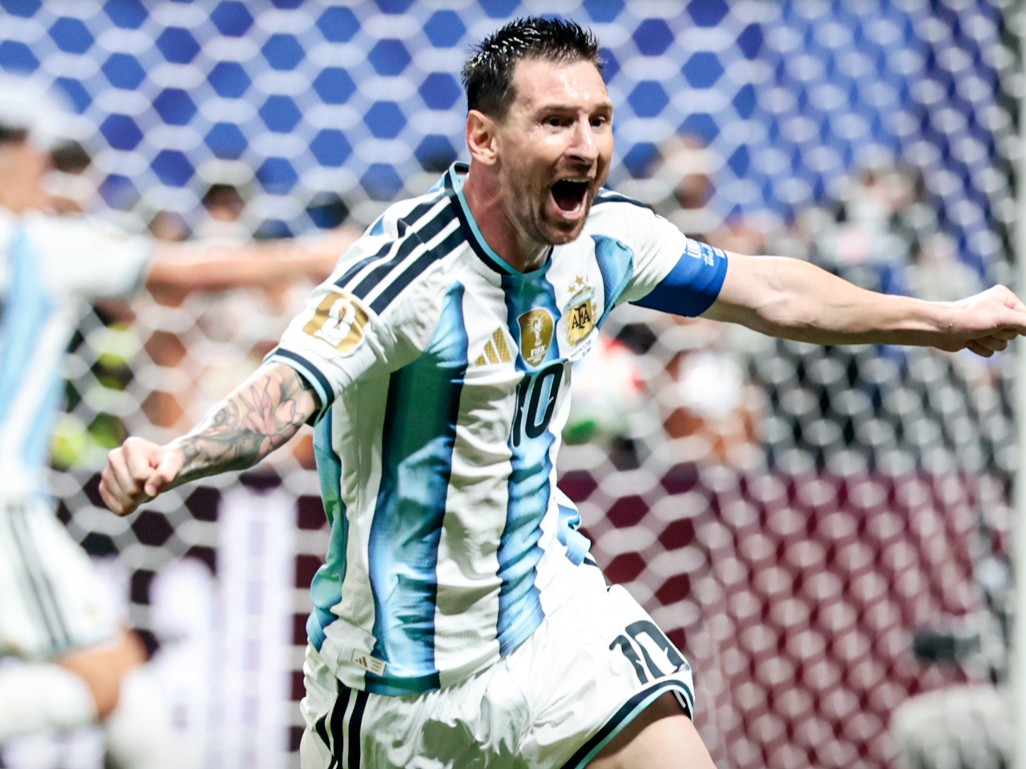
Argentina vs Egypt — From 0-2 down, the South Americans registered the latest regulated comeback in World Cup history: Romero 79’, Messi 83’, Fernandez 90’+2.
For the Africans, the 82nd-minute problem is no longer a pattern. It is a record.
What Happened
Egypt were magnificent until the 79th minute. Ibrahim’s 15th-minute header gave the Pharaohs an entirely deserved lead.
Goalkeeper Shobeir produced one of the performances of the tournament — saving Messi’s first-half penalty, denying Mac Allister’s header, stopping Alvarez’s point-blank effort in the 42nd minute.
Zico’s 67th-minute finish made it 2–0. Egypt had led for twelve minutes. Argentina had created almost nothing.
Then came eleven minutes that will define Egypt’s football generation. Romero headed home in the 79th minute.
Messi equalised in the 83rd.
In stoppage time, Alvarez appeared to foul Salah in the penalty area — the referee waved play on, VAR did not intervene — and Fernandez headed home at the other end in the 90th+2 minute to complete one of the great World Cup recoveries.
Seven minutes of added time had been signalled.
Egypt had more than five minutes remaining to recover the 3–2.
Those minutes were not used.
Egypt’s goalkeeper, central midfielder and head coach were all booked in the aftermath of Fernandez’s goal.
The collective eruption consumed the time that remained.
Egypt were eliminated not when Fernandez scored, but when they chose not to respond to it.
The Tactical Failure
“It doesn’t matter who you are and who you’re playing, if you’re 2-0 up with 12 minutes to go and you lose, you absolutely deserve to go out.”
That was the verdict of one fan writing on BBC Sport’s live text — and it is analytically correct.
However, the more instructive observation came from another correspondent: “When going 2-0 ahead, they went to six at the back at times and gave up all possession and forgot how to defend.
“They handed the game to Argentina by being negative and trying to shut up shop.”
The second correspondent named it precisely.
“Egypt, leading 2–0, dropped into a six-man defensive block and surrendered all possession.
“This was not a defensive mistake. It was a deliberate tactical choice — and it was wrong.”
When a team drops into a passive low block with a lead, it does not protect the lead. It creates the conditions for losing it.
A six-man defensive line compressed deep invites sustained pressure into the space immediately in front — precisely the space Romero arrived into for the 79th-minute header.
A team defending deep without possession cannot control tempo. It cannot run down the clock. It simply waits to be attacked.
Morocco, the last African team in the tournament, has demonstrated the alternative throughout this competition.
Leading Canada 3–0, they never retreated into a low block. They maintained possession, pressed intelligently, and continued to create.
The lead was protected by playing, not by parking. Egypt chose the opposite.
They gave Argentina the ball and waited. Argentina needed eleven minutes to convert the gift.
The Disorientation Cascade
The single most analytically significant moment of Egypt’s collapse was not a goal.
It was the simultaneous booking of midfielder Hamdi Fathy, goalkeeper Mostafa Shobeir, and head coach Hossam Hassan in the immediate aftermath of Fernandez’s goal.
Three of Egypt’s most critical figures were consumed by protest at the referee rather than by the task of recovering the match.
The goalkeeper who should have been organising an immediate restart.
The midfielder who should have been driving forward.
The head coach whose job was to galvanise a team that still had five-plus minutes and seven minutes of added time to find an equaliser.
Instead, every unit of collective energy was directed at the official. Argentina needed only to wait for the whistle.
This is the disorientation mechanism confirmed in its most complete form.
An adverse officiating decision in the closing phase — the Salah non-penalty — disrupted Egypt’s collective psychology at the precise moment when composure was the only instrument that mattered.
Egypt did not lose the match when Fernandez scored.
They conceded it in the minutes that followed by choosing not to play them.
The Officiating Dimension
Ahmad Yousef’s BBC Radio 5 Live analysis deserves careful attention.
Two specific decisions: Zico’s goal disallowed for an infringement Yousef described as occurring almost on Egypt’s own touchline and as “so minimal”.
And Alvarez’s apparent contact with Salah’s right boot, waved away without VAR review, moments before Fernandez’s winner.
Yousef’s central question — “If that was Lionel Messi or someone else in an Argentina shirt, would there have been the same consistency?” — goes to the heart of a pattern documented across this tournament.
Ghana were denied a clear penalty against England, confirmed by three independent analysts.
The Senegal penalty in the 125th minute was concluded by Archivo VAR to have been caused by the Belgian captain’s own foot extension.
Cape Verde faced four contested calls against Argentina without equivalent VAR scrutiny.
The pattern does not establish deliberate bias.
It establishes a structural asymmetry: adverse officiating decisions cluster in the closing phases of African teams’ most important matches with a consistency that exceeds coincidence.
More critically, the response to those decisions — collective protest, bookings, shape abandoned — is itself a coached discipline that African teams have not developed. Morocco have.
Their composed response to disputed calls throughout this tournament is a preparation achievement, not a temperamental one.
The Five Failure Modes — All Five, in 11 Minutes
The closing-phase collapse framework identifies five failure modes: tactical, psychological, disorientation cascade, absence of game management, and the officiating environment.
Egypt’s eleven minutes confirmed all five simultaneously.
Tactical: Egypt dropped to six at the back and surrendered possession — creating the space Romero exploited.
Psychological: the 2–0 lead became a burden rather than a platform the moment Argentina scored, with heads visibly dropping.
Disorientation: the Salah non-penalty triggered collective protest at the precise moment shape reset was required.
Game management: no proactive substitutions, no tempo control, no coached closing-phase response.
Officiating environment: two disputed decisions in the closing phase — Zico’s disallowance and the Salah non-penalty — both in Egypt’s favour and both contested by independent analysts.
Not one of these failure modes requires superior talent to correct.
All five are preparation deficits.
All five are correctable through coaching. None were corrected tonight.
Egypt’s Legacy
The analytical record must not obscure the human one. Egypt played in their first-ever World Cup Round of 16.
They defeated Australia on penalties.
They led Argentina 2–0 with twelve minutes remaining.
Shobeir produced one of the tournament’s finest individual goalkeeping performances.
Salah created 16 chances — joint highest in the tournament.
Egypt gave the African continent 78 minutes of genuine belief.
The exit is painful.
The manner of it — from 2–0 up with 12 minutes remaining, five-plus minutes of added time spent in protest — will define the post-tournament conversation across the continent.
Egypt leave Atlanta with their heads held high.
The lessons will last longer than the flight home.
The margin between making history and conceding it was 11 minutes, five failure modes, and a preparation culture that has not yet been built.
That is what must change.
*Nathan Shoko writes on football governance, performance analytics, and the political economy of the game. The views expressed by Nathan Shoko are not necessarily those of The Bulrushes