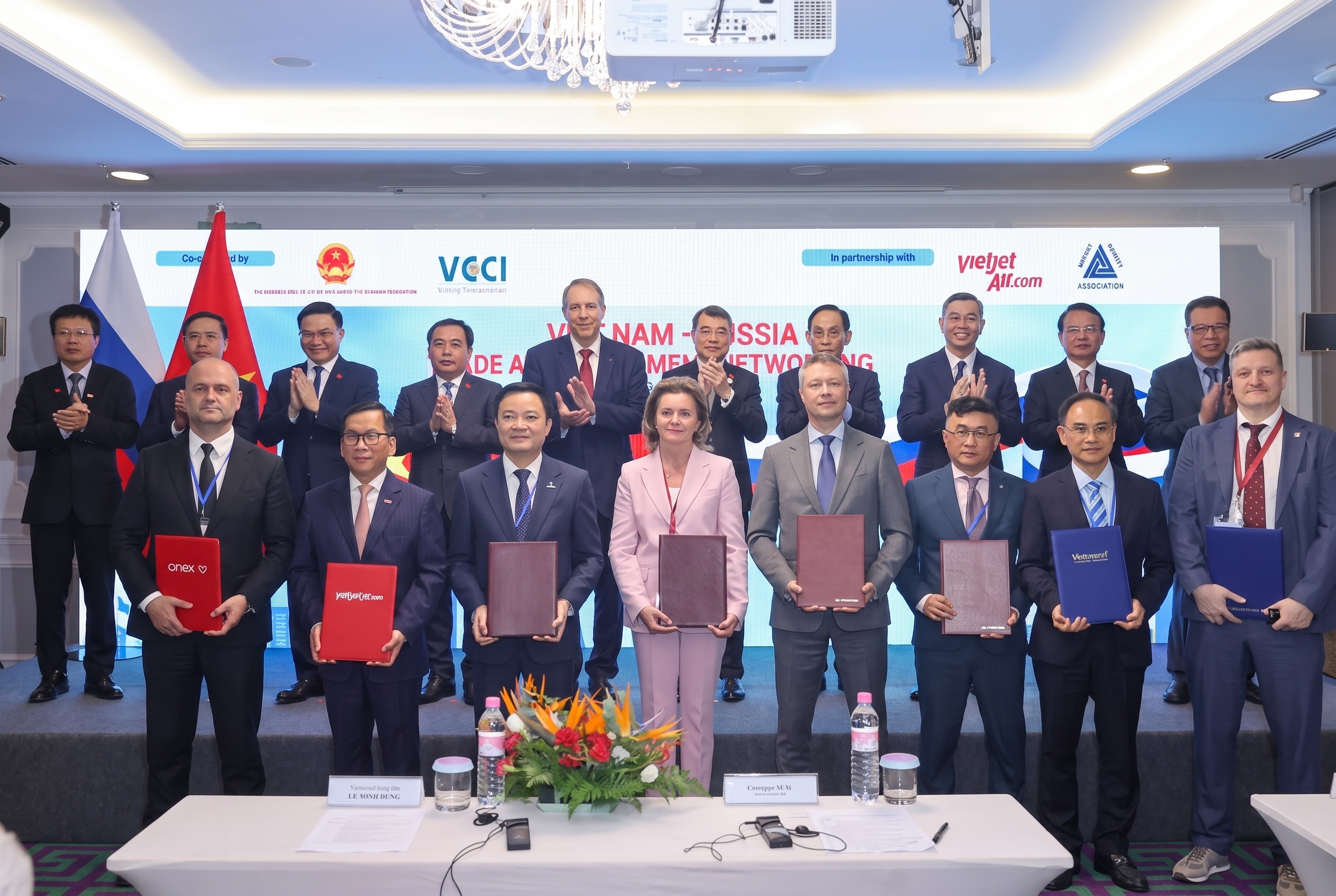
Moscow – The Fuel Division of Rosatom and Vietnam’s National Oil and Gas Corporation, Petrovietnam, have signed a memorandum of understanding in the field of additive technologies.
The document was signed by Director of the Additive Technologies Business Unit at Rosatom’s Fuel Division Ilya Kavelashvili, and Deputy General Director of Petrovietnam Fan Tu Ziang.
A key project of this collaboration between Rosatom and Petrovietnam is the establishment of a modern additive technologies center in Vietnam.
This technology makes it possible to manufacture parts and components that are difficult to produce using traditional methods such as casting and machining, while reducing product weight and optimising material use.
Petrovietnam plans to use the center to enhance the efficiency of its operations: with 3D printing capabilities, the corporation will be able to manufacture complex components for drilling and pumping equipment, reducing production downtime through rapid prototyping.
The introduction of additive technologies will also accelerate the maintenance and repair of equipment and large-scale products, reducing dependence on imported spare parts.
The project is scheduled to be implemented in several phases: starting with a technical audit of Petrovietnam’s production processes conducted by Russian specialists, followed by the configuration agreement for the center and a list of additive equipment, leading up to the center’s official opening.
“Collaboration in additive technologies is a promising avenue for expanding bilateral partnerships between Russia and Vietnam,” noted Fan Tu Ziang.
“We expect to successfully implement the project to create a national Additive Technologies Center.
“The exploration of potential sites for the center is scheduled for July of this year, with the opening anticipated as early as 2027.”
For the Fuel Division of Rosatom, this project extends beyond a one-time export deal.
Russian specialists offer their international partners not just equipment supply, but a comprehensive industry ecosystem: from scientific and technical support and raw material supply to engineering education.
“We already have a successful experience in exporting Russian additive technologies,” commented Ilya Kavelashvili.
“The first foreign Additive Technologies Center of Rosatom, equipped with Russian technology, has been established in Belarus, and a large-scale industrial 3D printer for the aerospace sector has been supplied to India.
“This proves that Russian solutions – namely equipment, materials, and software – are competitive on a global market.
“In the future, we are open to consider localisation of 3D printers assembly in Vietnam for further promotion in the markets of Southeast Asia.”
This approach – not a one-off supply of equipment, but the building of a long-term technological ecosystem – is relevant far beyond Southeast Asia.
It encompasses not only equipment, but also scientific and technical support, raw material supply, and workforce training.
Rosatom already has experience training specialists from South Africa: students from the country receive quotas at universities affiliated with the state corporation.
Similar principles – from technology transfer to workforce development – could be applied to cooperation with South Africa in the field of additive technologies.
Koeberg, Africa’s only commercial nuclear power station, has been in operation for over 40 years, and Eskom is implementing a life-extension project that includes the replacement of major components and the refurbishment of systems originally designed more than four decades ago.
Nuclear plants depend on specialised components, some of which were designed by suppliers that no longer exist, while small production runs are often not economically viable using traditional manufacturing methods.
Additive technologies offer a realistic way to strengthen such supply chains: secure digital archives of certified component designs allow plant operators to produce approved parts on demand under regulatory oversight, shortening delivery times and reducing dependence on a limited pool of suppliers.
At the same time, developing these technologies also requires the right expertise – meaning that expanding educational programmes and engineering workforce training could become part of a broader strategy for introducing additive technologies in South Africa.
As international standards in this field continue to develop, additive technologies could become an additional tool for strengthening the resilience not only of the nuclear sector, but of other South African industries as well.